


Glycylglycine
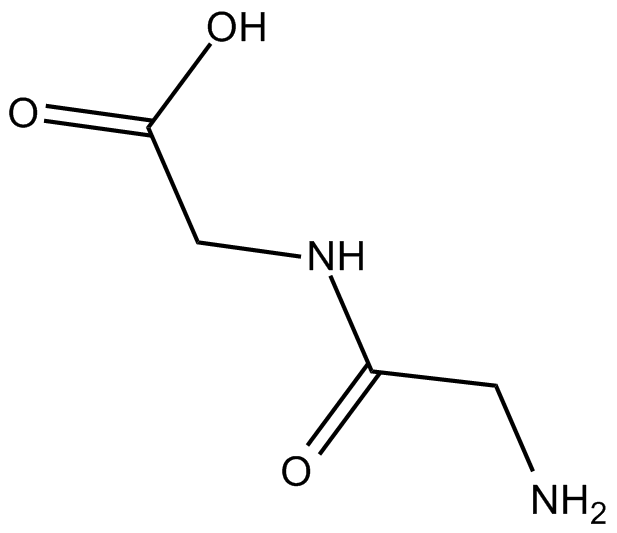
Glycylglycine (CAS No.: 556-50-3) is the simplest naturally derived dipeptide, widely utilized as a fundamental model compound in biochemical and molecular biology research, particularly for studying peptide structure–function relationships and enzymatic processes. As a non-selective substrate for glycylglycine dipeptidase and a reported inhibitor of inducible nitric oxide synthase, it participates in cellular regulatory mechanisms involving nitrogen metabolism and redox balance. Glycylglycine is capable of passive diffusion across cellular membranes and is subsequently hydrolyzed to glycine, thereby contributing to intracellular energy metabolism, biosynthetic pathways, and antioxidant processes. Experimental studies indicate that it can modulate enzyme activity and signaling pathways, including those associated with γ-glutamyl-related systems, and influence cellular functions such as spermatogonial stem cell proliferation, astrocyte activation, and nitric oxide release, alongside upregulation of neurotrophic factors including PDGFA, FGF2, and CNTF. These properties make it a valuable tool in investigations of cell signaling, metabolic regulation, reproductive biology, and neurodegenerative disease mechanisms. In vitro activity is generally observed in the low micromolar to millimolar range depending on assay conditions, and its use in experimental systems, including cell-based assays and biochemical studies, typically varies according to specific research objectives and protocol designs.
| Physical Appearance | Solid |
| Storage | -20°C |
| M.Wt | 132.12 |
| Cas No. | 556-50-3 |
| Formula | C4H8N2O3 |
| Solubility | insoluble in EtOH; insoluble in DMSO; ≥52.7 mg/mL in H2O |
| Chemical Name | 2-(2-aminoacetamido)acetic acid |
| Canonical SMILES | O=C(O)CNC(CN)=O |
| Shipping Condition | Small Molecules with Blue Ice, Modified Nucleotides with Dry Ice. |
| General tips | We do not recommend long-term storage for the solution, please use it up soon. |