


Glycine
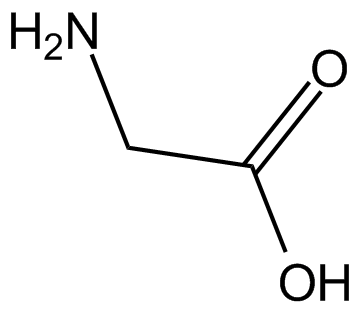
Glycine (CAS No.: 56-40-6) is a naturally occurring non-essential amino acid widely distributed in proteins such as gelatin and silk fibroin and extensively utilized as a reference compound in biochemical and pharmacological research. Functionally, glycine serves as a major inhibitory neurotransmitter in the central nervous system, mediating fast synaptic inhibition through ligand-gated ion channels, while also acting as an essential co-agonist at glutamate-gated N-methyl-D-aspartate receptors to modulate excitatory neurotransmission and synaptic plasticity. In addition to its roles in neurotransmission, glycine has been shown to influence cellular integrity by inhibiting NINJ1-mediated membrane aggregation and reducing plasma membrane rupture during regulated cell death, thereby providing a useful tool for investigating mechanisms of cell injury and protection. Its biological activity is typically observed across nanomolar to millimolar concentration ranges depending on receptor context and experimental system. Glycine is broadly applied in studies of neuronal signaling, receptor pharmacology, cell death pathways, cancer biology, and angiogenesis, and is frequently incorporated into in vitro assays and in vivo models to probe amino acid metabolism and neurotransmitter dynamics, with experimental concentrations selected according to specific study designs and research objectives.
| Physical Appearance | Solid |
| Storage | -20°C |
| M.Wt | 75.07 |
| Cas No. | 56-40-6 |
| Formula | C2H5NO2 |
| Solubility | insoluble in EtOH; insoluble in DMSO; ≥54.6 mg/mL in H2O |
| Chemical Name | 2-aminoacetic acid |
| Canonical SMILES | NCC(O)=O |
| Shipping Condition | Small Molecules with Blue Ice, Modified Nucleotides with Dry Ice. |
| General tips | We do not recommend long-term storage for the solution, please use it up soon. |