


glucuronate
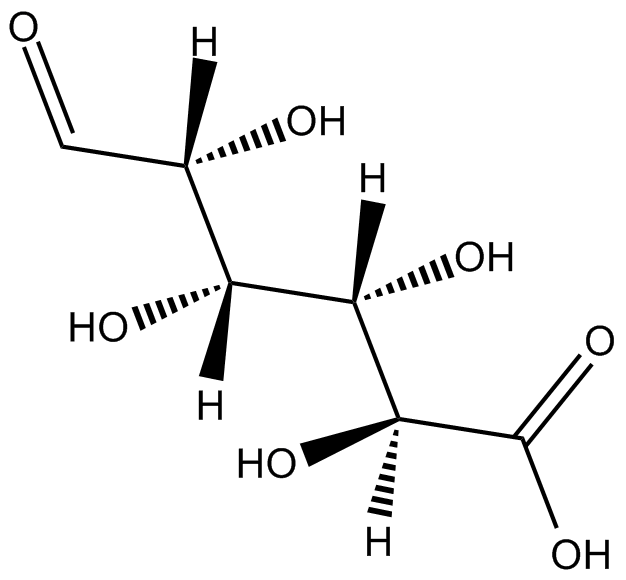
glucuronate (CAS No.: 6556-12-3) is a biologically relevant monosaccharide derivative of glucose that serves as a key structural and functional component of proteoglycans, including heparan sulfate and chondroitin sulfate, and plays critical roles in embryonic development, extracellular matrix organization, and regulation of cell adhesion and aggregation. Endogenously, it is generated through the oxidation of glucose via uridine diphosphate–linked intermediates and participates in glucuronidation pathways, where it is conjugated to diverse endogenous and xenobiotic substrates to facilitate detoxification and excretion. Metabolic conversion of glucuronate to ethyl glucuronide has been shown to activate Toll-like receptor 4 signaling, implicating it in inflammatory and nociceptive pathways relevant to pain biology. In addition, glucuronate and its derivatives, such as glucurono-lactone, have been associated with hepatoprotective and detoxifying functions, as well as emerging anti-inflammatory and anti-tumor activities, supporting their utility in mechanistic studies of metabolism, immune signaling, and cancer pharmacology. Altered levels of glucuronate have also been observed in cellular models of lysosomal storage disorders, highlighting its relevance in metabolic disease research. In vitro and cellular studies typically employ glucuronate at micromolar to millimolar concentrations depending on the biological system and experimental objectives, and it is widely used in studies of glycosaminoglycan biosynthesis, TLR4-mediated signaling, and drug conjugation processes in both cell-based assays and preclinical models.
| Physical Appearance | A solid |
| Storage | -20°C |
| M.Wt | 194.14 |
| Cas No. | 6556-12-3 |
| Formula | C6H10O7 |
| Synonyms | D-(+)-Glucuronic Acid |
| Solubility | insoluble in EtOH; ≥53.7 mg/mL in H2O; ≥8.66 mg/mL in DMSO |
| Chemical Name | (2S,3S,4S,5R)-2,3,4,5-tetrahydroxy-6-oxohexanoic acid |
| Canonical SMILES | O=C[C@@](O)([H])[C@](O)([H])[C@@](O)([H])[C@@](O)([H])C(O)=O |
| Shipping Condition | Small Molecules with Blue Ice, Modified Nucleotides with Dry Ice. |
| General tips | We do not recommend long-term storage for the solution, please use it up soon. |