


Geraniol
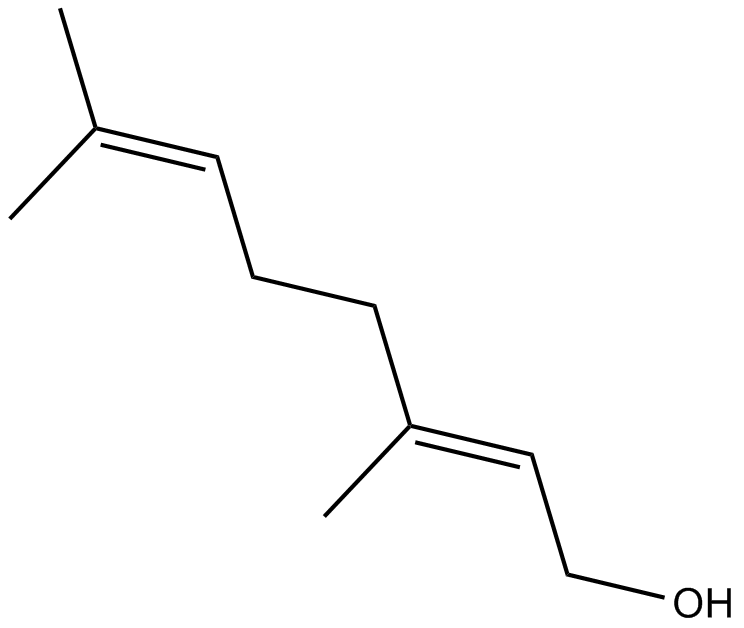
Geraniol (CAS No.: 106-24-1) is a naturally occurring monoterpene alcohol widely distributed in essential oils derived from aromatic plants such as rose, citronella, lemongrass, and lavender, and is extensively utilized in food, fragrance, and cosmetic applications while also serving as a bioactive small molecule of interest in biomedical research. Functionally, geraniol exhibits a broad spectrum of pharmacological activities, including antimicrobial, antifungal, antioxidant, anti-inflammatory, and anticancer effects, and has been shown to inhibit cell proliferation and induce apoptosis in diverse cellular systems. Mechanistically, its biological activity is associated with modulation of oxidative stress pathways, regulation of pro-inflammatory mediators, and interference with signaling cascades involved in cell cycle progression and survival, such as pathways linked to apoptosis induction and cellular redox balance; it has also been reported to enhance the sensitivity of tumor cells to chemotherapeutic agents, suggesting potential utility in combination therapy strategies. In vitro studies typically demonstrate activity in the low micromolar to micromolar range depending on cell type and assay conditions, with observed effects across multiple cancer cell lines including those derived from breast, lung, colon, prostate, and other tissues. Geraniol is further employed in studies investigating metabolic disorders, including diabetes-related models, due to its modulatory effects on oxidative and inflammatory pathways. Its classification as generally recognized as safe supports its suitability for translational research contexts, although sensitivity reactions may occur and can be assessed by patch testing. In experimental settings, dosing and exposure conditions vary according to specific model systems, including cell-based assays and animal studies, making geraniol a versatile tool compound for probing mechanisms of disease and evaluating novel therapeutic strategies.
| Physical Appearance | Liquid |
| Storage | -20°C |
| M.Wt | 154.25 |
| Cas No. | 106-24-1 |
| Formula | C10H18O |
| Synonyms | β-Geraniol; (E)-Geraniol; NSC 9279 |
| Solubility | insoluble in H2O; ≥42.7 mg/mL in DMSO; ≥68 mg/mL in EtOH |
| Chemical Name | (E)-3,7-dimethylocta-2,6-dien-1-ol |
| Canonical SMILES | C/C(C)=C/CC/C(C)=C/CO |
| Shipping Condition | Small Molecules with Blue Ice, Modified Nucleotides with Dry Ice. |
| General tips | We do not recommend long-term storage for the solution, please use it up soon. |