


Furazolidone
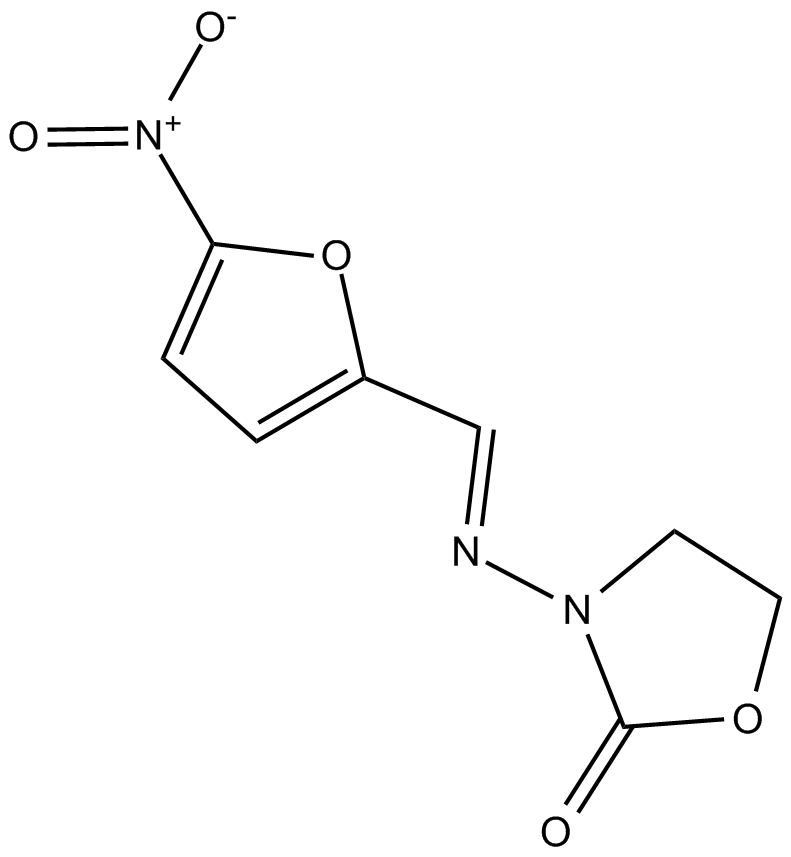
Furazolidone (CAS No.: 67-45-8) is a synthetic nitrofuran derivative with established antiprotozoal and antibacterial properties, widely utilized as a research tool in studies of infectious disease and cellular regulation. Mechanistically, furazolidone exerts its antimicrobial effects in part through interaction with microbial DNA and inhibition of monoamine oxidase activity, contributing to disrupted cellular metabolism and growth. It demonstrates broad-spectrum in vitro activity against protozoa such as Giardia lamblia and Trichomonas vaginalis, as well as Gram-negative bacterial pathogens including Salmonella, Shigella, Escherichia coli, and Vibrio species, with efficacy typically observed in the low micromolar to microgram-per-milliliter range. Beyond its antimicrobial profile, furazolidone has gained interest in oncology research due to its ability to modulate cellular proliferation, induce apoptosis, and promote differentiation, potentially through stabilization of the tumor suppressor protein p53 and interference with leukemia-associated fusion protein signaling pathways. These properties support its application in studies of acute myeloid leukemia and other malignancies using cell-based and animal models, where dosing regimens and exposure conditions are adjusted according to specific experimental objectives. Collectively, furazolidone serves as a multifunctional small molecule for investigating host–pathogen interactions, monoamine oxidase-related pathways, and mechanisms of tumor suppression and cellular stress responses in biomedical research.
| Physical Appearance | A solid |
| Storage | -20°C |
| M.Wt | 225.16 |
| Cas No. | 67-45-8 |
| Formula | C8H7N3O5 |
| Synonyms | Furoxone; NSC 6469; Nifulidone; Nitrofurazolidone; Nitrofuroxon; Tikofuran; Trifurox |
| Solubility | insoluble in H2O; insoluble in EtOH; ≥10.6 mg/mL in DMSO |
| Chemical Name | (E)-3-(((5-nitrofuran-2-yl)methylene)amino)oxazolidin-2-one |
| Canonical SMILES | O=[N+]([O-])C1=CC=C(/C=N/N2CCOC2=O)O1 |
| Shipping Condition | Small Molecules with Blue Ice, Modified Nucleotides with Dry Ice. |
| General tips | We do not recommend long-term storage for the solution, please use it up soon. |