fumarate
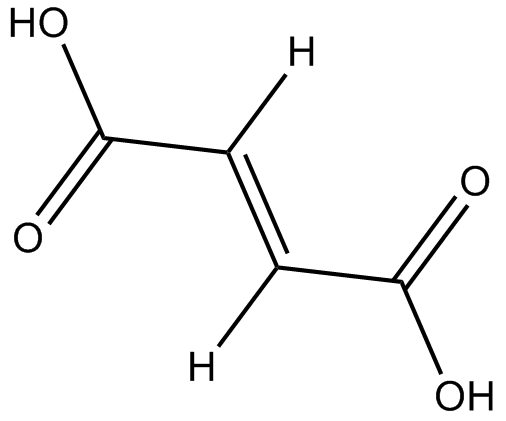
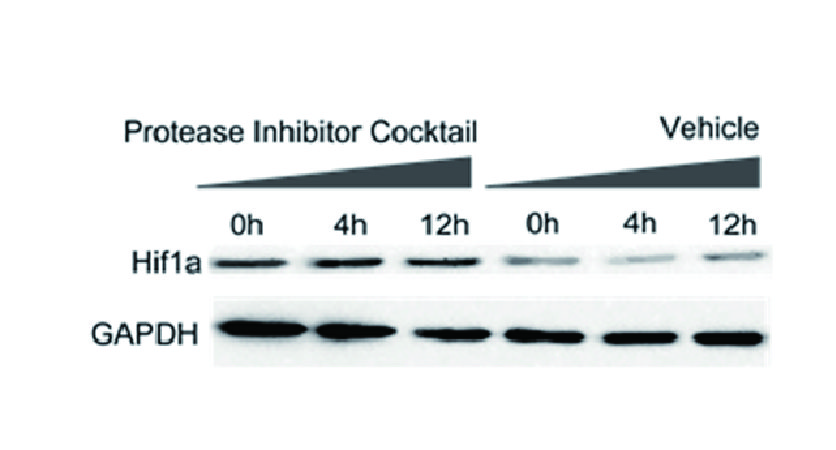
fumarate (CAS No.: 110-17-8) is a small endogenous dicarboxylic acid belonging to the class of organic compounds characterized by the presence of two carboxylic acid groups, and it functions as a key intermediate in the tricarboxylic acid cycle, contributing to cellular energy metabolism and ATP generation. In biochemical and cellular research, fumarate is widely utilized as a model metabolite to investigate metabolic flux, mitochondrial function, and redox homeostasis. It has been shown to modulate inflammatory signaling pathways, notably suppressing p38 MAPK-dependent NF-κB activation and reducing cytokine-induced gene expression such as eotaxin-1 in stimulated fibroblasts, thereby serving as a useful probe for dissecting stress and inflammation-associated signaling networks. Additionally, fumarate has gained attention as an oncometabolite, with elevated levels observed in certain tumor contexts where it can inhibit prolyl hydroxylase enzymes and influence hypoxia-related signaling pathways, making it relevant for studies of cancer metabolism and epigenetic regulation. In vitro, its biological effects are typically observed across low micromolar to millimolar concentration ranges depending on the assay system and cell type. Fumarate is commonly applied in cell-based assays and metabolic profiling studies, as well as in animal models investigating metabolic disorders or signaling dysregulation, with experimental concentrations and dosing regimens varying according to specific study designs and research objectives.
| Physical Appearance | Solid |
| Storage | -20°C |
| M.Wt | 116.07 |
| Cas No. | 110-17-8 |
| Formula | C4H4O4 |
| Solubility | insoluble in H2O; ≥21.67 mg/mL in EtOH with ultrasonic; ≥64.9 mg/mL in DMSO |
| Chemical Name | fumaric acid |
| Canonical SMILES | O=C(O)/C([H])=C([H])/C(O)=O |
| Shipping Condition | Small Molecules with Blue Ice, Modified Nucleotides with Dry Ice. |
| General tips | We do not recommend long-term storage for the solution, please use it up soon. |