


Etidronate disodium
Etidronate disodium (CAS No.: 7414-83-7) is a first-generation, non-nitrogenous bisphosphonate and a diphosphonate analog of endogenous pyrophosphate widely used in bone biology and mineralization research. This compound exhibits oral and intravenous activity and exerts its primary pharmacological effects by binding to hydroxyapatite in bone matrix, where it inhibits osteoclast-mediated bone resorption through induction of osteoclast apoptosis and disruption of cellular function, thereby modulating bone remodeling processes. In addition to its anti-resorptive activity, etidronate disodium has been shown to attenuate pathological calcification in vascular smooth muscle cells, supporting its use in studies of arterial calcification and related cardiovascular pathologies. As a metal ion chelator, it is also employed in experimental systems investigating heavy metal sequestration and removal. Emerging evidence suggests potential anticancer activity, making it of interest in exploratory oncology research, although its precise molecular targets in this context remain incompletely defined. In vitro activity is generally observed in the nanomolar to micromolar range depending on the biological system and endpoint measured, consistent with other agents in the bisphosphonate class. Etidronate disodium is commonly utilized in cell-based assays of osteoclast differentiation and function, as well as in animal models of osteoporosis, ectopic calcification, and bone metabolism disorders, where dosing and exposure conditions are adjusted according to specific experimental objectives.
| Physical Appearance | A solid |
| Storage | -20°C |
| M.Wt | 249.99 |
| Cas No. | 7414-83-7 |
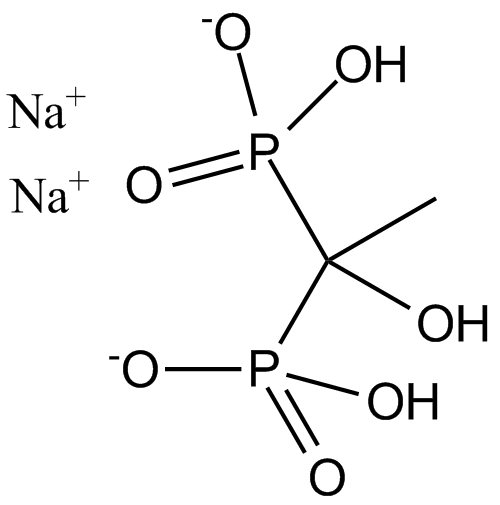
| Formula | C2H6Na2O7P2 |
| Synonyms | Etidronic Acid; Didronel; HEDP; Hydroxyethylidene Diphosphonic Acid |
| Solubility | insoluble in DMSO; insoluble in EtOH; ≥44.7 mg/mL in H2O |
| Chemical Name | sodium (1-hydroxyethane-1,1-diyl)bis(hydrogenphosphonate) |
| Canonical SMILES | OP([O-])(C(O)(P(O)([O-])=O)C)=O.[Na+].[Na+] |
| Shipping Condition | Small Molecules with Blue Ice, Modified Nucleotides with Dry Ice. |
| General tips | We do not recommend long-term storage for the solution, please use it up soon. |