


Estragole
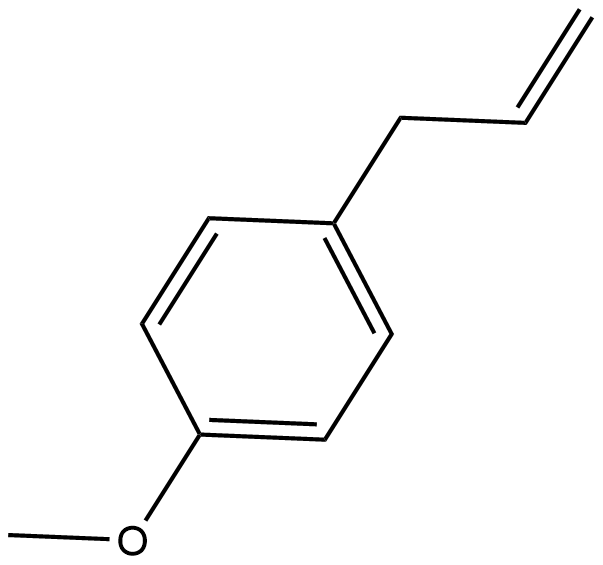
Estragole (CAS No.: 140-67-0) is a naturally occurring phenylpropene compound widely found in the essential oils of plants such as fennel, basil, and tarragon, and is commonly used in the formulation of food flavorings and perfumes. In biomedical research, Estragole has attracted considerable attention due to its potential genotoxicity and carcinogenicity. Studies have shown that Estragole can be metabolized in vivo to 1′-hydroxyestragole, which can form adducts with DNA, leading to DNA damage and cytotoxicity. In in vitro studies, 1′-hydroxyestragole can induce the formation of DNA adducts and cytotoxicity at concentrations ranging from nanomolar to micromolar levels. In cell and animal models, research on Estragole and its metabolites typically involves evaluating hepatotoxicity and carcinogenic risk, and the doses or concentrations used in experiments usually depend on the experimental design and research objectives.
| Physical Appearance | Liquid |
| Storage | -20°C |
| M.Wt | 148.20 |
| Cas No. | 140-67-0 |
| Formula | C10H12O |
| Synonyms | 4-Allylanisole; Methyl Chavicol; NSC 404113 |
| Solubility | ≥27.4 mg/mL in DMSO; ≥25 mg/mL in EtOH; ≥2.55 mg/mL in H2O with ultrasonic |
| Chemical Name | 1-allyl-4-methoxybenzene |
| Canonical SMILES | O(C1=CC=C(C=C1)CC=C)C |
| Shipping Condition | Small Molecules with Blue Ice, Modified Nucleotides with Dry Ice. |
| General tips | We do not recommend long-term storage for the solution, please use it up soon. |