


Eflornithine hydrochloride
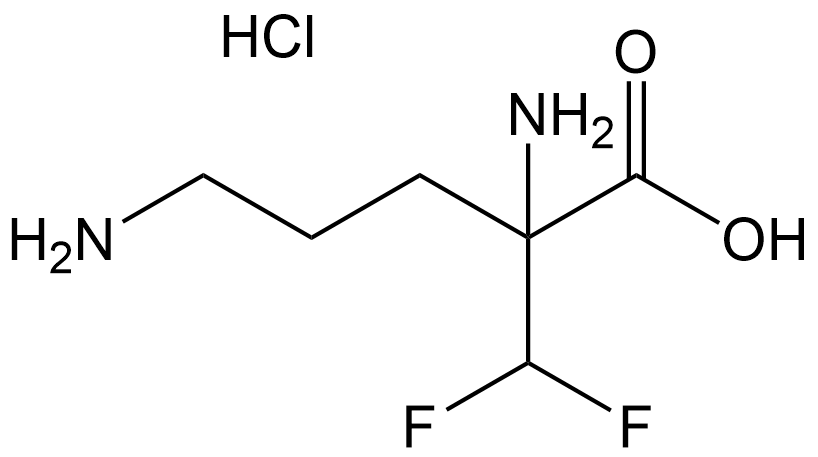
Eflornithine hydrochloride (DFMO, CAS No. 68278-23-9) is a mechanism-based irreversible inhibitor of ornithine decarboxylase (ODC), blocking the rate-limiting step of polyamine synthesis (putrescine→spermidine/spermine decrease), thereby inhibiting cell proliferation, commonly manifested as G1-phase arrest; its effects can be reversed by supplementation with exogenous polyamines. Clinically, it is used for African trypanosomiasis (T. b. gambiense) and topical hair growth inhibition; it is also commonly used as a polyamine-pathway tool compound in tumors (e.g., neuroblastoma, chemoprevention of colorectal cancer).
For experimental applications, at the cellular level it is commonly used at a final concentration of ~0.5–5 mM (often 1 mM or 5 mM) for 24–96 h to deplete polyamines and observe changes in proliferation/colony formation/stemness, etc.; at the animal level, oral administration is most often used (administration via drinking water is common, e.g., ~1–2% w/v continuous dosing; or gavage/oral divided dosing as designed in the literature). The actual intake dose fluctuates with water consumption and model differences, and the dosing window is typically calibrated by monitoring body weight, water intake, and tissue/urinary polyamine levels.
References:
[1] Romijn JC, Verkoelen CF, Splinter TA. Problems of pharmacokinetic studies on alpha-difluoromethylornithine in mice. Cancer Chemother Pharmacol. 1987;19(1):30-4. doi: 10.1007/BF00296251. PMID: 3102094.
[2] Bock JM, Pickart MA, Pink JJ, Harari PM. Modulation of tumor cell proliferation and apoptosis by polyamine depletion in cells of head and neck squamous cell carcinomas. Radiat Res. 1999 Dec;152(6):604-10. PMID: 10581530.
| Storage | Store at -20°C |
| M.Wt | 218.63 |
| Cas No. | 68278-23-9 |
| Formula | C6H13ClF2N2O2 |
| Synonyms | DFMO HCl; Vaniqa; NSC 270295; NSC 337250 |
| Chemical Name | 2,5-diamino-2-(difluoromethyl)pentanoic acid hydrochloride |
| Canonical SMILES | Cl.O=C(O)C(N)(CCCN)C(F)F |
| Shipping Condition | Small Molecules with Blue Ice, Modified Nucleotides with Dry Ice. |
| General tips | We do not recommend long-term storage for the solution, please use it up soon. |