


DPTA NONOate
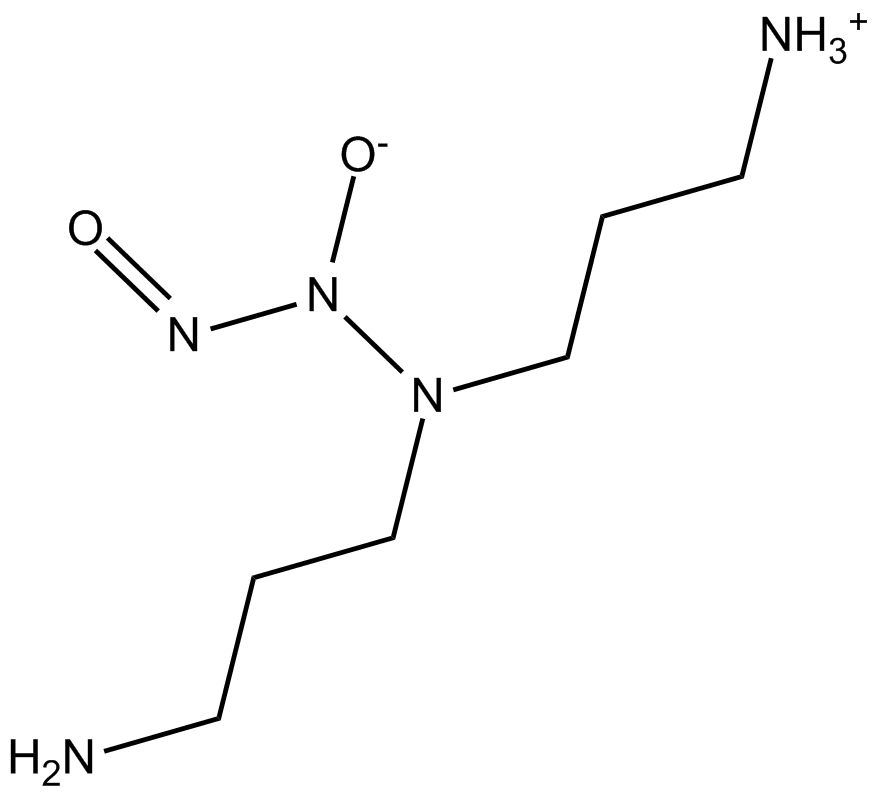
DPTA NONOate (CAS No.: 146724-95-0) is a well-characterized nitric oxide (NO) donor belonging to the diazeniumdiolate class, widely utilized in biomedical research to investigate NO-mediated signaling pathways and physiological processes. It undergoes spontaneous, pH-dependent first-order decomposition under physiological conditions, exhibiting half-lives of approximately 3 hours at 37°C and 5 hours at 22–25°C (pH 7.4), and releases two moles of NO per mole of parent compound, enabling sustained and controlled NO delivery. Through the liberation of NO, DPTA NONOate modulates key molecular targets including soluble guanylate cyclase and downstream cyclic GMP-dependent signaling cascades, thereby influencing vascular tone, cellular proliferation, apoptosis, and inflammatory responses. Its biological activity is typically observed across nanomolar to micromolar concentration ranges depending on experimental context, reflecting the sensitivity of NO-responsive pathways. This compound is extensively applied in in vitro cell-based assays and in vivo models to study cardiovascular physiology, endothelial function, and oxidative stress, as well as to evaluate NO-related therapeutic strategies. Experimental concentrations or dosing regimens are generally tailored to specific study designs and desired kinetics of NO release.
| Physical Appearance | A crystalline solid |
| Storage | -20°C |
| M.Wt | 191.23 |
| Cas No. | 146724-95-0 |
| Formula | C6H17N5O2 |
| Synonyms | Dipropylenetriamine NONOate |
| Solubility | Soluble in DMSO |
| Canonical SMILES | [NH3+]CCCN(CCCN)N([O-])N=O |
| Shipping Condition | Small Molecules with Blue Ice, Modified Nucleotides with Dry Ice. |
| General tips | We do not recommend long-term storage for the solution, please use it up soon. |