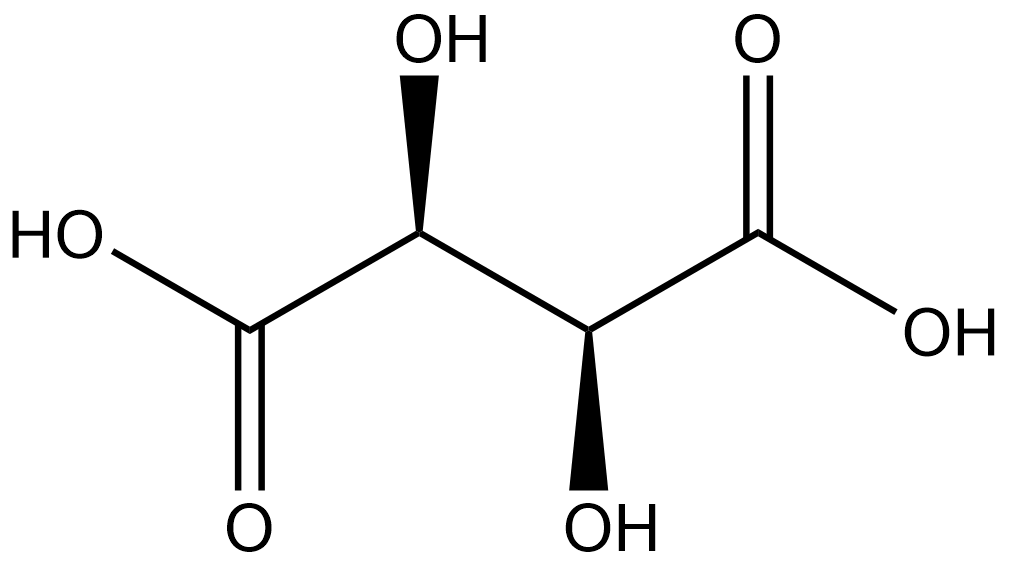
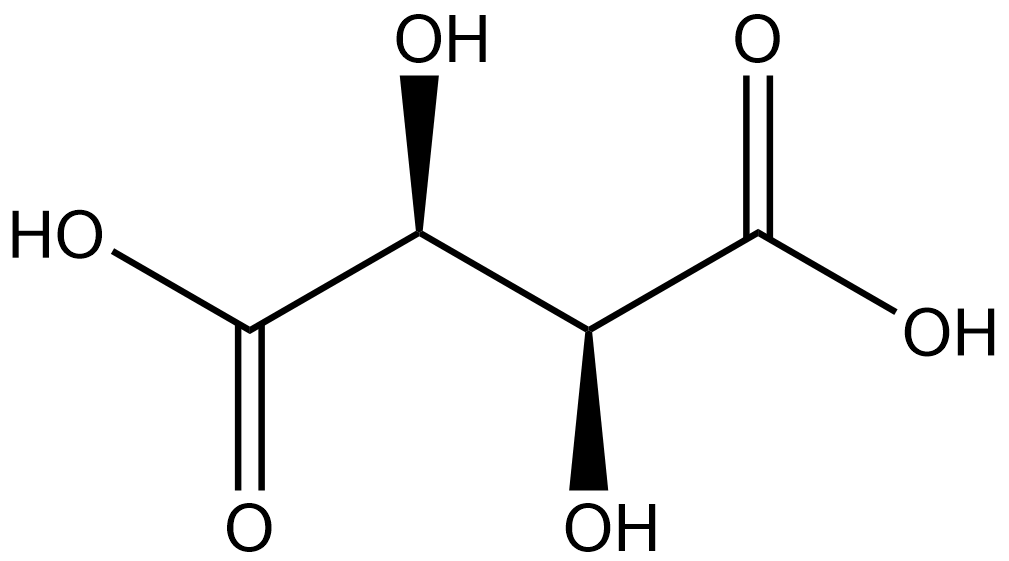
DL-Tartaric acid
DL-Tartaric acid (CAS No.: 133-37-9) is a small organic acid widely classified as a biochemical reagent and pH modulating metabolite analog used in life sciences research, with relevance to cellular metabolism studies, formulation science, and early stage drug discovery workflows where acid base balance, ionic composition, and metal ion interactions influence experimental outcomes. As the racemic form of tartaric acid, it is conceptually related to naturally occurring tartrate species found in plant derived matrices and microbial metabolic contexts, and in biomedical laboratories it is primarily employed as a research grade excipient like component, buffering contributor, and complexation partner rather than as a selective ligand for a single canonical protein target. Current evidence indicates that its biological effects are generally mediated through physicochemical mechanisms, including modulation of extracellular and intracellular pH microenvironments, influence on transporter dependent handling of dicarboxylate like anions, and alteration of metal availability that can secondarily affect enzyme systems linked to redox homeostasis, mitochondrial function, and metabolism associated signaling networks such as AMPK sensitive nutrient stress responses under specific assay conditions. Reported in vitro use is typically characterized by activity windows in the micromolar to millimolar range depending on cell type, medium composition, and endpoint selection, while direct high affinity target driven potency values are often not established for this compound class in the same way as receptor focused small molecules. In practice, DL-tartaric acid is used in cell based assays to control medium conditions, probe acid stress biology, or support comparative studies of stereochemistry related metabolites, and it may also be incorporated into animal or ex vivo experimental systems as a formulation variable or biochemical challenge component, with the concentrations or doses used in experiments typically depending on specific experimental designs and research objectives.
| Storage | Room temperature for 3 years |
| M.Wt | 150.09 |
| Cas No. | 133-37-9 |
| Formula | C4H6O6 |
| Chemical Name | (2S,3S)-2,3-dihydroxysuccinic acid |
| Canonical SMILES | [C@H]([C@@H](C(O)=O)O)(C(O)=O)O |
| Shipping Condition | Small Molecules with Blue Ice, Modified Nucleotides with Dry Ice. |
| General tips | We do not recommend long-term storage for the solution, please use it up soon. |
Quality Control & MSDS
- View current batch:
Chemical structure