


DL-3-Phenyllactic acid
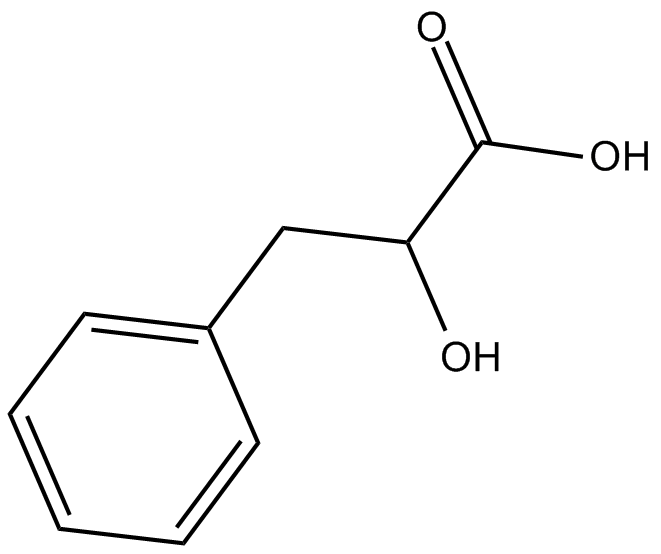
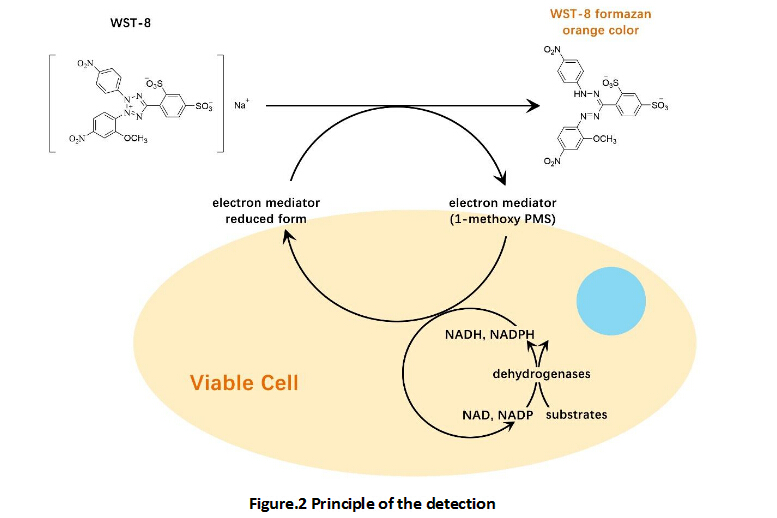
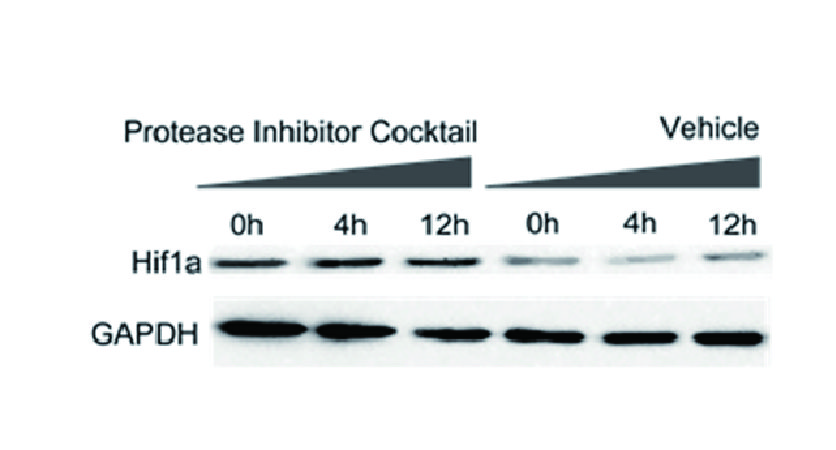
DL-3-Phenyllactic acid (CAS No.: 828-01-3) is a naturally occurring aromatic hydroxy acid metabolite widely studied for its broad-spectrum antimicrobial and antifungal properties in microbiology and drug discovery research. Derived from microbial and metabolic processes, this compound is classified within phenyl alkanoic acids and exhibits inhibitory activity against a range of Gram-positive and Gram-negative bacteria as well as filamentous fungi, including species such as Aspergillus flavus and Aspergillus ochraceus, with reported activity in the low to mid milligram per milliliter range in vitro. Its mechanism of action is thought to involve disruption of microbial cell membrane integrity, interference with cellular homeostasis, and suppression of microbial growth, although precise molecular targets remain under investigation. In addition to antimicrobial effects, emerging evidence suggests broader biological relevance, including associations with metabolic and neurological conditions, positioning it as a molecule of interest in systems biology and biomarker studies. DL-3-Phenyllactic acid is commonly employed in cell-based assays and microbial culture systems to evaluate antimicrobial efficacy, explore synergistic interactions with established antibiotics, and investigate resistance mechanisms, while in vivo studies have examined its functional effects in agricultural and nutritional models. Experimental concentrations or dosing regimens vary depending on study design and intended application, making it a versatile reference compound for probing antimicrobial pathways and supporting the development of novel anti-infective strategies.
| Physical Appearance | A solid |
| Storage | -20°C |
| M.Wt | 166.17 |
| Cas No. | 828-01-3 |
| Formula | C9H10O3 |
| Synonyms | Ba 2653; 2-Hydroxy-3-phenylpropanoic Acid; NSC 2627; (±)-3-Phenyllactic Acid; DL-3-Phenyllactic Acid |
| Solubility | ≥125 mg/mL in DMSO with ultrasonic |
| Chemical Name | 2-hydroxy-3-phenylpropanoic acid |
| Canonical SMILES | O=C(C(CC1=CC=CC=C1)O)O |
| Shipping Condition | Small Molecules with Blue Ice, Modified Nucleotides with Dry Ice. |
| General tips | We do not recommend long-term storage for the solution, please use it up soon. |