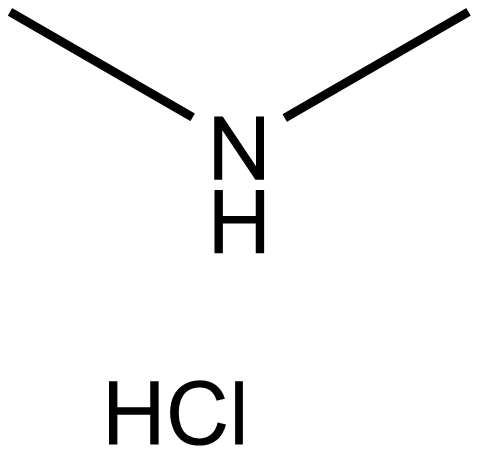
Dimethylamine hydrochloride
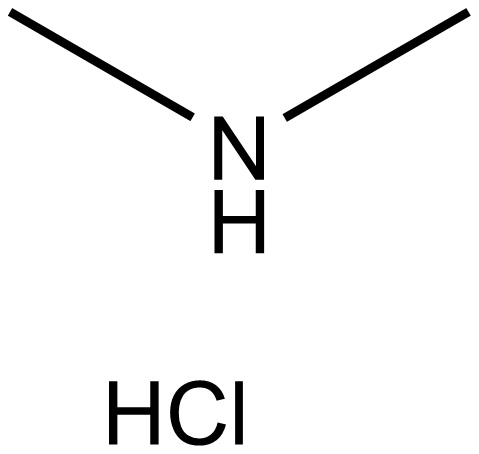
Dimethylamine hydrochloride (CAS No.: 506-59-2) is a small aliphatic amine salt primarily categorized as a biochemical intermediate and analytical reference reagent in life sciences, with relevance to metabolic biochemistry, nitrogen handling, and method development in biomedical research and early stage drug discovery workflows. Endogenous dimethylamine is detected in human urine and is considered a downstream metabolite arising from pathways linked to trimethylamine N oxide turnover and asymmetric dimethylarginine catabolism, including hydrolytic conversion mediated by dimethylarginine dimethylaminohydrolase, which functionally connects this analyte to nitric oxide related metabolic networks rather than to a direct receptor pharmacology profile. Consistent with this role, current evidence supports its use mainly as a probe and matrix component for studying amine metabolism, methylated arginine processing, and biomarker associated flux in cell and biofluid based assays, while specific high confidence molecular targets, canonical agonist or antagonist signaling pathways, and standardized potency metrics such as IC50 or EC50 are not well established for this compound itself in the way typically reported for dedicated bioactive modulators. In vitro investigations therefore commonly emphasize concentration controlled exposure windows spanning low micromolar to millimolar ranges depending on assay format, readout sensitivity, and buffering conditions, and application contexts include analytical calibration, metabolite tracing in cell models, and incorporation into broader screening cascades where amine related interference, transport, or catabolic context is being characterized; when used in translationally oriented experimental systems including animal studies, the concentrations or doses used in experiments typically depend on specific experimental designs and research objectives.
| Storage | -20°C for 3 years |
| M.Wt | 81.54 |
| Cas No. | 506-59-2 |
| Formula | C2H7N.HCl |
| Chemical Name | dimethylamine hydrochloride |
| Canonical SMILES | Cl.N(C)C |
| Shipping Condition | Small Molecules with Blue Ice, Modified Nucleotides with Dry Ice. |
| General tips | We do not recommend long-term storage for the solution, please use it up soon. |
Quality Control & MSDS
- View current batch:
Chemical structure