Diallyl Trisulfide
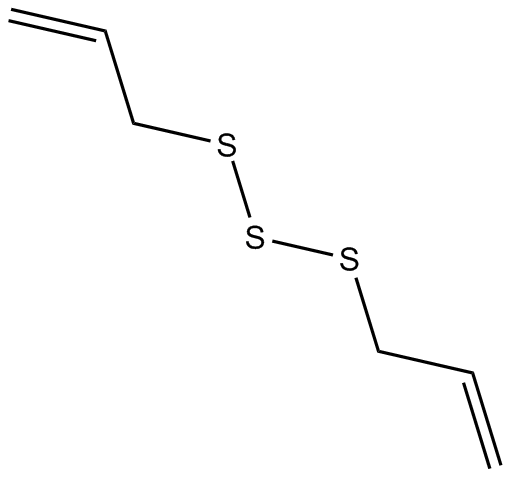
Diallyl Trisulfide (CAS No.: 2050-87-5) is a naturally occurring organosulfur polysulfide derived primarily from garlic oil and is widely utilized as a bioactive small molecule in cancer biology, pharmacology, and cell signaling research. Classified as an H2S-releasing compound, it exerts pleiotropic biological effects through modulation of redox homeostasis, regulation of apoptosis, and control of cell cycle progression, with documented involvement in key signaling pathways such as NF-κB and Nrf2. Diallyl Trisulfide demonstrates antiproliferative activity across multiple cancer cell types, including prostate, colon, and liver models, with inhibitory effects typically observed in the low micromolar range, alongside its ability to induce programmed cell death and suppress tumor growth in in vivo xenograft systems. In addition to its anticancer properties, it exhibits anti-inflammatory, antioxidant, and antimicrobial activities, and has been reported to influence gene expression and enzyme function associated with lipid metabolism. This compound is therefore commonly employed in mechanistic studies of oxidative stress, apoptosis signaling, and inflammation, as well as in drug discovery workflows targeting oncology and metabolic disorders, with experimental concentrations or dosing regimens varying according to specific model systems and research objectives.
| Physical Appearance | Liquid |
| Storage | -20°C |
| M.Wt | 178.34 |
| Cas No. | 2050-87-5 |
| Formula | C6H10S3 |
| Synonyms | DATS; NSC 651936 |
| Solubility | insoluble in H2O; ≥23.9 mg/mL in EtOH; ≥30.1 mg/mL in DMSO |
| Chemical Name | 1,3-diallyltrisulfane |
| Canonical SMILES | C=CCSSSCC=C |
| Shipping Condition | Small Molecules with Blue Ice, Modified Nucleotides with Dry Ice. |
| General tips | We do not recommend long-term storage for the solution, please use it up soon. |