Diallyl Disulfide
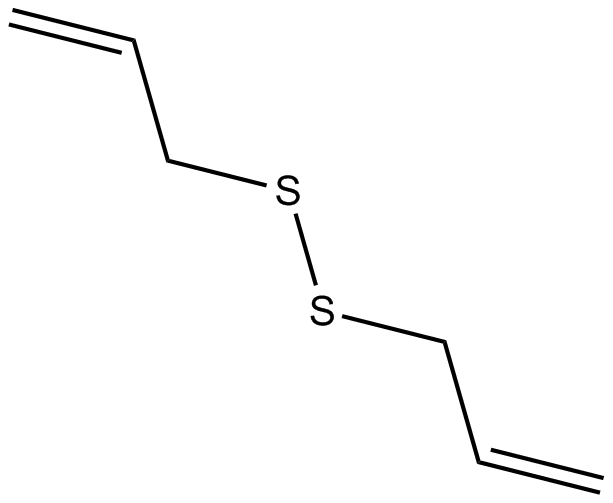
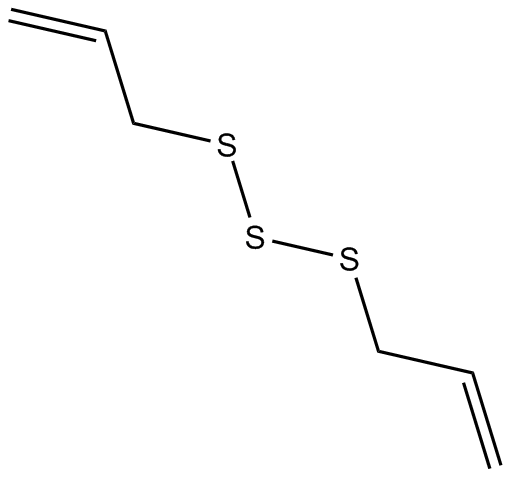
Diallyl Disulfide (CAS No.: 2179-57-9) is a naturally occurring organosulfur compound derived from allicin in garlic and related Allium species, broadly classified within allyl sulfides and widely utilized as a bioactive small molecule in pharmacological and biochemical research. It exhibits pleiotropic regulatory effects on key cellular processes, including modulation of cell cycle progression, apoptosis, and oxidative stress responses, primarily through interaction with signaling pathways such as Nrf2, NF-κB, and MAPK. Mechanistically, Diallyl Disulfide also functions as a thiol-dependent hydrogen sulfide donor, contributing to its cytoprotective, cardioprotective, and neuroprotective properties, and has been identified as an orally active inhibitor of human squalene monooxygenase with inhibitory activity in the micromolar range. In vitro and in vivo studies consistently demonstrate anti-inflammatory, antioxidant, antidepressant, and anti-proliferative effects, supporting its relevance in cancer biology, inflammation research, and redox signaling studies. As a research tool, it is frequently employed to investigate tumor cell growth inhibition, cellular defense mechanisms, and lipid metabolism pathways, with experimental concentrations and dosing regimens varying according to specific model systems and study objectives.
| Physical Appearance | Liquid |
| Storage | -20°C |
| M.Wt | 146.27 |
| Cas No. | 2179-57-9 |
| Formula | C6H10S2 |
| Synonyms | DADS; Garlicin; NSC 29228 |
| Solubility | insoluble in H2O; ≥105.2 mg/mL in DMSO; ≥110.8 mg/mL in EtOH |
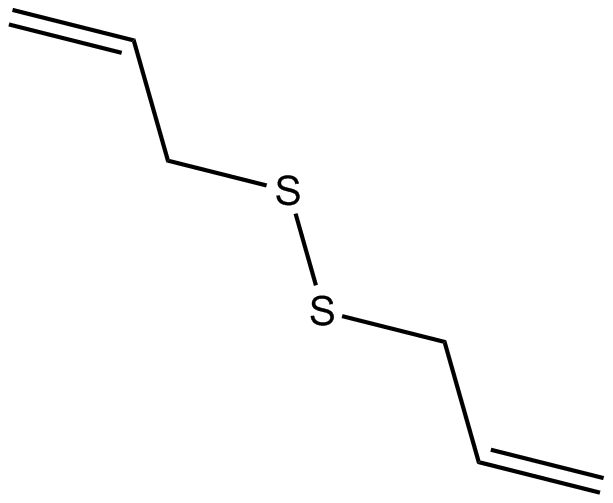
| Chemical Name | 1,2-diallyldisulfane |
| Canonical SMILES | C=CCSSCC=C |
| Shipping Condition | Small Molecules with Blue Ice, Modified Nucleotides with Dry Ice. |
| General tips | We do not recommend long-term storage for the solution, please use it up soon. |
Quality Control & MSDS
- View current batch:
Chemical structure