


DCOIT
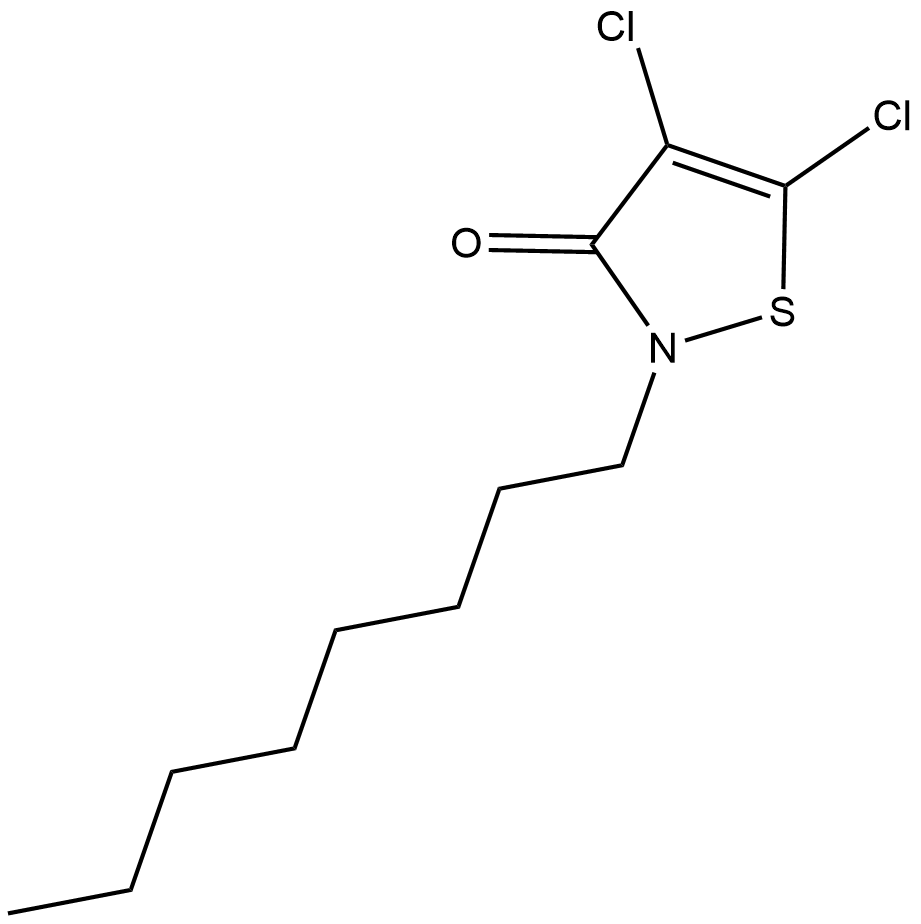
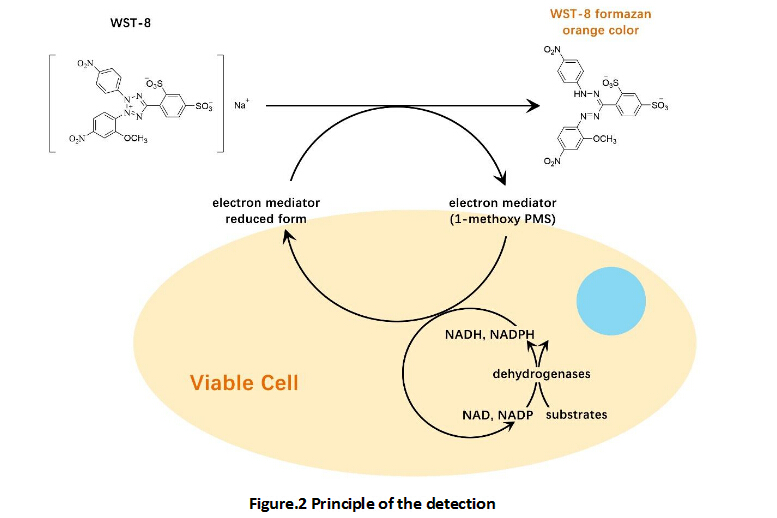
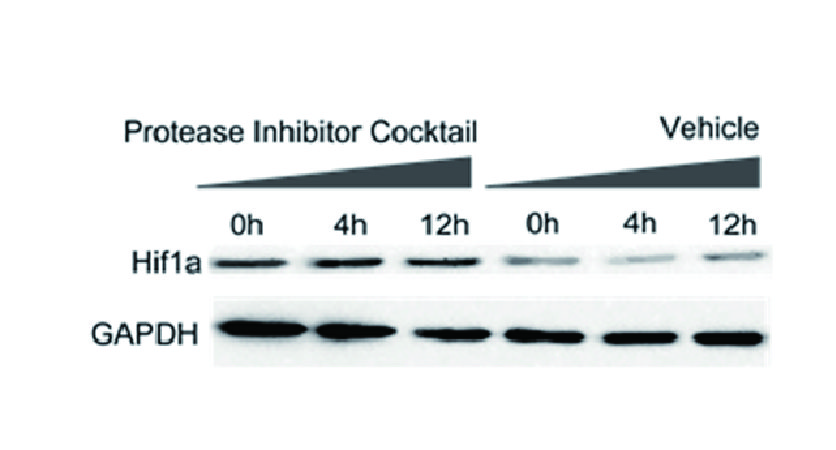
DCOIT (CAS No.: 64359-81-5) is a representative isothiazolinone compound widely utilized as a biochemical tool in neuroendocrine and signal transduction research. It has been shown to stimulate gonadotropin-releasing hormone receptor-mediated pathways, promoting the synthesis of follicle-stimulating hormone and luteinizing hormone in neuronal systems, thereby serving as a useful probe for investigating hypothalamic–pituitary–gonadal axis regulation. In addition to its activity on GnRHR signaling, DCOIT interferes with multiple intracellular pathways, including G protein-coupled receptor signaling, mitogen-activated protein kinase cascades, and calcium-dependent signaling processes, indicating a broader impact on cellular communication networks. Experimental studies typically employ this compound in vitro to dissect receptor-mediated endocrine responses or to evaluate cross-talk between signaling pathways, with activity generally observed in the nanomolar to low micromolar range depending on the assay system. DCOIT is also applied in mechanistic studies using cellular and biochemical models to explore receptor activation, downstream kinase modulation, and calcium flux dynamics, with dosing and exposure conditions varying according to specific experimental designs and research objectives.
| Physical Appearance | A solid |
| Storage | -20°C |
| M.Wt | 282.23 |
| Cas No. | 64359-81-5 |
| Formula | C11H17Cl2NOS |
| Synonyms | Kathon 930 |
| Solubility | ≥48.6 mg/mL in DMSO; ≥52.5 mg/mL in EtOH; insoluble in H2O |
| Chemical Name | 4,5-dichloro-2-octylisothiazol-3(2H)-one |
| Canonical SMILES | CCCCCCCCN1SC(Cl)=C(Cl)C1=O |
| Shipping Condition | Small Molecules with Blue Ice, Modified Nucleotides with Dry Ice. |
| General tips | We do not recommend long-term storage for the solution, please use it up soon. |