


D-Pyroglutamic acid
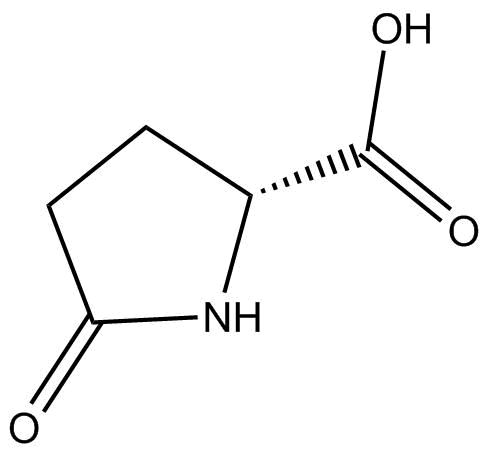
D-Pyroglutamic acid (CAS No.: 4042-36-8) is an endogenous metabolite and cyclic derivative of D-glutamate, generated through enzymatic cyclization and involved in amino acid metabolism and related biochemical pathways. As a biologically active small molecule, it has been shown to modulate enzyme activity and influence cellular processes through the regulation of specific signaling pathways, making it of interest in studies of metabolic regulation and cellular homeostasis. Altered levels of D-pyroglutamic acid have been observed in pathological conditions such as metabolic syndrome and end-stage renal disease, supporting its utility as a metabolic biomarker and a probe for disease-associated biochemical changes. In vitro investigations indicate that it can affect enzyme function at low micromolar to millimolar concentrations, although precise activity profiles depend on the experimental system and target context. Consequently, D-pyroglutamic acid is widely applied in cell-based assays and disease models to elucidate metabolic mechanisms, assess pathway modulation, and explore its potential relevance in therapeutic research, with experimental concentrations tailored to specific study designs.
| Physical Appearance | A solid |
| Storage | -20°C |
| M.Wt | 129.11 |
| Cas No. | 4042-36-8 |
| Formula | C5H7NO3 |
| Synonyms | (R)-5-Oxoproline; (+)-Pyroglutamic Acid |
| Solubility | ≥11.57 mg/mL in EtOH; ≥23.25 mg/mL in H2O; ≥52 mg/mL in DMSO |
| Chemical Name | (R)-5-oxopyrrolidine-2-carboxylic acid |
| Canonical SMILES | O=C1CC[C@H](C(O)=O)N1 |
| Shipping Condition | Small Molecules with Blue Ice, Modified Nucleotides with Dry Ice. |
| General tips | We do not recommend long-term storage for the solution, please use it up soon. |