


D(+)-Pipecolinic acid
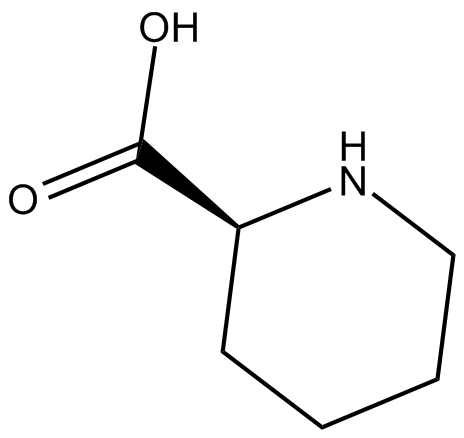
D(+)-Pipecolinic acid (CAS No.: 1723-00-8) is a naturally occurring D-enantiomer of a cyclic amino acid that functions as an intermediate in lysine metabolism and is detected in mammalian biological fluids, where it contributes to metabolic processes linked to the central nervous system. As a piperidine-containing carboxylic acid derivative, it is implicated in neurotransmitter-related pathways and has been reported to modulate receptor activity and influence neuronal signaling, making it a relevant molecule for investigating neurochemical regulation and metabolic network dynamics. In biochemical and metabolomics research, D(+)-pipecolinic acid is frequently employed as an endogenous metabolite marker to study lysine degradation pathways and their association with physiological and pathological states, while its defined stereochemistry also supports its use as a chiral building block in synthetic and medicinal chemistry aimed at improving molecular rigidity and stability. Although specific quantitative activity parameters are not consistently defined, its biological effects are generally examined across low micromolar to millimolar concentration ranges depending on the experimental system. This compound is commonly utilized in cell-based assays, enzyme studies, and metabolomic profiling, as well as in exploratory in vivo models to elucidate metabolic flux and signaling interactions, with experimental conditions tailored to the objectives of each study.
| Physical Appearance | Solid |
| Storage | -20°C |
| M.Wt | 129.16 |
| Cas No. | 1723-00-8 |
| Formula | C6H11NO2 |
| Solubility | insoluble in DMSO; insoluble in EtOH; ≥41.2 mg/mL in H2O |
| Chemical Name | (S)-piperidine-2-carboxylic acid |
| Canonical SMILES | O=C(O)[C@@H]1CCCCN1 |
| Shipping Condition | Small Molecules with Blue Ice, Modified Nucleotides with Dry Ice. |
| General tips | We do not recommend long-term storage for the solution, please use it up soon. |