


D(+)-Malic acid
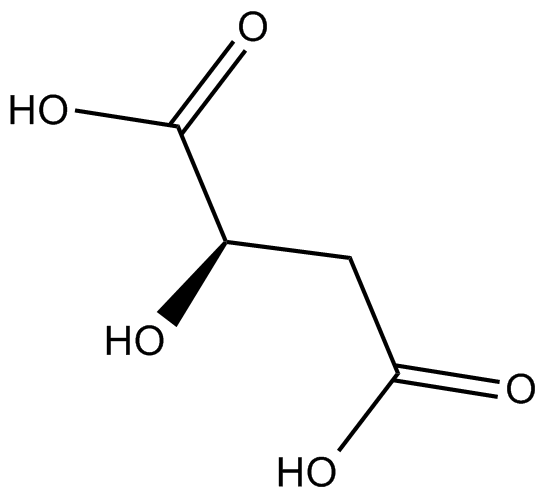
D(+)-Malic acid (CAS No.: 636-61-3) is a naturally occurring beta hydroxy dicarboxylic acid and the D-enantiomer of malic acid, a metabolite ubiquitously produced in living organisms and an intermediate of the citric acid cycle. As a stereochemically defined organic acid, it is widely utilized in biochemical and metabolic research to investigate stereospecific transport processes and enzyme selectivity, particularly in studies of mitochondrial function and cellular respiration. D(+)-Malic acid has been reported to act as a competitive inhibitor of L-malate transport systems, making it a useful tool for probing carrier-mediated transport mechanisms and metabolic flux. Its role in central carbon metabolism links it to pathways involved in energy production, redox balance, and biosynthetic precursor generation. In vitro studies typically employ concentrations ranging from low micromolar to millimolar levels depending on the experimental context, such as enzyme kinetics, transport assays, or cell-based metabolic profiling. This compound is frequently applied in cell culture and biochemical assays to dissect metabolic pathway regulation, validate transporter specificity, and support compound screening efforts targeting metabolic enzymes or pathways, with experimental conditions tailored to specific model systems and research objectives.
| Physical Appearance | Solid |
| Storage | -20°C |
| M.Wt | 134.09 |
| Cas No. | 636-61-3 |
| Formula | C4H6O5 |
| Solubility | ≥41.1 mg/mL in DMSO; ≥46.1 mg/mL in H2O; ≥49.4 mg/mL in EtOH |
| Chemical Name | (R)-2-hydroxysuccinic acid |
| Canonical SMILES | OC([C@H](O)CC(O)=O)=O |
| Shipping Condition | Small Molecules with Blue Ice, Modified Nucleotides with Dry Ice. |
| General tips | We do not recommend long-term storage for the solution, please use it up soon. |