


D-Glutamine
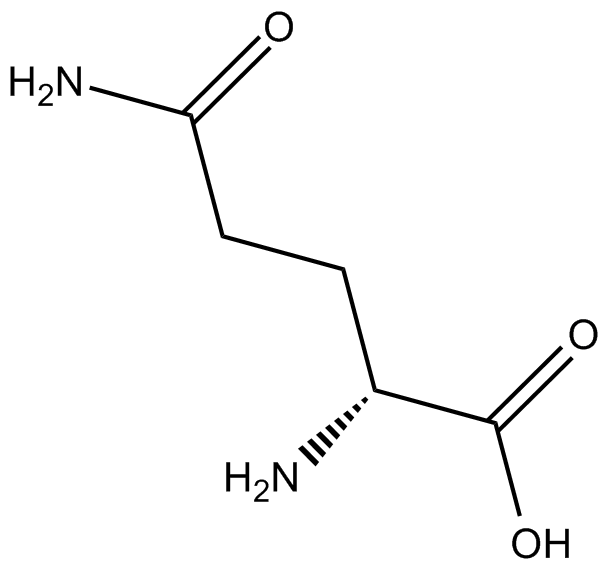
D-Glutamine (CAS No.: 5959-95-5) is a cell-permeable D-enantiomer of the conditionally essential amino acid glutamine, classified within the amino acid metabolite family and widely utilized in biochemical and biomedical research as a stereochemical probe of glutamine-dependent processes. Endogenously related to the abundant nitrogen carrier L-glutamine, which is synthesized from glutamic acid and ammonia and plays central roles in nitrogen transport, energy metabolism, and biosynthetic pathways, D-glutamine serves as a valuable tool for investigating stereospecific transport systems, enzymatic selectivity, and metabolic flux in cellular models. Although it is not a primary substrate in canonical mammalian glutamine metabolism, it can interact with amino acid transporters and influence pathways associated with nitrogen balance, redox homeostasis, and cellular energetics, including processes linked to glutaminolysis and anaplerosis. Alterations in D-glutamine levels have been observed in disease-related contexts, such as reduced serum concentrations in experimental models of acute pancreatitis and in patients with hepatocellular carcinoma, supporting its relevance as a metabolic indicator in pathophysiological studies. In vitro, D-glutamine is typically applied in the micromolar to millimolar concentration range to assess transporter specificity, metabolic enzyme discrimination, and nutrient utilization in cultured cells, while in vivo applications are tailored to experimental design. Its use extends to drug discovery and metabolic research, where it aids in dissecting glutamine-dependent signaling pathways and evaluating the stereochemical requirements of candidate therapeutics targeting amino acid metabolism.
| Physical Appearance | A solid |
| Storage | -20°C |
| M.Wt | 146.14 |
| Cas No. | 5959-95-5 |
| Formula | C5H10N2O3 |
| Synonyms | D-Gln |
| Solubility | insoluble in EtOH; insoluble in DMSO; ≥18.27 mg/mL in H2O |
| Chemical Name | (R)-2,5-diamino-5-oxopentanoic acid |
| Canonical SMILES | NC(CC[C@@H](N)C(O)=O)=O |
| Shipping Condition | Small Molecules with Blue Ice, Modified Nucleotides with Dry Ice. |
| General tips | We do not recommend long-term storage for the solution, please use it up soon. |