


D-Glucurone
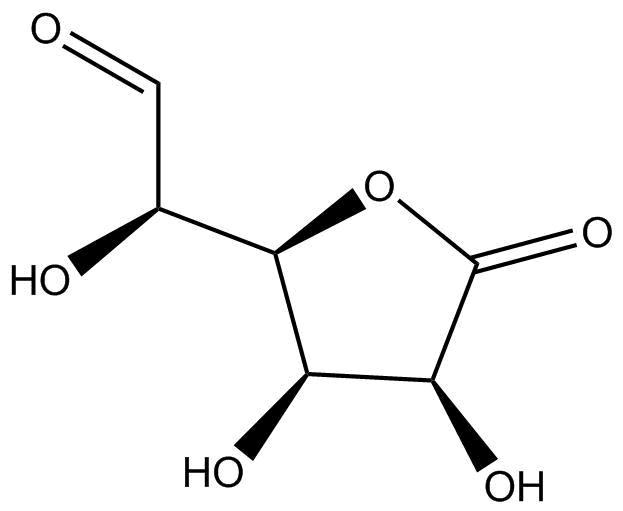
D-Glucurone (CAS No.: 32449-92-6) is an endogenous metabolite and a lactone derivative of glucuronic acid that functions as an intermediate in the glucuronic acid pathway, contributing to carbohydrate metabolism and serving as a precursor in the biosynthesis of L-ascorbic acid via gulonolactone intermediates. As a key biochemical intermediate, it is widely utilized in glycosylation-related synthetic chemistry as a starting reagent for the preparation of structurally diverse glucuronic acid derivatives, including glucuronides, long-chain alkyl glucuronides, and optically active compounds relevant to drug development and prodrug design. Mechanistically, D-glucurone participates in detoxification and conjugation pathways associated with glucuronidation processes, which are critical for xenobiotic metabolism and cellular redox balance. Experimental studies indicate that it exhibits cytoprotective and antioxidant-associated effects, mitigating toxin-induced cellular damage by preserving enzymatic activities such as superoxide dismutase and maintaining glutathione levels, while reducing markers of oxidative stress and hepatocellular injury. In neuronal and in vivo model systems, D-glucurone has demonstrated the ability to modulate neurotoxicity-related endpoints, including restoration of neuronal excitability, suggesting relevance to neurovascular and neurodegenerative research, with emerging interest in reversible cerebral vasoconstriction syndrome models. Although specific molecular targets and potency metrics are not well defined, its biological effects are generally observed in low micromolar to milligram-per-liter experimental ranges depending on the system. D-Glucurone is therefore broadly applied in metabolic studies, toxicology assays, and synthetic medicinal chemistry, with experimental concentrations or dosing regimens tailored to specific cellular or animal model conditions.
| Physical Appearance | A solid |
| Storage | -20°C |
| M.Wt | 176.12 |
| Cas No. | 32449-92-6 |
| Formula | C6H8O6 |
| Synonyms | D-Glucuronolactone; NSC 656 |
| Solubility | insoluble in EtOH; ≥49.2 mg/mL in H2O; ≥57.1 mg/mL in DMSO |
| Chemical Name | (R)-2-((2S,3R,4S)-3,4-dihydroxy-5-oxotetrahydrofuran-2-yl)-2-hydroxyacetaldehyde |
| Canonical SMILES | O[C@H]([C@@H]1O)[C@@H]([C@@H](O)C=O)OC1=O |
| Shipping Condition | Small Molecules with Blue Ice, Modified Nucleotides with Dry Ice. |
| General tips | We do not recommend long-term storage for the solution, please use it up soon. |