


D-Cysteine
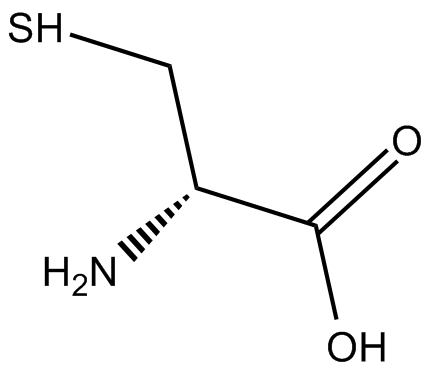
D-Cysteine (CAS No.: 921-01-7) is the D-enantiomer of the naturally occurring thiol-containing amino acid cysteine and is widely utilized as a biochemical tool in microbiology, neurobiology, and redox biology research. As a non-essential amino acid analog, D-cysteine can undergo oxidation to form cystine and participates in thiol-dependent redox processes, while also serving as a substrate for D-amino acid oxidase, leading to the generation of hydrogen sulfide, a signaling molecule implicated in cellular stress responses and neuronal function. Experimental studies have demonstrated that D-cysteine exhibits inhibitory activity against a range of bacterial species, including Escherichia coli, Streptococcus mutans, and Streptococcus sanguinis, and can disrupt the formation and cariogenic potential of multispecies biofilms, with activity typically observed in the low micromolar to millimolar concentration range depending on the system. In neural research contexts, D-cysteine has been shown to modulate neural progenitor cell proliferation and is frequently employed to investigate mechanisms of oxidative stress regulation and gasotransmitter-mediated signaling pathways. In vitro and in vivo experimental applications commonly explore its role in microbial growth inhibition, redox homeostasis, and neurochemical modulation, with dosing or concentration parameters adjusted according to specific experimental objectives and model systems.
| Physical Appearance | Solid |
| Storage | -20°C |
| M.Wt | 121.16 |
| Cas No. | 921-01-7 |
| Formula | C3H7NO2S |
| Solubility | insoluble in EtOH; insoluble in DMSO; ≥10.8 mg/mL in H2O with ultrasonic |
| Chemical Name | (S)-2-amino-3-mercaptopropanoic acid |
| Canonical SMILES | SC[C@@H](N)C(O)=O |
| Shipping Condition | Small Molecules with Blue Ice, Modified Nucleotides with Dry Ice. |
| General tips | We do not recommend long-term storage for the solution, please use it up soon. |