


D-Aspartic acid
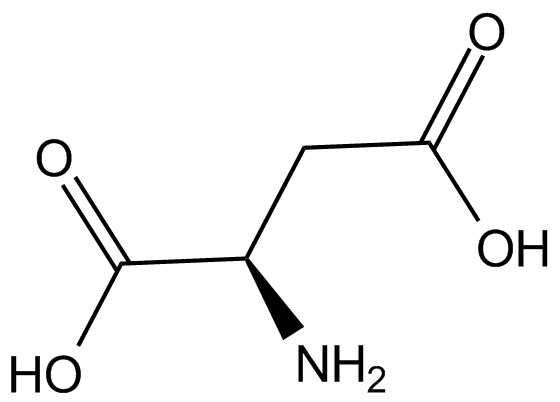
D-Aspartic acid (CAS No.: 1783-96-6) is an endogenous amino acid that functions as a bioactive neuromodulator and neurotransmitter, playing a critical role in synaptic transmission and neuroendocrine regulation. It is generated from L-aspartic acid via aspartate racemase and is metabolized by D-aspartate oxidase, with additional contributions from dietary protein turnover and intestinal microbiota. Mechanistically, D-aspartic acid interacts with ionotropic NMDA receptors by binding to the L-glutamate recognition site, thereby modulating excitatory neurotransmission, enhancing cyclic AMP production, and facilitating synaptic plasticity, including increased field excitatory postsynaptic potentials in neuronal tissues. In parallel, it has been identified as an inhibitor of pyroptosis, implicating it in the regulation of inflammatory cell death pathways. D-Aspartic acid also exerts significant effects on the endocrine system by promoting the synthesis and release of hormones such as luteinizing hormone, growth hormone, testosterone, and progesterone, highlighting its involvement in hypothalamic–pituitary–gonadal axis function. In vitro and in vivo studies typically employ concentrations ranging from low micromolar to millimolar levels depending on the experimental context, with applications spanning neuronal cell models, synaptosomal preparations, and animal studies investigating neurodevelopment, synaptic signaling, hormone regulation, and pyroptosis-associated disease mechanisms. As such, D-aspartic acid serves as a valuable tool compound in neuroscience, endocrinology, and inflammation-related drug discovery research.
| Physical Appearance | A solid |
| Storage | -20°C |
| M.Wt | 133.1 |
| Cas No. | 1783-96-6 |
| Formula | C4H7NO4 |
| Synonyms | NSC 97922 |
| Solubility | ≥3.16 mg/mL in H2O with gentle warming; insoluble in DMSO; insoluble in EtOH |
| Chemical Name | (R)-2-aminosuccinic acid |
| Canonical SMILES | OC(C[C@@H](N)C(O)=O)=O |
| Shipping Condition | Small Molecules with Blue Ice, Modified Nucleotides with Dry Ice. |
| General tips | We do not recommend long-term storage for the solution, please use it up soon. |