


D(-)-Arginine
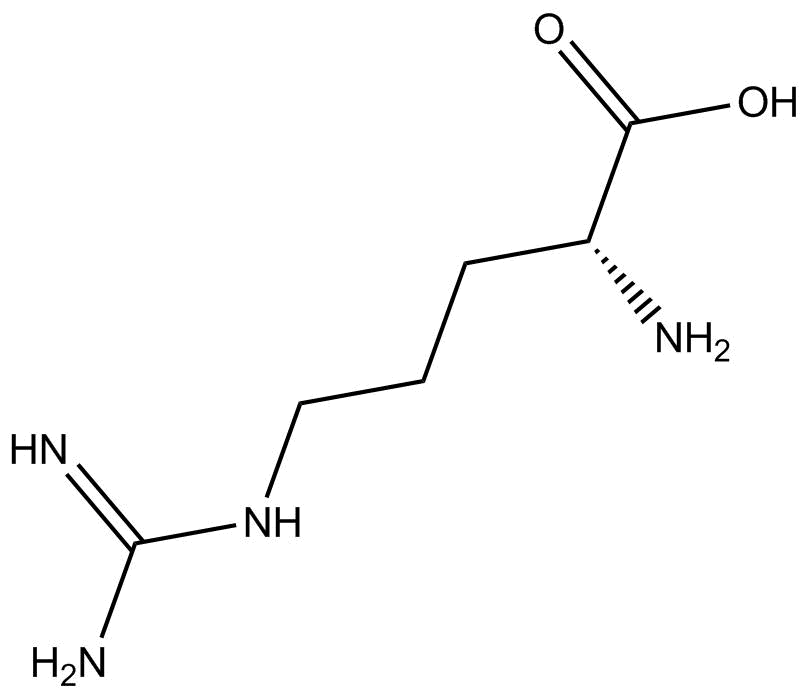
D(-)-Arginine (CAS No.: 157-06-2) is the D-enantiomer of the α-amino acid arginine, a conditionally essential amino acid involved in protein biosynthesis, and serves as a biologically inactive counterpart to the naturally occurring L-isomer. Unlike L-arginine, which functions as a substrate for nitric oxide synthase and participates in nitric oxide signaling pathways, D(-)-arginine does not support nitric oxide production and is therefore widely employed as a negative control in studies investigating nitric oxide-mediated vascular, neuronal, and immunological processes. Detected in mammalian tissues such as mouse brain, this stereoisomer has been utilized to dissect stereospecific mechanisms of amino acid transport and metabolism, as well as to evaluate the functional relevance of L-arginine-dependent pathways. In pharmacological and preclinical research, D(-)-arginine has demonstrated the ability to modulate biological responses indirectly, including inhibition of L-arginine-induced antinociceptive effects in inflammatory pain models, highlighting its utility in neurobiology and pain research. Although it lacks intrinsic enzymatic activity in canonical arginine-dependent pathways, it remains a valuable tool compound in oncology and neurological disease studies, including myeloma-related investigations, where it aids in distinguishing stereospecific biological effects. Experimental applications typically involve in vitro and in vivo models with concentrations or dosing regimens tailored to the specific study design, often spanning from micromolar ranges in cell-based assays to higher doses in animal models for mechanistic evaluation.
| Physical Appearance | A solid |
| Storage | -20°C |
| M.Wt | 174.2 |
| Cas No. | 157-06-2 |
| Formula | C6H14N4O2 |
| Synonyms | (R)-Arginine |
| Solubility | insoluble in EtOH; insoluble in DMSO; ≥28.4 mg/mL in H2O |
| Chemical Name | D-arginine |
| Canonical SMILES | NC(NCCC[C@@H](N)C(O)=O)=N |
| Shipping Condition | Small Molecules with Blue Ice, Modified Nucleotides with Dry Ice. |
| General tips | We do not recommend long-term storage for the solution, please use it up soon. |