


D-Alanine
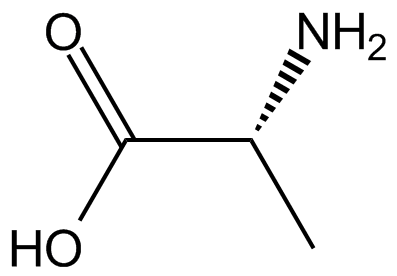
D-Alanine (CAS No.: 338-69-2) is a stereoisomer of the amino acid alanine and represents a nonessential amino acid derivative that serves as a useful tool compound in neuropharmacological research. It functions as a weak agonist of inhibitory glycine receptors (GlyR) and PMBA-sensitive sites, exhibiting receptor activation with half-maximal effective concentrations in the millimolar range, indicative of relatively low potency. Through its interaction with GlyR, D-alanine can modulate chloride ion channel activity and inhibitory neurotransmission, making it relevant for investigating ligand–receptor interactions, synaptic signaling mechanisms, and the functional characterization of glycinergic pathways. This compound is commonly employed in in vitro assays to probe receptor pharmacodynamics, as well as in cellular and biochemical models aimed at elucidating inhibitory neurotransmitter system function and screening for modulators of GlyR-mediated signaling. Experimental concentrations are typically selected based on assay sensitivity and specific study objectives, particularly in studies focused on receptor activation profiles and comparative ligand efficacy.
| Physical Appearance | Solid |
| Storage | -20°C |
| M.Wt | 89.09 |
| Cas No. | 338-69-2 |
| Formula | C3H7NO2 |
| Solubility | insoluble in DMSO; insoluble in EtOH; ≥16.75 mg/mL in H2O |
| Chemical Name | (R)-2-aminopropanoic acid |
| Canonical SMILES | OC([C@H](N)C)=O |
| Shipping Condition | Small Molecules with Blue Ice, Modified Nucleotides with Dry Ice. |
| General tips | We do not recommend long-term storage for the solution, please use it up soon. |