Cyclopentolate Hydrochloride
Cyclopentolate Hydrochloride (CAS No.: 5870-29-1) is a synthetic small molecule classified as an atropine like antimuscarinic agent and is broadly used as a pharmacological tool compound in cholinergic signaling research relevant to biomedical discovery workflows, where it functions as a competitive antagonist of muscarinic acetylcholine receptors with reported high affinity for M1 and M3 subtypes and comparatively lower affinity for M2 receptors, and with antagonist potency characterized from nanomolar binding activity to functional effects that are commonly profiled across nanomolar to micromolar concentration ranges depending on receptor system, cell context, and assay format; mechanistically, blockade of G protein coupled muscarinic receptor signaling reduces downstream cholinergic responses, including pathways linked to Gq phospholipase C inositol phosphate calcium mobilization and Gi or Go associated modulation of cyclic nucleotide signaling, thereby enabling controlled interrogation of receptor subtype pharmacology, pathway bias, and network level cholinergic regulation in receptor engineered cell lines, primary cell preparations, and translational animal pharmacology models, while in drug discovery programs it is frequently employed as a reference antagonist for assay validation, selectivity benchmarking, counter screening against off target cholinergic liabilities, and mechanistic deconvolution of muscarinic contributions to observed phenotypes; experimental concentrations or doses are selected according to model specific sensitivity, exposure paradigm, and research objective, and all use is restricted to laboratory research contexts rather than any form of human use or other non research applications.
| Storage | -20°C for 3 years |
| M.Wt | 327.85 |
| Cas No. | 5870-29-1 |
| Formula | C17H26ClNO3 |
| Synonyms | DL-Cyclopentolate hydrochloride |
| Solubility | ≥32.2 mg/mL in DMSO; ≥31.6 mg/mL in EtOH; ≥32.9 mg/mL in H2O |
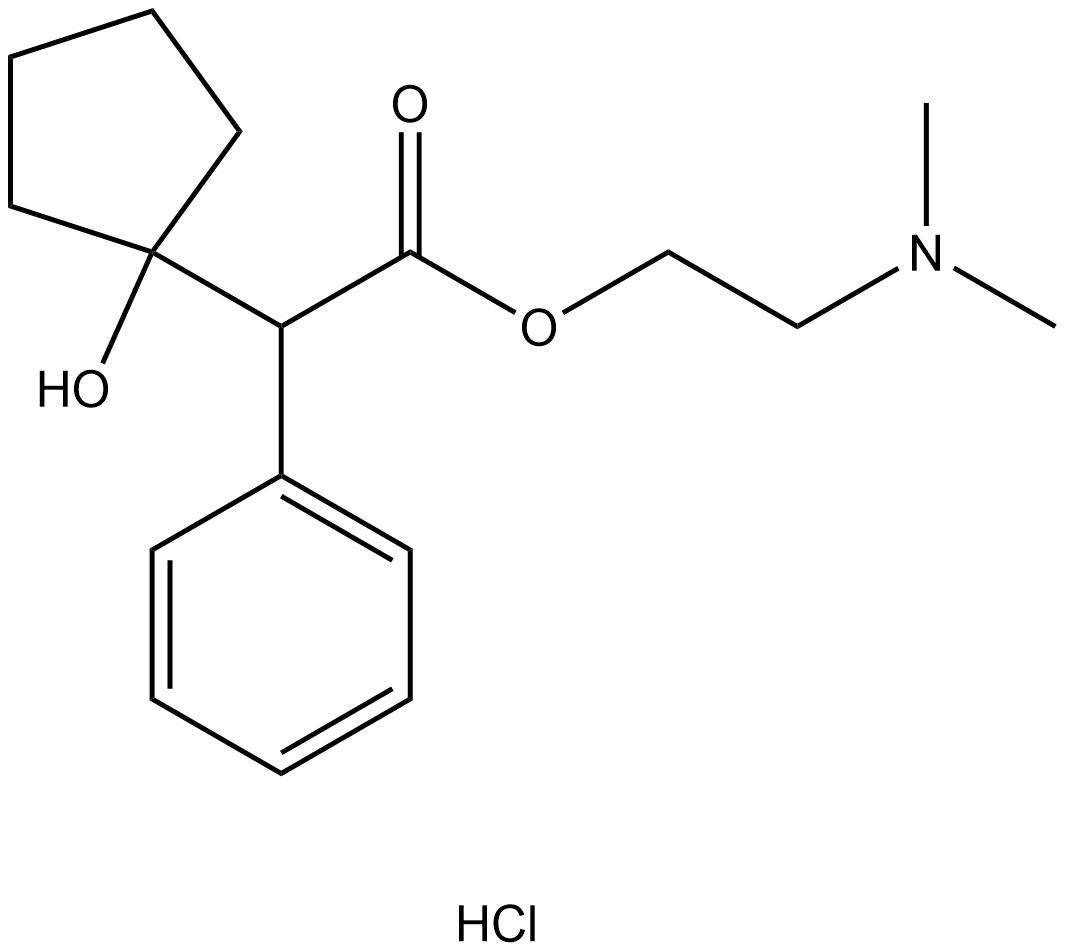
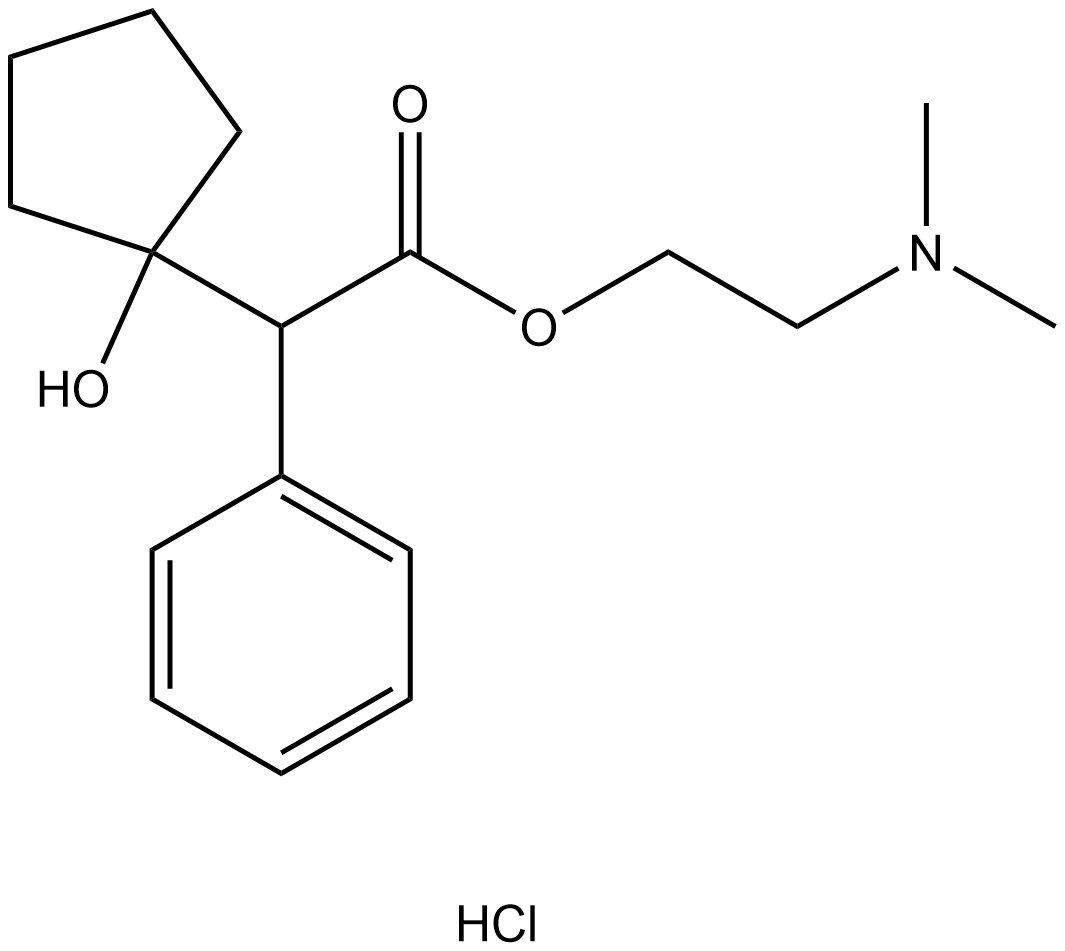
| Chemical Name | 2-(dimethylamino)ethyl 2-(1-hydroxycyclopentyl)-2-phenylacetate hydrochloride |
| Canonical SMILES | Cl.O=C(OCCN(C)C)C(C=1C=CC=CC1)C2(O)CCCC2 |
| Shipping Condition | Small Molecules with Blue Ice, Modified Nucleotides with Dry Ice. |
| General tips | We do not recommend long-term storage for the solution, please use it up soon. |
Quality Control & MSDS
- View current batch:
Chemical structure