


Cyclohexanecarboxylic acid
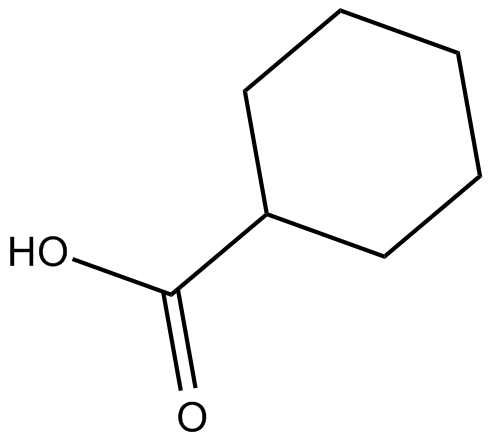
Cyclohexanecarboxylic acid (CAS No.: 98-89-5) is a small-molecule alicyclic carboxylic acid recognized as a structural analogue of valproate and a biologically relevant intermediate in mammalian aromatic compound biosynthesis, particularly within pathways associated with the transformation of shikimic acid during aromatization processes. This compound is utilized in biochemical and neuropharmacological research as a tool to investigate metabolic flux through aromatic pathways and to explore mechanisms underlying neuronal excitability. Experimental evidence indicates that cyclohexanecarboxylic acid exhibits anticonvulsant-like activity in preclinical models, potentially mediated through modulation of neurotransmitter systems or ion channel dynamics within the central nervous system, although its precise molecular targets remain incompletely defined. In vitro studies with related analogues suggest activity within the low micromolar to millimolar range depending on assay conditions and biological context. It is commonly applied in cell-based assays and animal models to probe neurochemical signaling, metabolic pathway regulation, and structure–activity relationships of valproate-like compounds, with experimental concentrations or dosing regimens determined by specific study designs and research objectives.
| Physical Appearance | <29°CSolid,>31°CLiquid |
| Storage | -20°C |
| M.Wt | 128.17 |
| Cas No. | 98-89-5 |
| Formula | C7H12O2 |
| Solubility | insoluble in H2O; ≥48.3 mg/mL in DMSO; ≥52.9 mg/mL in EtOH |
| Chemical Name | cyclohexanecarboxylic acid |
| Canonical SMILES | O=C(O)C1CCCCC1 |
| Shipping Condition | Small Molecules with Blue Ice, Modified Nucleotides with Dry Ice. |
| General tips | We do not recommend long-term storage for the solution, please use it up soon. |