


Cuminaldehyde
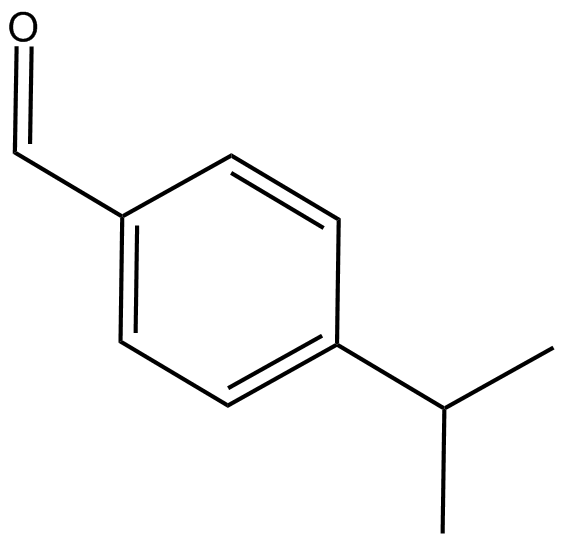
Cuminaldehyde (CAS No.: 122-03-2) is a naturally occurring aromatic aldehyde predominantly isolated from Cuminum cyminum and widely utilized as a bioactive small molecule in pharmacological and biochemical research. It has been characterized as a multi-target modulator with inhibitory activity against key metabolic and inflammatory enzymes, including aldose reductase, α-glucosidase, and lipoxygenase, exhibiting inhibitory potency spanning from sub-milligram per milliliter to micromolar ranges depending on the target. Mechanistic studies indicate that cuminaldehyde can regulate oxidative stress and inflammatory signaling pathways, and it has also been shown to interfere with α-synuclein fibrillation and aggregation, highlighting its relevance in protein misfolding and neurodegeneration-related research models. In vitro and in vivo experimental systems further demonstrate its capacity to modulate cellular proliferation, apoptosis, microbial growth, and enzyme-mediated metabolic processes, making it a useful tool compound for investigating pathways associated with cancer biology, metabolic dysfunction, neurodegenerative processes, and neuropathic signaling. The concentrations or doses applied in experimental settings vary according to specific assay conditions and model systems, and its broad spectrum of biochemical activities supports its application in target validation, mechanism-of-action studies, and early-stage drug discovery efforts.
| Physical Appearance | Liquid |
| Storage | -20°C |
| M.Wt | 148.2 |
| Cas No. | 122-03-2 |
| Formula | C10H12O |
| Solubility | ≥17.3 mg/mL in H2O; ≥41.6 mg/mL in DMSO; ≥47.3 mg/mL in EtOH |
| Chemical Name | 4-isopropylbenzaldehyde |
| Canonical SMILES | CC(C)C1=CC=C(C=O)C=C1 |
| Shipping Condition | Small Molecules with Blue Ice, Modified Nucleotides with Dry Ice. |
| General tips | We do not recommend long-term storage for the solution, please use it up soon. |