


Creatine
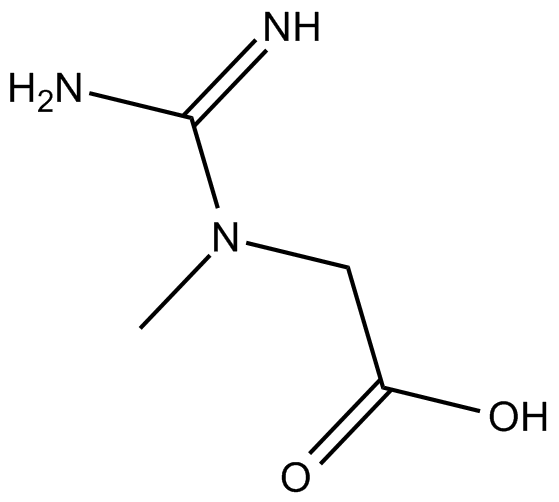





Creatine (CAS No.: 57-00-1) is an endogenous amino acid derivative ubiquitously present in vertebrate tissues and biological fluids, where it functions as a central component of cellular energy homeostasis. Predominantly localized in skeletal muscle, with additional distribution in brain, heart, and other metabolically active tissues, creatine exists largely in its phosphorylated form, phosphocreatine, serving as a rapidly mobilizable high-energy phosphate reservoir. Through the reversible creatine kinase–mediated transfer of phosphate groups between ATP and creatine, this system constitutes a key intracellular energy shuttle that buffers ATP levels during periods of fluctuating energy demand. Biosynthetically derived from arginine, glycine, and methionine, creatine is subsequently metabolized to creatinine and excreted via urine. In biochemical and pharmacological research, creatine is widely employed as a model metabolite for investigating cellular bioenergetics, mitochondrial function, and metabolic regulation, as well as for studying kinase-driven phosphotransfer networks and energy-dependent signaling pathways. Experimental studies in cell-based and animal models typically utilize concentration ranges spanning micromolar to millimolar levels, depending on the specific assay design and metabolic context. Its well-characterized role in energy buffering and metabolic flux makes creatine a valuable tool in drug discovery workflows focused on metabolic modulation, enzyme kinetics, and systems-level analyses of cellular energy dynamics.
| Physical Appearance | Solid |
| Storage | -20°C |
| M.Wt | 131.14 |
| Cas No. | 57-00-1 |
| Formula | C4H9N3O2 |
| Solubility | ≥26mg/mL in H2O |
| Chemical Name | N-carbamimidoyl-N-methylglycine |
| Canonical SMILES | O=C(CN(C(N)=N)C)O |
| Shipping Condition | Small Molecules with Blue Ice, Modified Nucleotides with Dry Ice. |
| General tips | We do not recommend long-term storage for the solution, please use it up soon. |