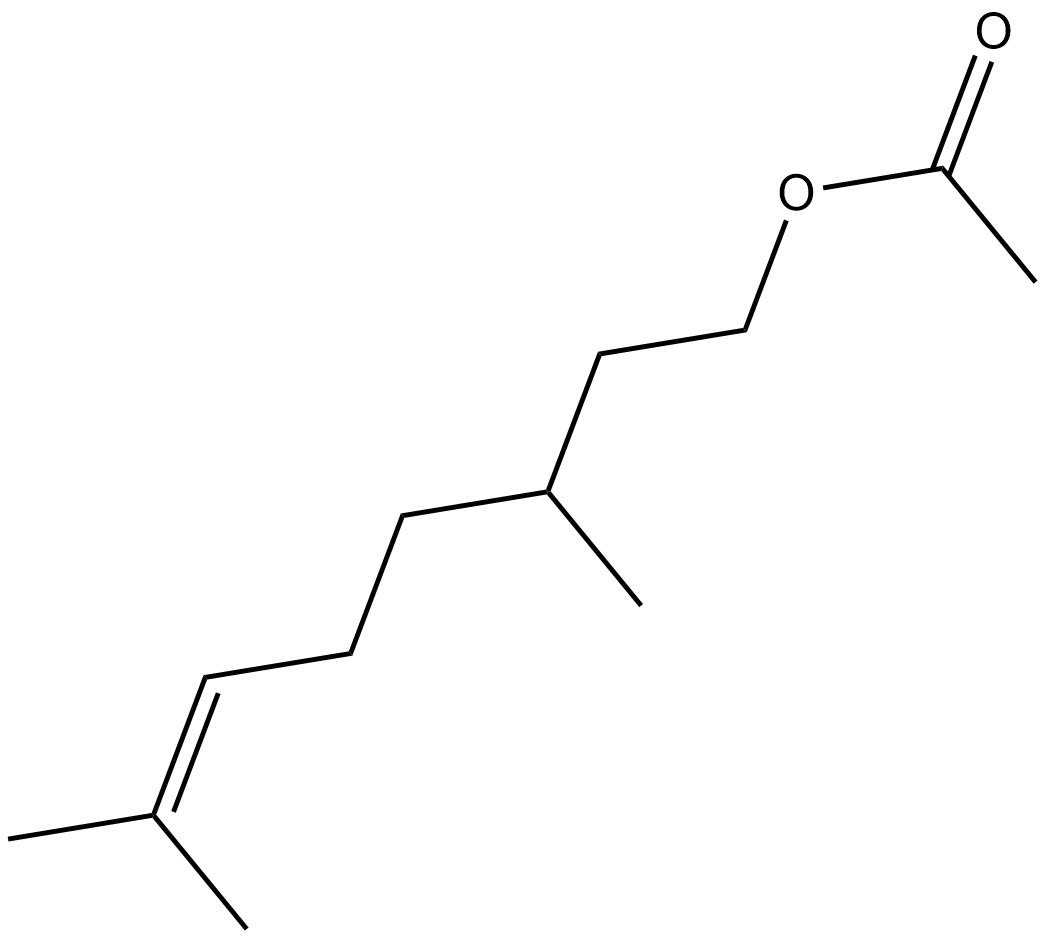
Citronellyl acetate
Citronellyl acetate (CAS No.: 150-84-5) is a naturally occurring monoterpene ester classified as a plant derived secondary metabolite and fragrance related natural product, and in biomedical research it is primarily positioned as a small molecule probe for sensory neurobiology and nociception associated signaling rather than for any clinical or consumption purpose; available preclinical literature indicates that its pharmacological profile is linked to modulation of ion channel and receptor systems involved in stimulus transduction, including TRPV1, TRPM8, acid sensing ion channels, glutamatergic signaling components, and downstream protein kinase pathways such as PKC and PKA, thereby supporting mechanistic investigation of peripheral and central pain transmission networks and broader chemosensory response biology in experimental settings; although publicly summarized datasets do not consistently report standardized quantitative potency endpoints across assays, activity is generally described in screening relevant concentration windows that are commonly explored from micromolar to, where assay sensitivity permits, lower concentration ranges, with exact exposure parameters varying by readout platform, cell type, and protocol; accordingly, this compound is typically applied in in vitro receptor or ion channel functional assays, neuronal or heterologous cell based pathway interrogation, and in vivo rodent models of acute nociceptive signaling for target validation, pathway mapping, and hit to mechanism follow up, where the concentrations or doses used in experiments typically depend on specific experimental designs and research objectives.
| Storage | -20°C for 2 years |
| M.Wt | 198.30 |
| Cas No. | 150-84-5 |
| Formula | C12H22O2 |
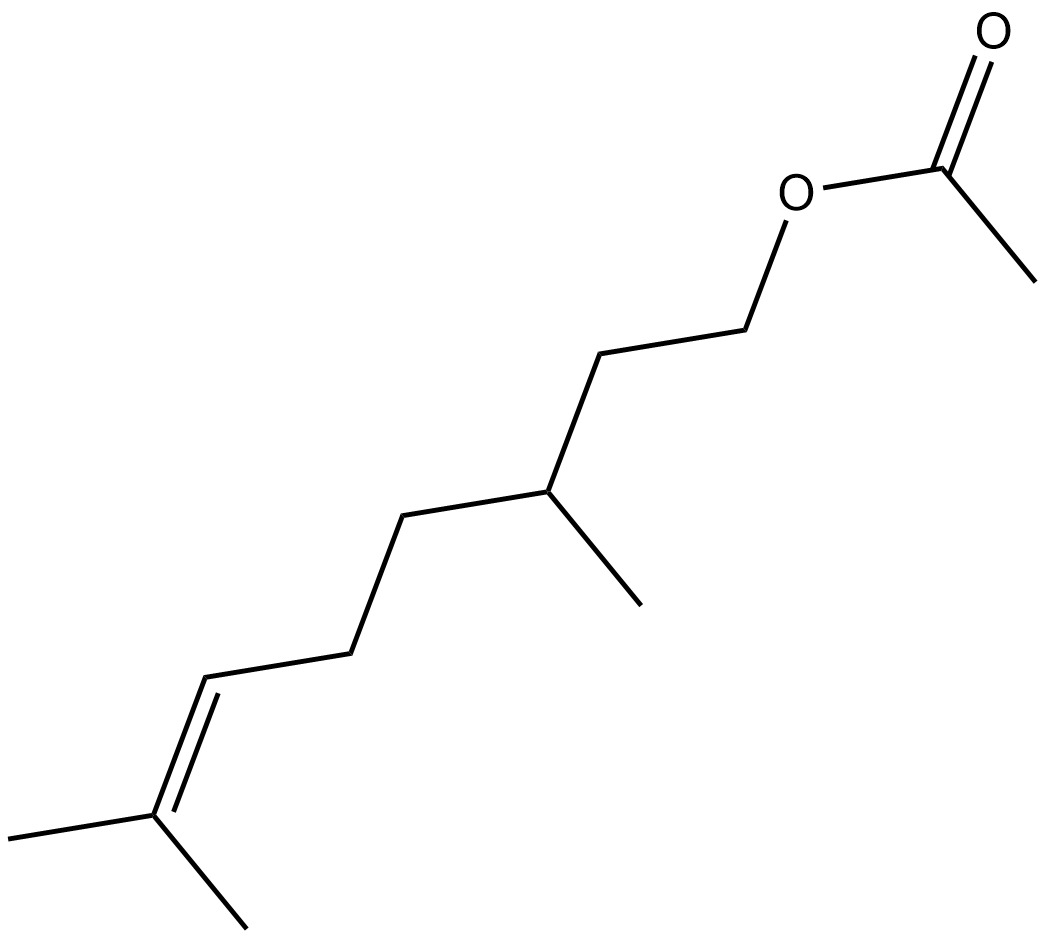
| Chemical Name | 3,7-dimethyloct-6-en-1-yl acetate |
| Canonical SMILES | O=C(OCCC(C)CCC=C(C)C)C |
| Shipping Condition | Small Molecules with Blue Ice, Modified Nucleotides with Dry Ice. |
| General tips | We do not recommend long-term storage for the solution, please use it up soon. |
Quality Control & MSDS
- View current batch:
Chemical structure