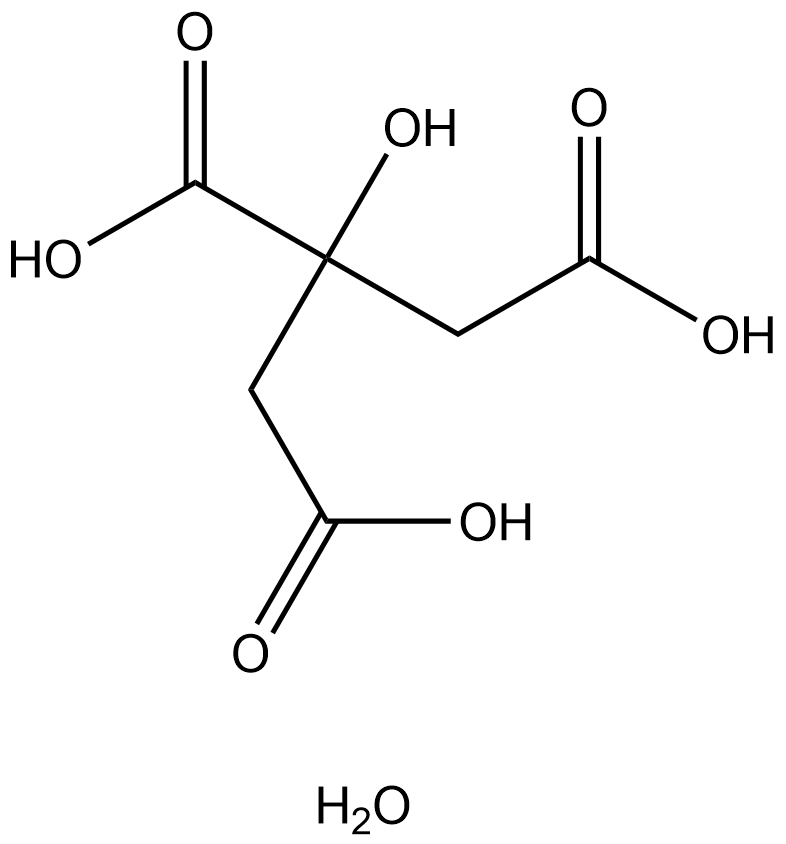
Citric acid hydrate
Citric acid hydrate (CAS No.: 5949-29-1) is an endogenous low molecular weight organic acid intermediate of central carbon metabolism and is broadly classified as a biochemical reagent and pH modulating excipient for life sciences research, with primary relevance to cell stress biology, redox homeostasis, and formulation focused drug discovery workflows; in experimental systems it is commonly used to control medium acidity, ionic microenvironment, and metal ion availability through chelation based buffering behavior, while mechanistic reports indicate that at sufficiently elevated exposure it can promote apoptosis and cell cycle arrest in S and G2 M phases in keratinocyte models and can exacerbate oxidative injury phenotypes through reduction of antioxidative enzyme activities, with additional preclinical evidence of hepatorenal toxicological responses in animal studies under context dependent dosing paradigms; consistent with these observations, no singular high affinity protein target is generally established and the dominant mode of action is interpreted as physicochemical and metabolic perturbation affecting pH sensitive signaling, mitochondrial stress responses, and oxidative balance rather than selective receptor pharmacology, and published in vitro potency is typically described qualitatively with activity emerging from low micromolar to millimolar exposure windows depending on cell type, matrix composition, and endpoint selection; therefore this reagent is widely applied in cell based assay conditioning, stress response modeling, and compound stability or compatibility assessments in early screening pipelines, where concentrations or doses used in experiments typically depend on specific experimental designs and research objectives and all use is restricted to controlled laboratory research settings ???????.
| Storage | -20°C for 3 years |
| M.Wt | 210.14 |
| Cas No. | 5949-29-1 |
| Formula | C6H10O8 |
| Solubility | ≥32 mg/mL in DMSO; ≥30.1 mg/mL in EtOH; ≥30.9 mg/mL in H2O |
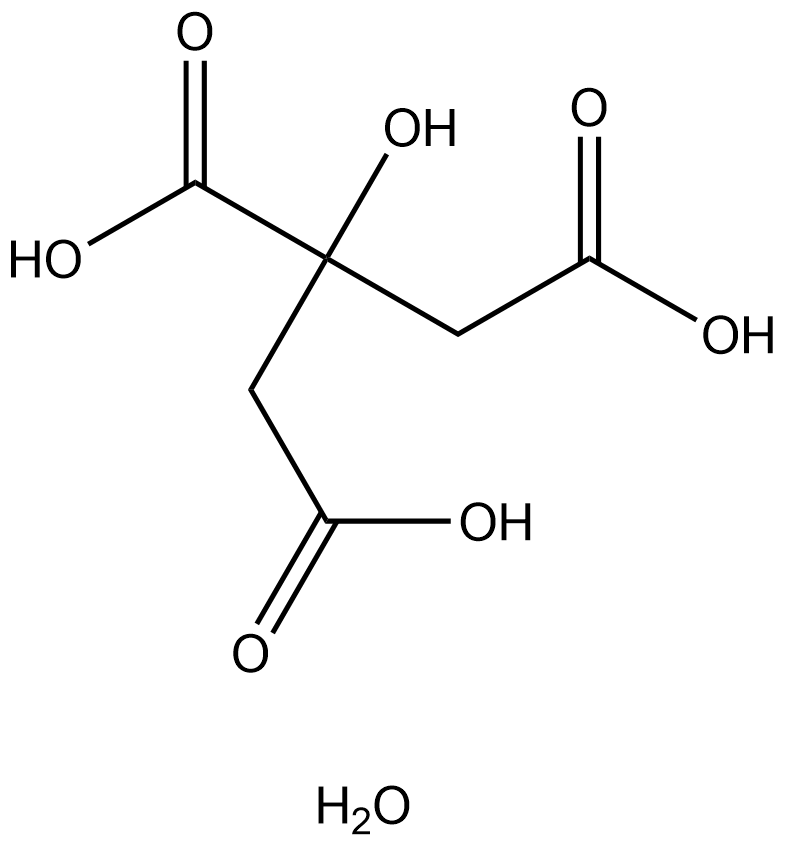
| Chemical Name | 2-hydroxypropane-1,2,3-tricarboxylic acid hydrate |
| Canonical SMILES | O=C(O)CC(O)(C(=O)O)CC(=O)O.O |
| Shipping Condition | Small Molecules with Blue Ice, Modified Nucleotides with Dry Ice. |
| General tips | We do not recommend long-term storage for the solution, please use it up soon. |
Quality Control & MSDS
- View current batch:
Chemical structure