Chromium picolinate
Chromium picolinate (CAS No.: 14639-25-9) is a synthetic chromium III coordination compound that is broadly classified as a metal based biochemical probe and redox active small molecule for metabolism and toxicology research, with primary use in mechanistic studies of cellular stress signaling rather than any clinical or nutritional application. In biomedical discovery workflows, it is commonly investigated for its ability to activate the p38 MAPK pathway, promote apoptosis under defined experimental conditions, and modulate oxidative balance through context dependent antioxidant and pro oxidative effects, with additional reports indicating genotoxic potential including DNA damage and mutagenic outcomes in susceptible systems. Current evidence supports its placement in research areas spanning signal transduction, mitochondrial stress biology, glucose metabolism modeling, and safety pharmacology, where it is used to interrogate stress responsive kinase networks and downstream transcriptional programs in cultured cells and selected animal models. Publicly available datasets do not establish a single standardized potency benchmark across assays, and activity is therefore generally interpreted across nanomolar to micromolar concentration domains depending on cell type, exposure duration, and readout platform, while in vivo dosing paradigms are similarly study specific. Typical applications include pathway deconvolution experiments, comparative profiling with other metal complexes, and compound screening panels that evaluate apoptosis, redox biomarkers, inflammatory mediators, and genomic stability endpoints, and the concentrations or doses used in experiments typically depend on specific experimental designs and research objectives.
| Storage | -20°C for 3 years |
| M.Wt | 418.30 |
| Cas No. | 14639-25-9 |
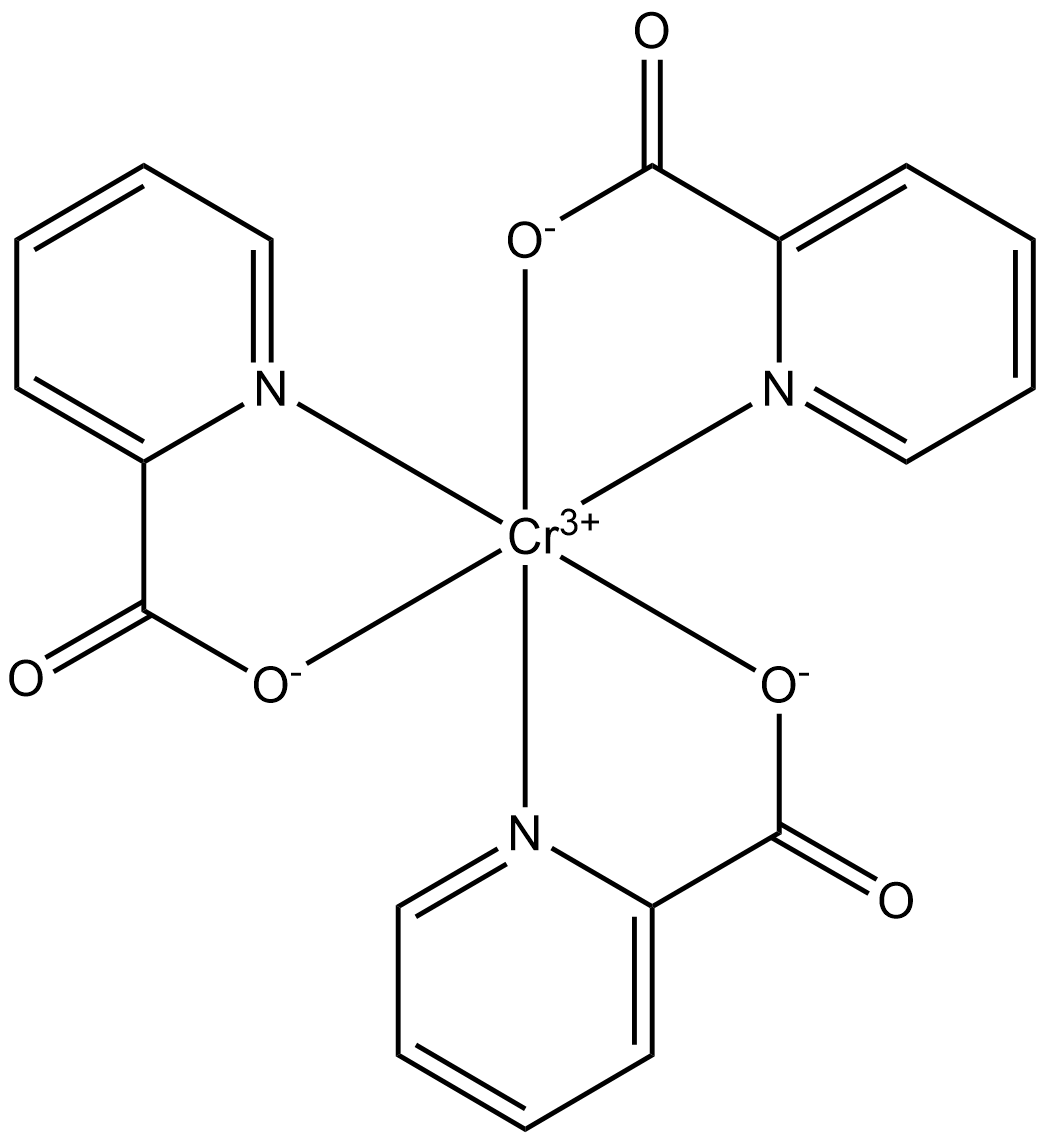
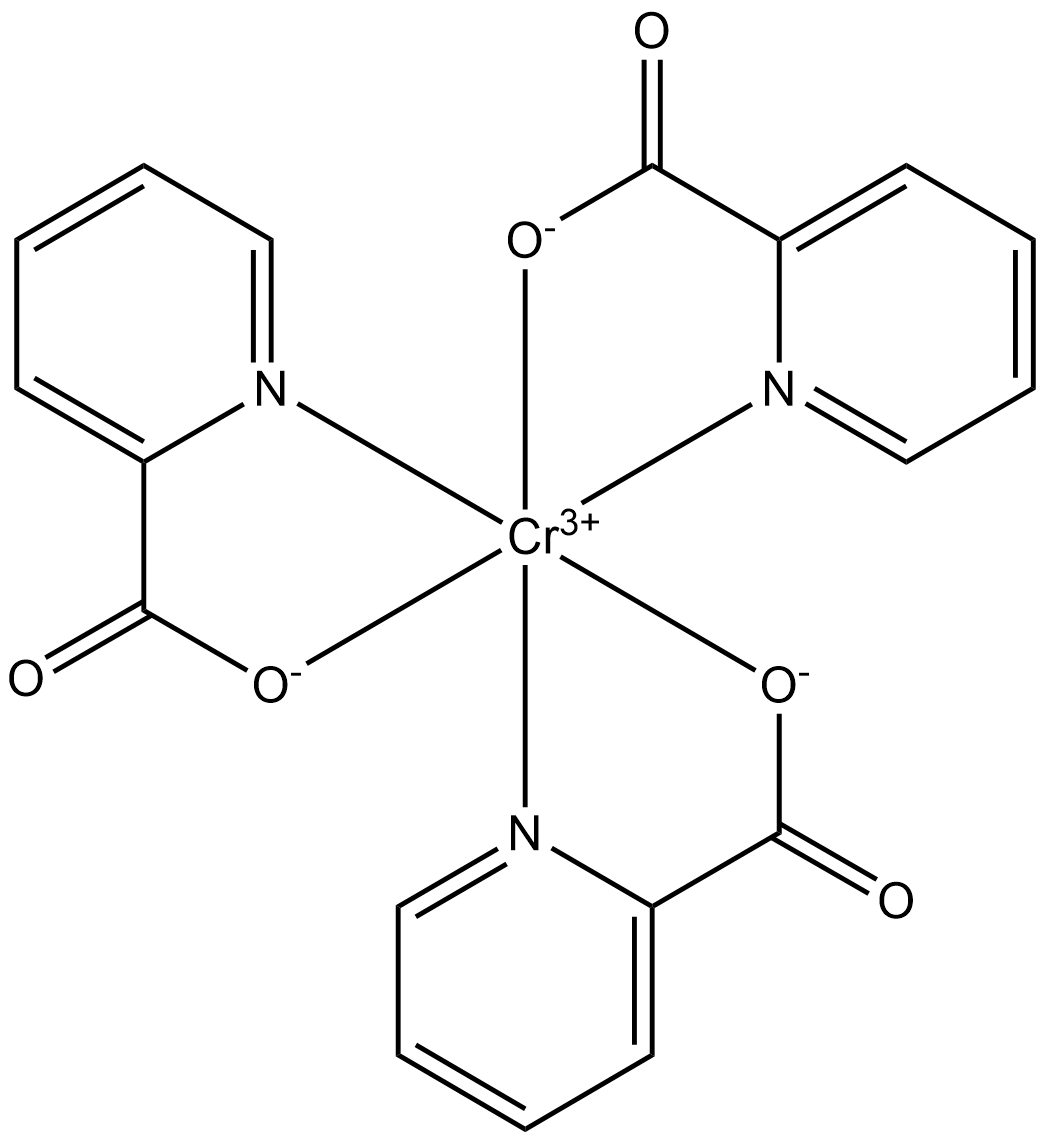
| Formula | C18H12CrN3O6 |
| Synonyms | Chromium (III) picolinate; Cr(Pic)3 |
| Solubility | insoluble in DMSO; insoluble in EtOH; insoluble in H2O |
| Canonical SMILES | O=C1[O-][Cr+3]23([O-]C(=O)C=4C=CC=C[N]42)([O-]C(=O)C=5C=CC=C[N]53)[N]=6C=CC=CC16 |
| Shipping Condition | Small Molecules with Blue Ice, Modified Nucleotides with Dry Ice. |
| General tips | We do not recommend long-term storage for the solution, please use it up soon. |
Quality Control & MSDS
- View current batch:
Chemical structure