


Chlortalidone
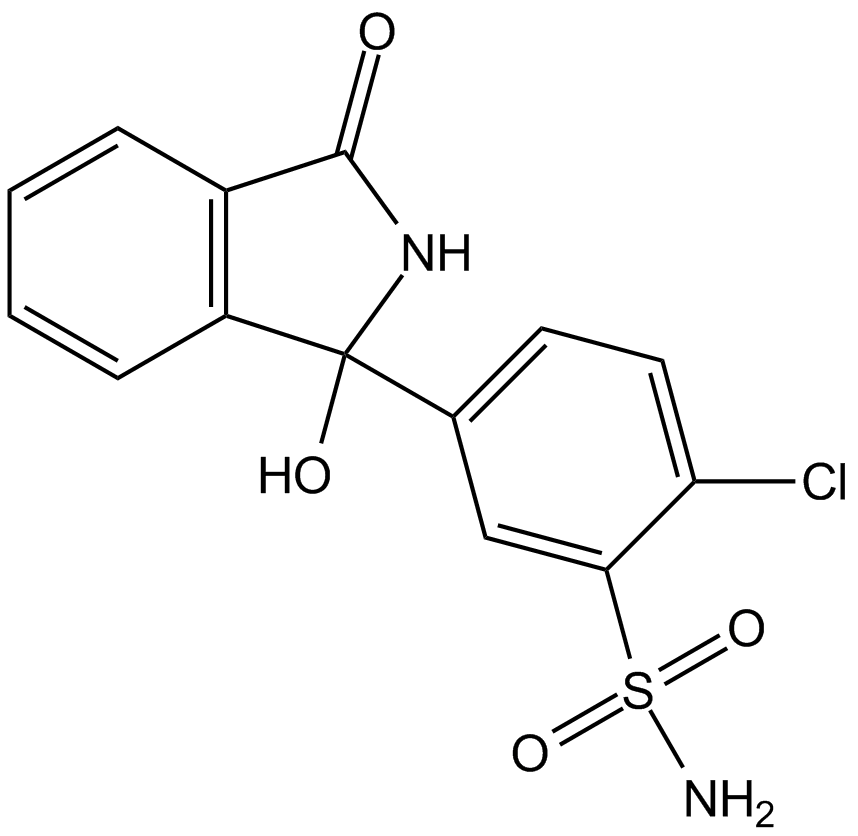
Chlortalidone (CAS No.: 77-36-1) is a thiazide-like small molecule widely utilized in biomedical research as a modulator of renal ion transport processes, primarily acting through inhibition of the sodium-chloride cotransporter (NCC) in distal convoluted tubule models. This compound serves as a valuable tool for investigating electrolyte homeostasis, fluid balance regulation, and ion channel pharmacology, as well as for probing signaling pathways associated with sodium and chloride reabsorption in epithelial cell systems. In vitro studies indicate that chlortalidone can effectively alter intracellular ion dynamics and transporter activity at low micromolar concentrations, making it suitable for mechanistic studies of transporter inhibition and downstream cellular responses. It is commonly employed in cell-based assays and animal models to examine renal physiology, cardiovascular-related ion regulation, and the molecular basis of diuretic action, with experimental concentrations or dosing regimens varying according to specific study designs.
| Physical Appearance | A solid |
| Storage | -20°C |
| M.Wt | 338.77 |
| Cas No. | 77-36-1 |
| Formula | C14H11ClN2O4S |
| Synonyms | Hygroton; NSC 69200; Oradil; Thalitone ? |
| Solubility | insoluble in EtOH; insoluble in H2O; ≥49.7 mg/mL in DMSO |
| Chemical Name | 2-chloro-5-(1-hydroxy-3-oxoisoindolin-1-yl)benzenesulfonamide |
| Canonical SMILES | O=C1NC(O)(C2=CC=C(Cl)C(S(=O)(N)=O)=C2)C3=C1C=CC=C3 |
| Shipping Condition | Small Molecules with Blue Ice, Modified Nucleotides with Dry Ice. |
| General tips | We do not recommend long-term storage for the solution, please use it up soon. |