


Chlorothalonil
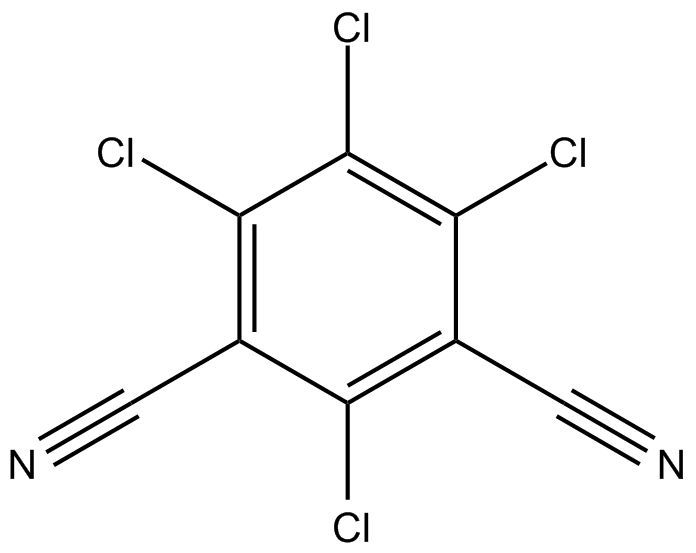
Chlorothalonil (CAS No.: 1897-45-6) is a broad-spectrum organochlorine fungicide widely used in agricultural settings and increasingly investigated in biomedical research for its multifaceted biological effects and toxicological mechanisms. It exerts its antifungal and antimicrobial activity primarily through covalent interaction with glutathione and cysteine residues on cellular proteins, leading to glutathione depletion and enzyme inactivation, thereby disrupting essential metabolic processes in target organisms. In vitro studies demonstrate inhibitory activity against a range of fungal and bacterial species at low micromolar to sub-micromolar concentrations, reflecting its potent biocidal properties. Beyond its pesticidal applications, Chlorothalonil is utilized in research to explore the impact of environmental toxicants on soil microbiota, where it has been shown to alter microbial community composition and function. In mammalian systems, experimental evidence indicates that Chlorothalonil can impair spermatogenesis, disrupt intestinal epithelial barrier integrity, and induce developmental toxicity, making it a valuable tool for studying reproductive and gastrointestinal toxicology as well as xenobiotic-induced stress responses. Additionally, its capacity to induce tumor formation in specific animal models without direct genotoxicity highlights its relevance in carcinogenesis research. The concentrations or doses employed in experimental settings vary depending on the biological system and study objectives, supporting its application across in vitro assays and in vivo models aimed at elucidating mechanisms of toxicity, redox imbalance, and environmental health effects.
| Physical Appearance | A solid |
| Storage | -20°C |
| M.Wt | 265.91 |
| Cas No. | 1897-45-6 |
| Formula | C8Cl4N2 |
| Synonyms | 2,4,5,6-Tetrachloroisophthalonitrile |
| Solubility | ≥14.1 mg/mL in DMSO; insoluble in EtOH; insoluble in H2O |
| Chemical Name | 2,4,5,6-tetrachloroisophthalonitrile |
| Canonical SMILES | ClC1=C(Cl)C(Cl)=C(C#N)C(Cl)=C1C#N |
| Shipping Condition | Small Molecules with Blue Ice, Modified Nucleotides with Dry Ice. |
| General tips | We do not recommend long-term storage for the solution, please use it up soon. |