


Chelerythrine
Chelerythrine (CAS No.: 34316-15-9) is a naturally occurring alkaloid renowned for its potent inhibitory activity on protein kinase C (PKC), with an IC50 in the low micromolar range, typically cited around 0.66 to 0.7 μM. As a selective antagonist of Ca2+/phospholipid-dependent PKC, it is widely utilized in the context of biomedical research and drug discovery, particularly for its ability to modulate key signaling pathways related to apoptosis and autophagy. Chelerythrine is recognized for its capacity to inhibit BclXL-Bak BH3 peptide binding with an IC50 of approximately 1.5 μM, displacing Bax from BclXL, and thereby inducing apoptotic pathways. Its biological activities extend to antitumor and anti-inflammatory effects, making it a valuable asset in the study of cancer and inflammatory diseases. Chelerythrine has been reported to inhibit telomerase activity, contributing to its antiproliferative effects in various cell models. Research applications typically involve exploring its mechanistic roles in cellular models and screening in animal models, where experimental concentrations vary according to specific experimental conditions and research questions. Additionally, chelerythrine's role as a PKC inhibitor positions it as a key biochemical tool in elucidating the pathways involving protein phosphorylation and signaling cascades in diverse biological systems.
| Physical Appearance | A solid |
| Storage | ﹣20°C |
| M.Wt | 348.37 |
| Cas No. | 34316-15-9 |
| Formula | C21H18NO4 |
| Synonyms | Toddaline, Broussonpapyrine |
| Solubility | ≥3.84mg/mL in DMSO with ultrasonic and warming |
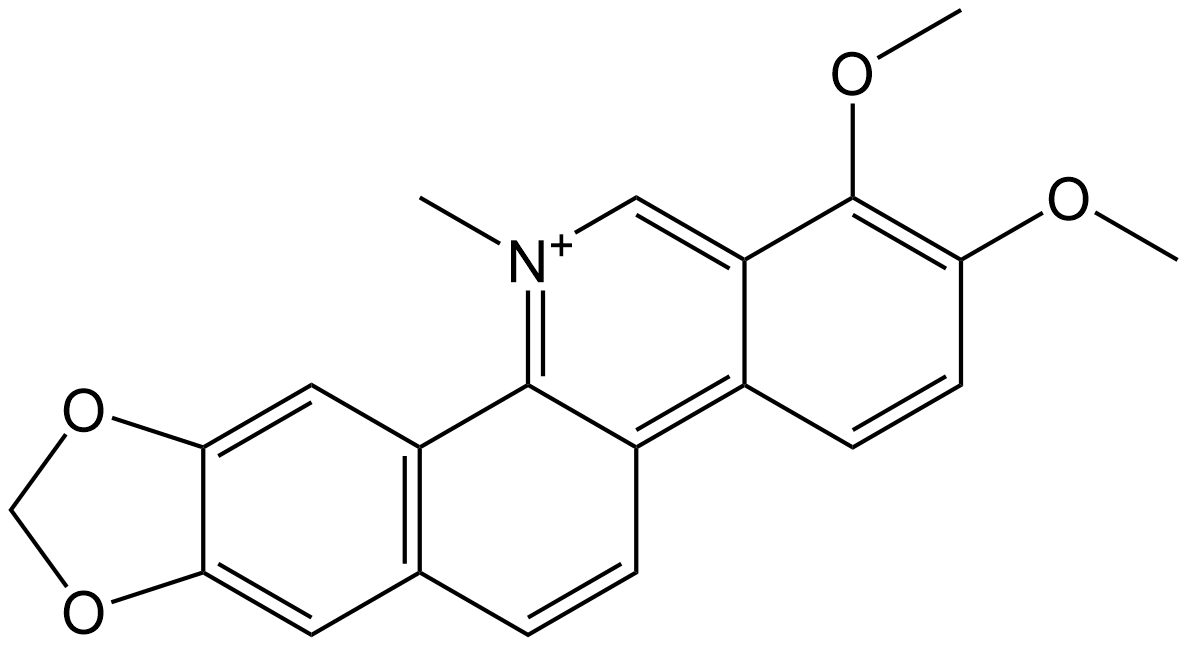
| Chemical Name | 1,2-dimethoxy-12-methyl-[1,3]dioxolo[4',5':4,5]benzo[1,2-c]phenanthridin-12-ium |
| Canonical SMILES | O(C=1C=CC2=C3C=CC=4C=C5OCOC5=CC4C3=[N+](C=C2C1OC)C)C |
| Shipping Condition | Small Molecules with Blue Ice, Modified Nucleotides with Dry Ice. |
| General tips | We do not recommend long-term storage for the solution, please use it up soon. |