


CGRP 8-37 (rat) acetate
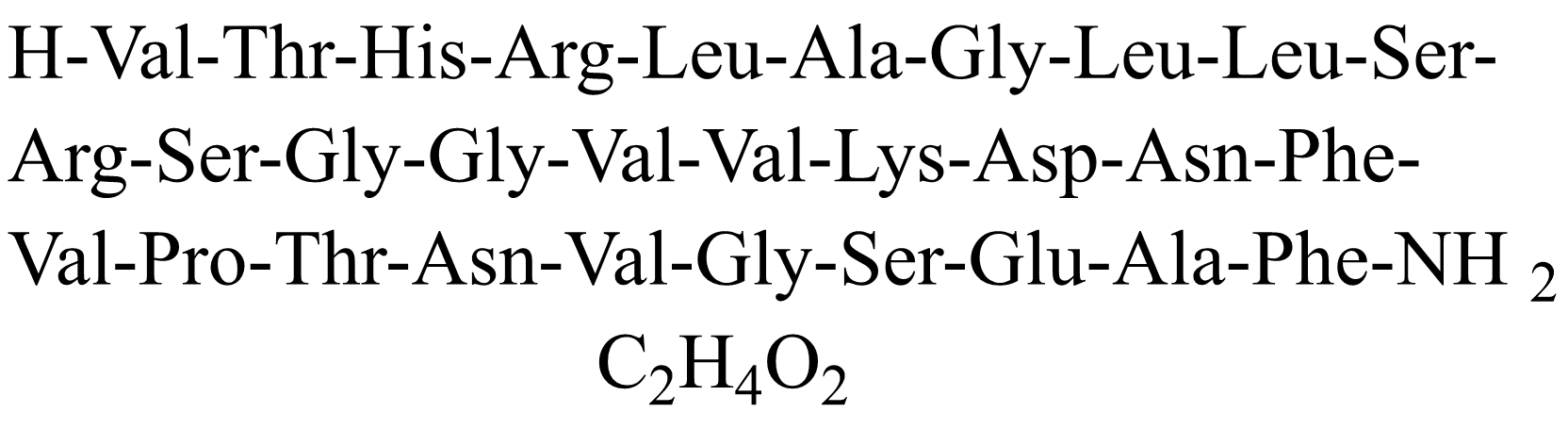





CGRP (Calcitonin gene-related protein) 8-37 (rat) TFA is the amino acid fragment at positions 8–37 of rodent α‑CGRP (sequence: VTHRLAGLLSRSGGVVKDNFVPTNVGSEAF), a classic CGRP receptor antagonist peptide. It blocks the CGRP₁ receptor composed of CLR/CRLR + RAMP1 or RAMP3, inhibits Gs‑cAMP‑PKA‑mediated effects such as vasodilation, heart rate acceleration and neuroprotective effects, and can amplify inflammatory and injury responses (e.g., exacerbating lung injury and downregulating AQP1/5 in LPS‑induced ALI). It is also applicable to dissect the CaSR‑CGRP‑vasodilation pathway and shows almost no activity at CRLR/RAMP2 (adrenomedullin receptor). It differs from human α‑CGRP(8–37) (VTHRLAGLLSRSGGVVKNNFVPTNVGSKAF) only at a few sites such as D↔N and E↔K, with a highly conserved overall sequence. However, this product is synthesized based on the rat sequence, with better matching affinity and selectivity for rat/rat‑derived models.
Common Protocols for Cell Experiments:
(1) In cells endogenously expressing CRLR/RAMP1 such as rat L6 and Rat2 cells, pre‑incubate with 0.1–1 μM CGRP(8–37) for 30–60 min, then administer a concentration gradient of CGRP and detect cAMP. A parallel rightward shift of the CGRP dose‑response curve with largely unchanged Emax will be observed, with a pA₂/pK_b of approximately 7.5–8. This is used to confirm the CGRP₁ receptor and exclude the adrenomedullin (ADM) receptor component.
(2) Endothelial/smooth muscle function: Use a wire myograph for rat mesenteric artery strips. After pre‑contraction, exogenous addition of 1 μM CGRP 8‑37 can partially inhibit relaxation induced by high Ca²⁺ or exogenous CGRP. It is often used in combination with BIBN4096 and NK1 blockers to distinguish signaling pathways.
Common Protocols for Animal Experiments:
(1) According to relevant literature, in transgenic mice expressing human CRLR, intravenous or intraperitoneal injection of 2 μmol/kg CGRP(8–37) can inhibit CGRP‑induced heart rate increase and blood pressure decrease; in the p‑phenylquinone writhing pain model, the ED₅₀ is approximately 6 μg per animal, and it reduces body temperature in a dose‑dependent manner. A starting dose of 1–2 μmol/kg is often used to design cardiovascular or analgesic animal experiments for functional verification of endogenous CGRP signaling.
(2) Acute lung injury model: SD rats are intraperitoneally injected with 0.5 mg/kg CGRP 8‑37, and 20 min later, LPS (10 mg/kg) is administered intratracheally to establish the model, with samples collected 6 h later. Compared with the LPS group, the CGRP 8‑37 group shows lower PaO₂, higher lung wet‑to‑dry weight ratio, elevated inflammatory factors (TNF‑α, IL‑1β, IL‑10) in BALF, and further decreased mRNA and protein levels of AQP1/5 in lung tissue. This protocol is used to demonstrate the protective effects of endogenous CGRP in anti‑inflammation and alleviating pulmonary edema.
References:
[1] Hong-Min F, Chun-Rong H, Rui Z, Li-Na S, Ya-Jun W, Li L. CGRP 8-37 enhances lipopolysaccharide-induced acute lung injury and regulating aquaporin 1 and 5 expressions in rats. J Physiol Biochem. 2016 Aug;73(3):381-386. doi: 10.1007/s13105-017-0563-3. Epub 2017 May 4. Erratum in: J Physiol Biochem. 2017 Nov;73(4):623. doi: 10.1007/s13105-017-0593-x. PMID: 28470555.
[2] Carlton-Carew SRE, Greenberg HZE, Greenwood IA, Albert AP. Stimulation of the calcium-sensing receptor induces relaxations through CGRP and NK1 receptor-mediated pathways in male rat mesenteric arteries. Physiol Rep. 2024 Jun;12(12):e16125. doi: 10.14814/phy2.16125. PMID: 39031618; PMCID: PMC11189779.
[3] Hay DL, Howitt SG, Conner AC, Doods H, Schindler M, Poyner DR. A comparison of the actions of BIBN4096BS and CGRP(8-37) on CGRP and adrenomedullin receptors expressed on SK-N-MC, L6, Col 29 and Rat 2 cells. Br J Pharmacol. 2002 Sep;137(1):80-6. doi: 10.1038/sj.bjp.0704844. PMID: 12183333; PMCID: PMC1573470.
[4] Liang YL, Belousoff MJ, Fletcher MM, Zhang X, Khoshouei M, Deganutti G, Koole C, Furness SGB, Miller LJ, Hay DL, Christopoulos A, Reynolds CA, Danev R, Wootten D, Sexton PM. Structure and Dynamics of Adrenomedullin Receptors AM1 and AM2 Reveal Key Mechanisms in the Control of Receptor Phenotype by Receptor Activity-Modifying Proteins. ACS Pharmacol Transl Sci. 2020 Mar 20;3(2):263-284. doi: 10.1021/acsptsci.9b00080. PMID: 32296767; PMCID: PMC7155201.
| Storage | Store at -20°C |
| M.Wt | 3187.56 |
| Cas No. | 129121-73-9 (free base) |
| Formula | C138H224N42O41 • C2H4O2 |
| Synonyms | Rat CGRP-(8-37) TFA;Rat alcitonin gene-related protein (8-37) TFA |
| Shipping Condition | Small Molecules with Blue Ice, Modified Nucleotides with Dry Ice. |
| General tips | We do not recommend long-term storage for the solution, please use it up soon. |