


carnosine
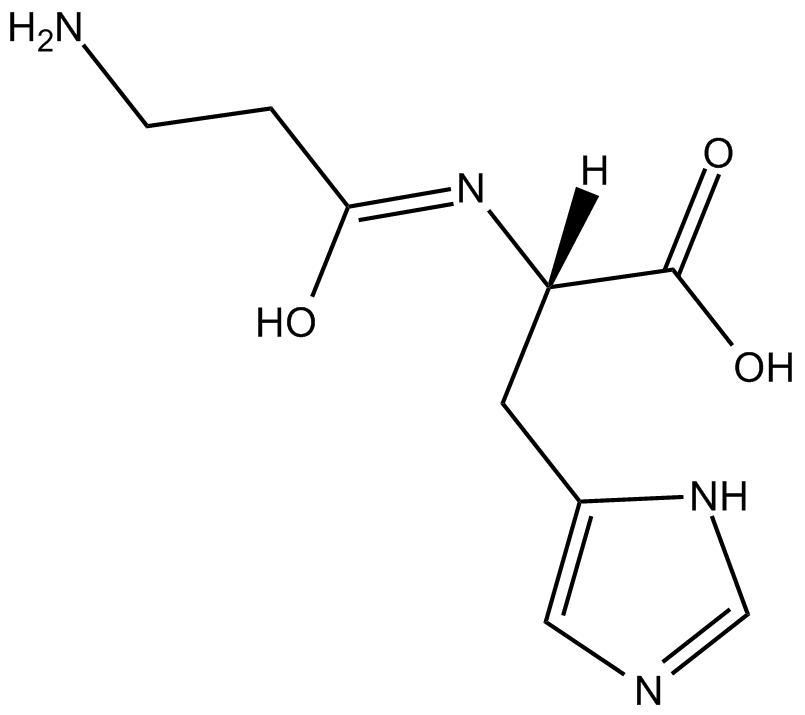
Carnosine (L-Carnosine, CAS No.: 305-84-0) is a dipeptide antioxidant composed of β-alanine and L-histidine. It mainly exerts biological activity through antioxidant mechanisms in skeletal muscle, brain, and heart tissues, and can act as a metal chelator, forming complexes with copper, cobalt, nickel, cadmium, and zinc. In diabetic rats, dietary administration of L-carnosine (60 mg/kg/day) reduced plasma levels of advanced glycation end products (AGEs). In a rat intracerebral hemorrhage model, L-carnosine (1000 mg/kg) reduced brain edema, blood–brain barrier disruption, microglial activation, and neuronal apoptosis. In a bile duct ligation-induced cirrhosis model, intraperitoneal injection of L-carnosine (250–1000 mg/kg) alleviated hepatic protein carbonylation and necrosis. In addition, in a lipopolysaccharide (LPS)-induced mouse lung injury model, L-carnosine reduced myeloperoxidase activity in lung tissue, reactive oxygen species production, and levels of tumor necrosis factor-α (TNF-α) and interleukin-6 (IL-6), while also alleviating alveolar hemorrhage, interstitial edema, and pulmonary leukocyte infiltration.
| Physical Appearance | A solid |
| Storage | -20°C |
| M.Wt | 226.23 |
| Cas No. | 305-84-0 |
| Formula | C9H14N4O3 |
| Synonyms | β-Alanylhistidine; NSC 524045 |
| Solubility | insoluble in EtOH; insoluble in DMSO; ≥44.7 mg/mL in H2O |
| Chemical Name | (S,Z)-2-((3-amino-1-hydroxypropylidene)amino)-3-(1H-imidazol-5-yl)propanoic acid |
| Canonical SMILES | NCC/C(O)=N/[C@@](C(O)=O)([H])CC1=CN=CN1 |
| Shipping Condition | Small Molecules with Blue Ice, Modified Nucleotides with Dry Ice. |
| General tips | We do not recommend long-term storage for the solution, please use it up soon. |