


Caprolactam
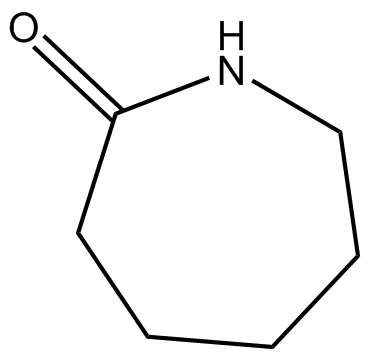
Caprolactam (CAS No.: 105-60-2) is a cyclic amide compound commonly classified as a versatile intermediate in organic synthesis and biomaterials research, widely utilized in life science studies as a precursor for polymeric materials. Its chemical reactivity enables participation in ring-opening polymerization processes, yielding polyamide-based materials with tunable physicochemical and biocompatibility properties, which are of particular interest for constructing experimental platforms in tissue engineering, controlled release systems, and biodegradable scaffold development. Although not characterized as a bioactive ligand with defined molecular targets or signaling pathway specificity, caprolactam and its derived polymers are frequently investigated for their interactions with cellular microenvironments, including effects on cell adhesion, proliferation, and material–tissue interfaces. In vitro studies involving caprolactam-derived materials typically evaluate biological responses across a range of low to moderate concentrations depending on polymer composition and formulation, while in vivo or ex vivo models may be employed to assess material performance and degradation behavior under physiologically relevant conditions. As such, caprolactam serves as a foundational building block in biomaterials science and drug delivery research, supporting the development and screening of advanced polymer systems for diverse experimental applications.
| Physical Appearance | A solid |
| Storage | -20°C |
| M.Wt | 113.16 |
| Cas No. | 105-60-2 |
| Formula | C6H11NO |
| Solubility | ≥18.5 mg/mL in EtOH with ultrasonic; ≥51.5 mg/mL in H2O; ≥65.9 mg/mL in DMSO |
| Chemical Name | azepan-2-one |
| Canonical SMILES | O=C1NCCCCC1 |
| Shipping Condition | Small Molecules with Blue Ice, Modified Nucleotides with Dry Ice. |
| General tips | We do not recommend long-term storage for the solution, please use it up soon. |