


Bis(4-nitrophenyl) phosphate
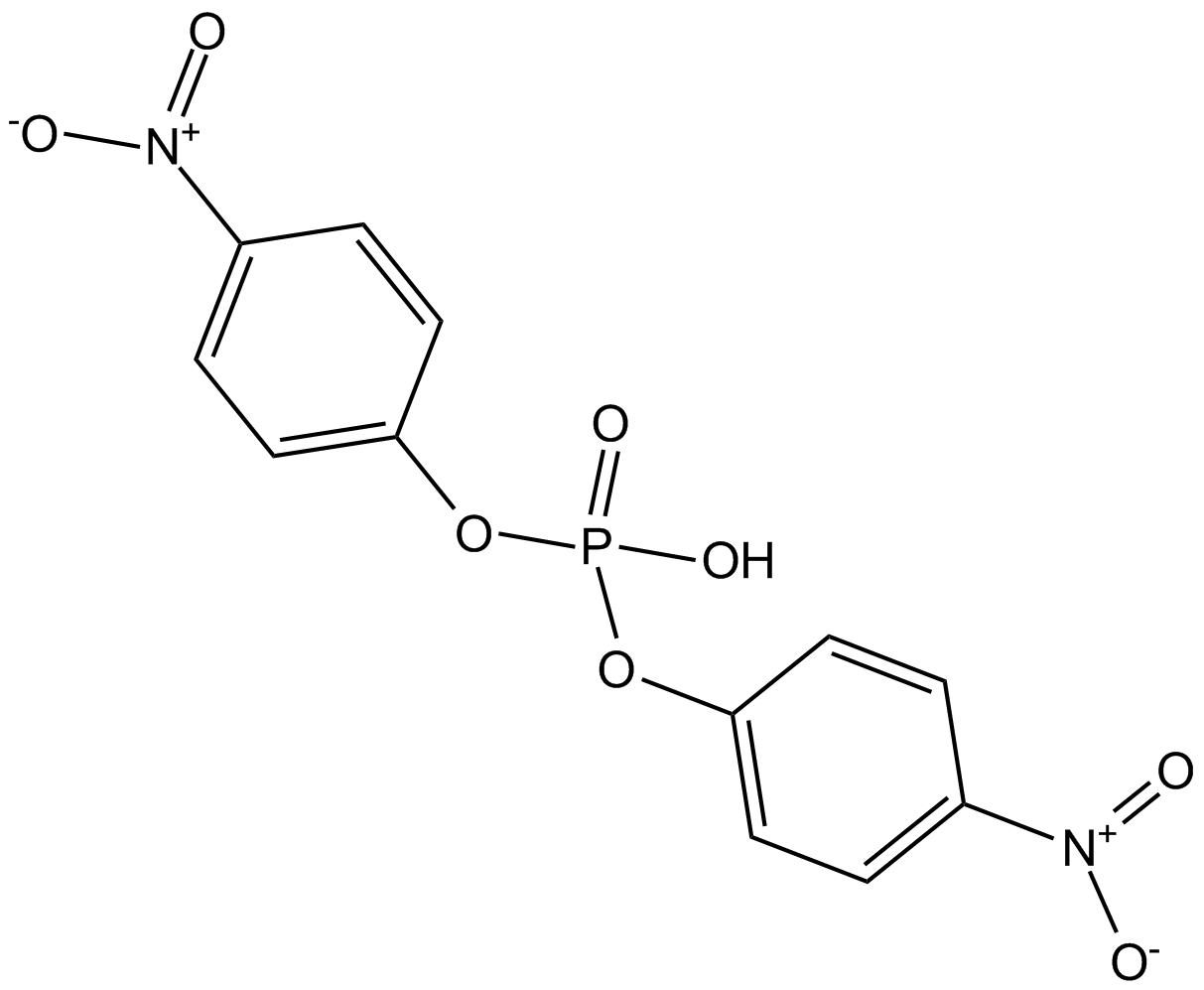





Bis(4-nitrophenyl) phosphate (CAS No.: 645-15-8) is a synthetic organophosphate reagent widely employed as a model substrate and catalytic probe in biochemical and polymer chemistry research, particularly for investigating phosphate ester hydrolysis mechanisms and enzyme-mimetic catalysis. It is commonly utilized to study the kinetics and mechanisms of phosphoester bond cleavage, including reactions involving (4-nitrophenyl) phosphate analogs, and serves as a useful tool in elucidating catalytic processes mediated by micellar or supramolecular systems. In addition to its role in hydrolytic studies, this compound has been reported to function as an efficient catalyst for ring-opening polymerization of cyclic esters such as β-butyrolactone, enabling controlled polymer growth and the formation of well-defined block copolymers without the need for reaction termination, thereby supporting investigations into polymer architecture–property relationships. In biochemical contexts, Bis(4-nitrophenyl) phosphate has also been described as an inhibitor of UDP-galactose-related processes and is applied in studies of glycosyltransferase membrane topology and function, providing insight into enzyme localization and activity. Its activity in enzymatic and catalytic assays is generally observed in the micromolar concentration range, although experimental conditions vary depending on the system under investigation. This compound is primarily used in in vitro assays, mechanistic enzymology, and materials-oriented research, where dosing and concentrations are adjusted according to specific experimental designs and objectives in biochemical and drug discovery research settings.
| Physical Appearance | A solid |
| Storage | -20°C |
| M.Wt | 340.18 |
| Cas No. | 645-15-8 |
| Formula | C12H9N2O8P |
| Synonyms | BNPP |
| Solubility | ≥14.6 mg/mL in H2O; ≥50.5 mg/mL in DMSO; ≥51.9 mg/mL in EtOH |
| Chemical Name | bis(4-nitrophenyl) hydrogen phosphate |
| Canonical SMILES | [O-][N+](C1=CC=C(OP(OC2=CC=C([N+]([O-])=O)C=C2)(O)=O)C=C1)=O |
| Shipping Condition | Small Molecules with Blue Ice, Modified Nucleotides with Dry Ice. |
| General tips | We do not recommend long-term storage for the solution, please use it up soon. |