


beta-Alanine
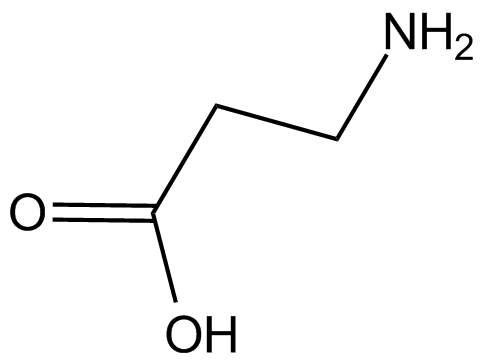
beta-Alanine (CAS No.: 107-95-9) is a naturally occurring, non-essential beta amino acid generated in vivo through the degradation of dihydrouracil and carnosine, and is widely studied in biochemical and neuropharmacological research due to its dual roles in metabolism and neurotransmission. As a precursor of carnosine, it contributes to intracellular buffering capacity, thereby supporting investigations into cellular pH regulation and metabolic stress responses. In the nervous system, beta-alanine has been shown to undergo neuronal uptake and interact with inhibitory neurotransmitter systems, acting as an agonist at glycine and gamma-aminobutyric acid (GABA) receptors and potentially functioning as a false transmitter that modulates synaptic signaling. These properties make it relevant for studying receptor activation dynamics, neurotransmitter competition, and amino acid transport mechanisms. In vitro studies typically employ concentrations in the micromolar to millimolar range depending on assay design, particularly in receptor binding, electrophysiological, and metabolic flux analyses. Additionally, beta-alanine is utilized in cell-based and animal models to explore pathways related to amino acid metabolism, neurochemical signaling, and rare metabolic conditions such as hyper-beta-alaninemia. Experimental concentrations or dosing regimens vary according to specific research objectives and model systems, underscoring its utility as a versatile tool compound in life sciences and drug discovery research.
| Physical Appearance | Solid |
| Storage | -20°C |
| M.Wt | 89.09 |
| Cas No. | 107-95-9 |
| Formula | C3H7NO2 |
| Solubility | insoluble in EtOH; insoluble in DMSO; ≥39.9 mg/mL in H2O |
| Chemical Name | 3-aminopropanoic acid |
| Canonical SMILES | NCCC(O)=O |
| Shipping Condition | Small Molecules with Blue Ice, Modified Nucleotides with Dry Ice. |
| General tips | We do not recommend long-term storage for the solution, please use it up soon. |