


azelate (nonanedioate)
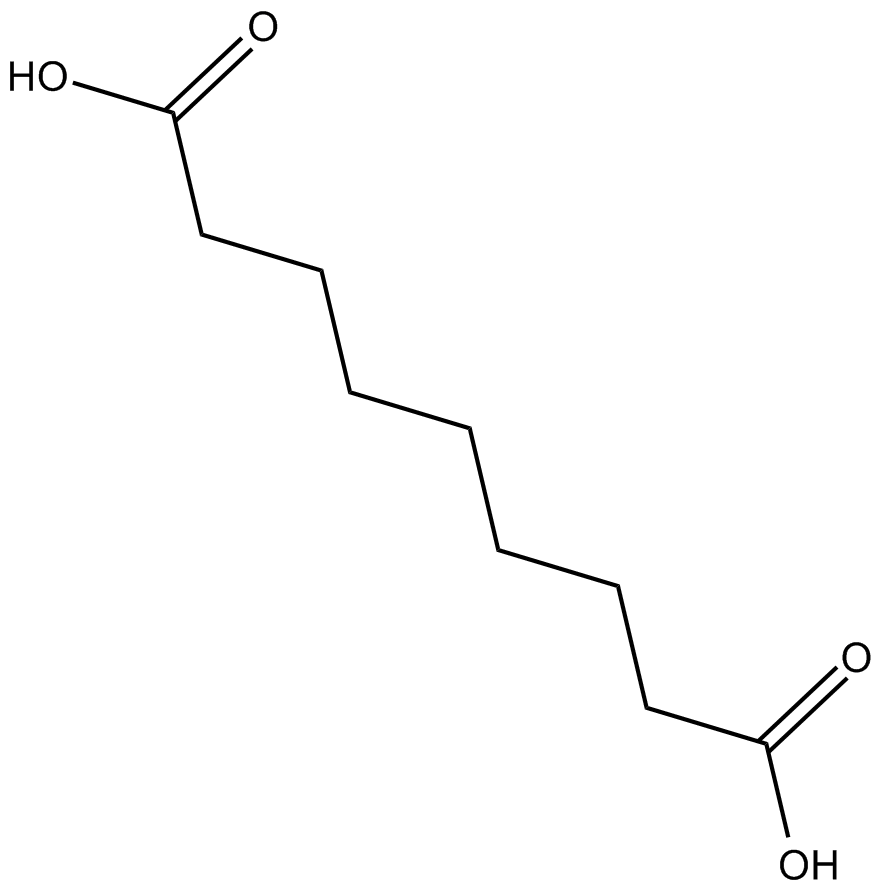
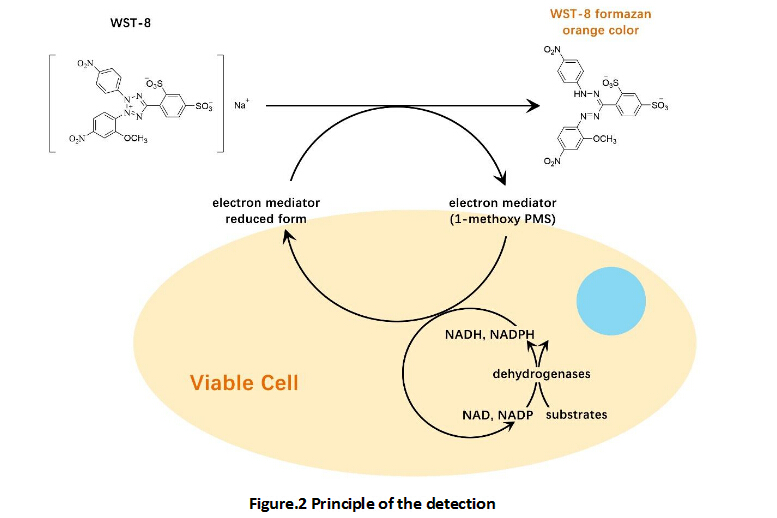
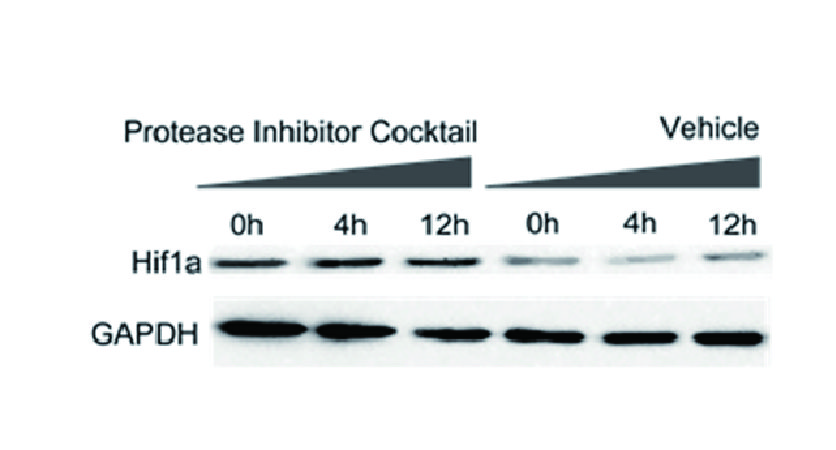
azelate (nonanedioate) (CAS No.: 123-99-9) is a naturally occurring saturated dicarboxylic acid widely distributed in plant sources such as wheat, rye, and barley and also produced by commensal skin microorganisms including Malassezia furfur, positioning it as a biologically relevant small molecule in dermatological and metabolic research. It exhibits broad antimicrobial activity, notably against Cutibacterium acnes and Staphylococcus epidermidis, primarily through inhibition of microbial cellular protein synthesis, and demonstrates bacteriostatic effects across a range of Gram-positive bacteria and fungi at concentrations typically reported in the low to mid micromolar range in vitro. In addition to its antimicrobial properties, azelate acts as a competitive inhibitor of several oxidoreductases, including tyrosinase, NADH dehydrogenase, succinate dehydrogenase, and components of the mitochondrial electron transport chain, supporting its role in modulating cellular redox balance and melanogenesis. Its ability to scavenge reactive oxygen species contributes to hypopigmenting effects and provides a mechanistic basis for its use in studies of oxidative stress and pigmentation disorders. In cancer and cell biology models, azelate has been shown to inhibit proliferation and DNA synthesis, induce mitochondrial structural alterations, and suppress growth of melanoma and keratinocyte cell lines in a dose- and time-dependent manner, highlighting its utility in investigations of cell cycle regulation and mitochondrial dysfunction. Owing to these multifaceted activities, azelate is frequently employed in in vitro and in vivo studies focused on antimicrobial screening, pigmentation biology, and skin disease modeling, with experimental concentrations and dosing regimens varying according to specific study designs and therapeutic endpoints.
| Physical Appearance | A solid |
| Storage | -20°C |
| M.Wt | 188.22 |
| Cas No. | 123-99-9 |
| Formula | C9H16O4 |
| Synonyms | FA 9:1;O2; NSC 19493 |
| Solubility | insoluble in H2O; ≥21.25 mg/mL in EtOH with ultrasonic; ≥25.7 mg/mL in DMSO with ultrasonic |
| Chemical Name | nonanedioic acid |
| Canonical SMILES | O=C(O)CCCCCCCC(O)=O |
| Shipping Condition | Small Molecules with Blue Ice, Modified Nucleotides with Dry Ice. |
| General tips | We do not recommend long-term storage for the solution, please use it up soon. |