


Auraptene
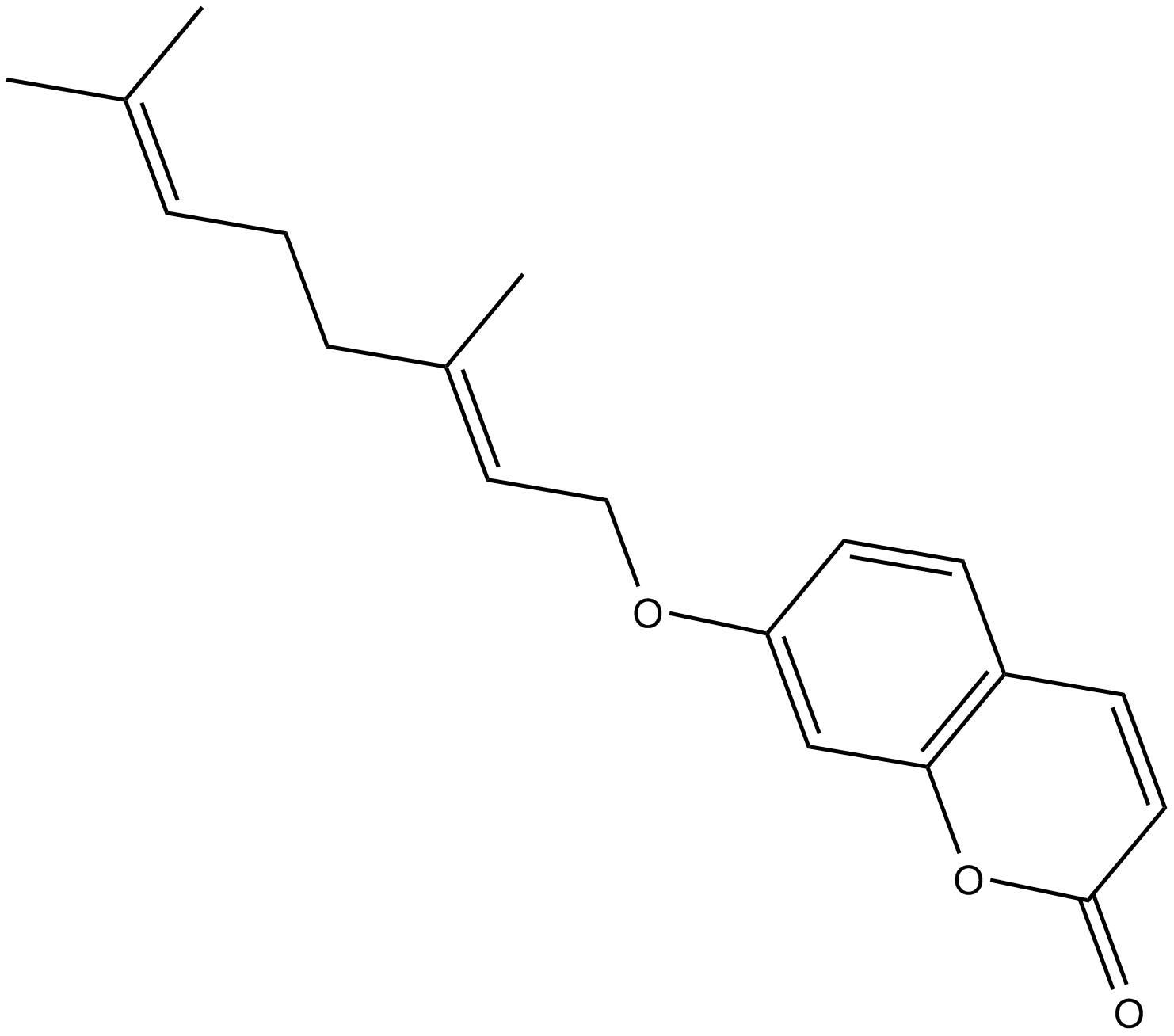
Auraptene (CAS No.: 495-02-3) is a naturally occurring geranyloxycoumarin predominantly isolated from citrus and other plant species, widely utilized in biomedical research as a bioactive small molecule with pleiotropic pharmacological properties. It exhibits pronounced anti-inflammatory, antioxidant, antimicrobial, anti-tumor, and neuroprotective activities, primarily mediated through modulation of cellular signaling pathways and enzyme activities involved in oxidative stress responses, inflammatory cascades, and carcinogenesis. Mechanistically, auraptene has been shown to inhibit leukocyte activation, induce phase II detoxifying enzymes, and modulate key molecular targets such as β-secretase (BACE1), with inhibitory activity observed at low to moderate micromolar concentrations, supporting its relevance in neurodegenerative disease research. In addition, its capacity to regulate pathogen-associated processes and cellular redox balance underscores its utility in studies of infection, inflammation, and metabolic dysfunction. Auraptene is frequently employed in cell-based assays and preclinical models to investigate signaling pathway regulation, enzyme inhibition, and disease-modifying potential in chronic conditions such as hypertension, cystic fibrosis, and neurodegeneration, with experimental concentrations or dosing regimens varying according to specific study designs and therapeutic hypotheses.
| Physical Appearance | A solid |
| Storage | -20°C |
| M.Wt | 298.38 |
| Cas No. | 495-02-3 |
| Formula | C19H22O3 |
| Synonyms | 7- Geranyloxycoumarin |
| Solubility | insoluble in H2O; ≥15.73 mg/mL in EtOH; ≥51.4 mg/mL in DMSO |
| Chemical Name | (E)-7-((3,7-dimethylocta-2,6-dien-1-yl)oxy)-2H-chromen-2-one |
| Canonical SMILES | O=C1C=CC2=C(C=C(OC/C=C(C)/CC/C=C(C)\C)C=C2)O1 |
| Shipping Condition | Small Molecules with Blue Ice, Modified Nucleotides with Dry Ice. |
| General tips | We do not recommend long-term storage for the solution, please use it up soon. |