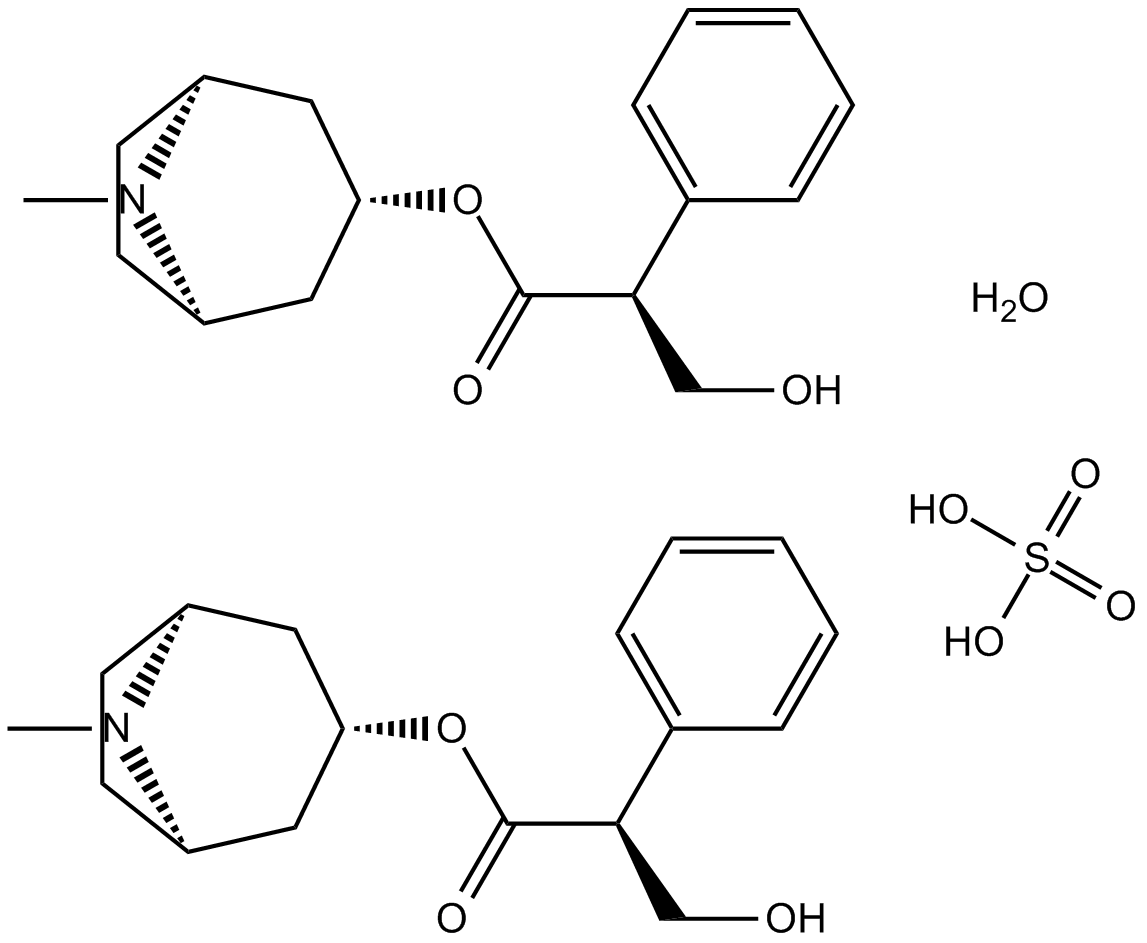
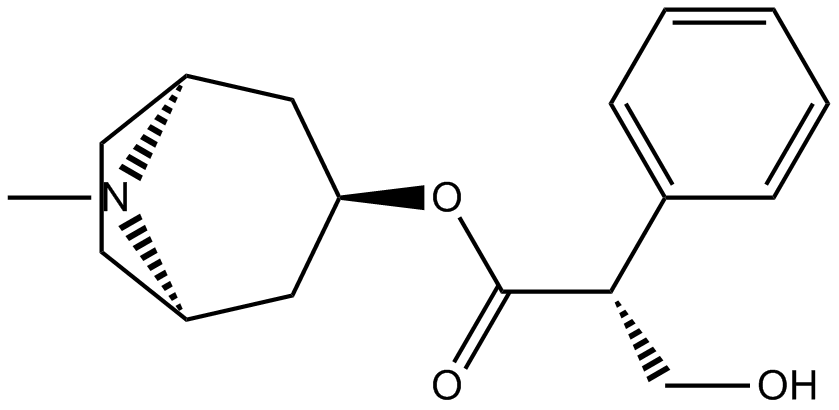
Atropine
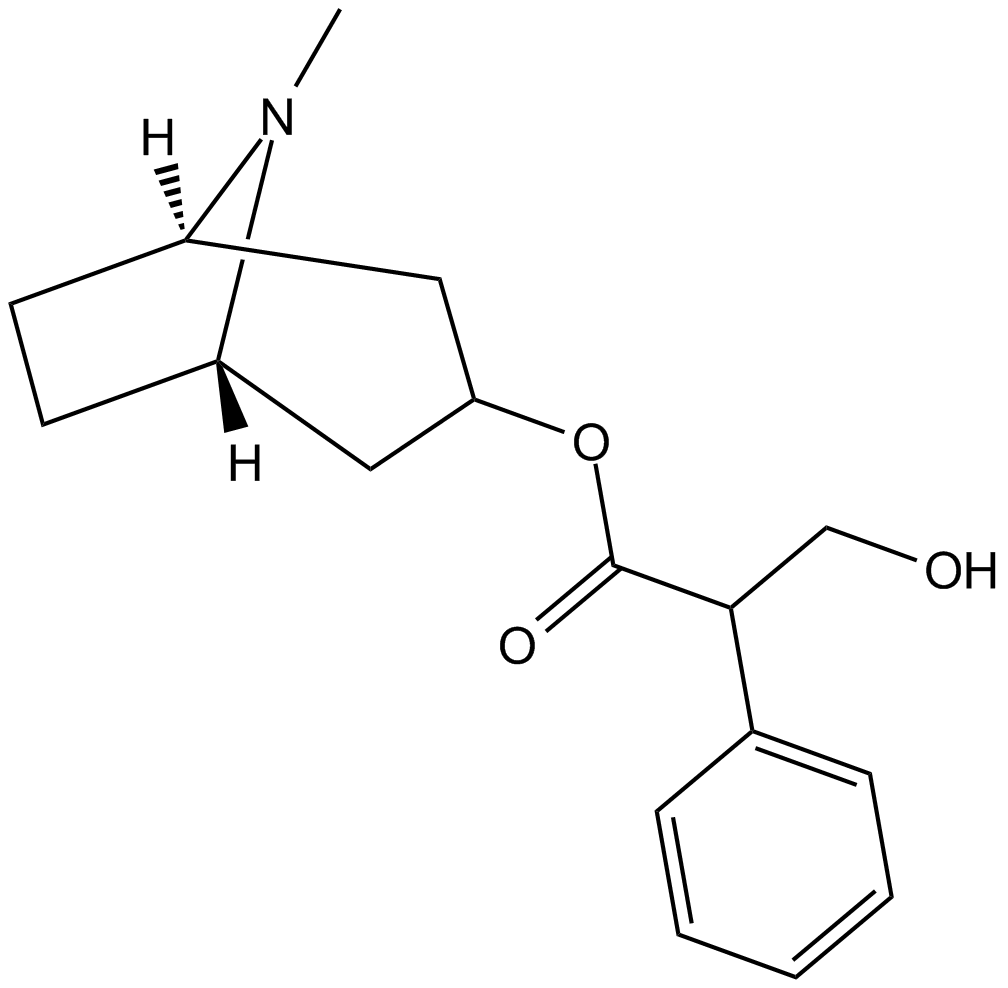
Atropine (CAS No.: 51-55-8) is a naturally derived tropane alkaloid originally obtained from Atropa belladonna and widely utilized as a prototypical competitive, reversible antagonist of muscarinic acetylcholine receptors, making it a fundamental tool in cholinergic signaling research and drug discovery. As a racemic mixture of d- and l-hyoscyamine, with pharmacological activity primarily attributed to the l-isomer, atropine exerts its effects by inhibiting acetylcholine binding at muscarinic receptor subtypes, thereby modulating parasympathetic neurotransmission and downstream signaling pathways. It demonstrates high potency in receptor binding assays, with inhibitory activity observed in the nanomolar range for certain muscarinic receptor subtypes, and effectively suppresses acetylcholine-induced physiological responses, including smooth muscle relaxation in vascular tissues. In experimental settings, atropine is extensively applied to investigate receptor pharmacology, autonomic nervous system function, and mechanisms underlying conditions such as bradycardia and myopia, as well as serving as a reference compound in screening assays targeting G protein-coupled receptors. It is also employed in analytical and forensic contexts as a reference standard for detecting adulterants or studying cholinergic toxicology. The concentrations or doses used in vitro and in vivo vary depending on the specific model system and research objectives, but its well-characterized pharmacological profile and broad applicability continue to support its role in both basic and translational biomedical research.
| Physical Appearance | A solid |
| Storage | -20°C |
| M.Wt | 289.37 |
| Cas No. | 51-55-8 |
| Formula | C17H23NO3 |
| Solubility | insoluble in H2O; ≥21.95 mg/mL in DMSO; ≥23.8 mg/mL in EtOH |
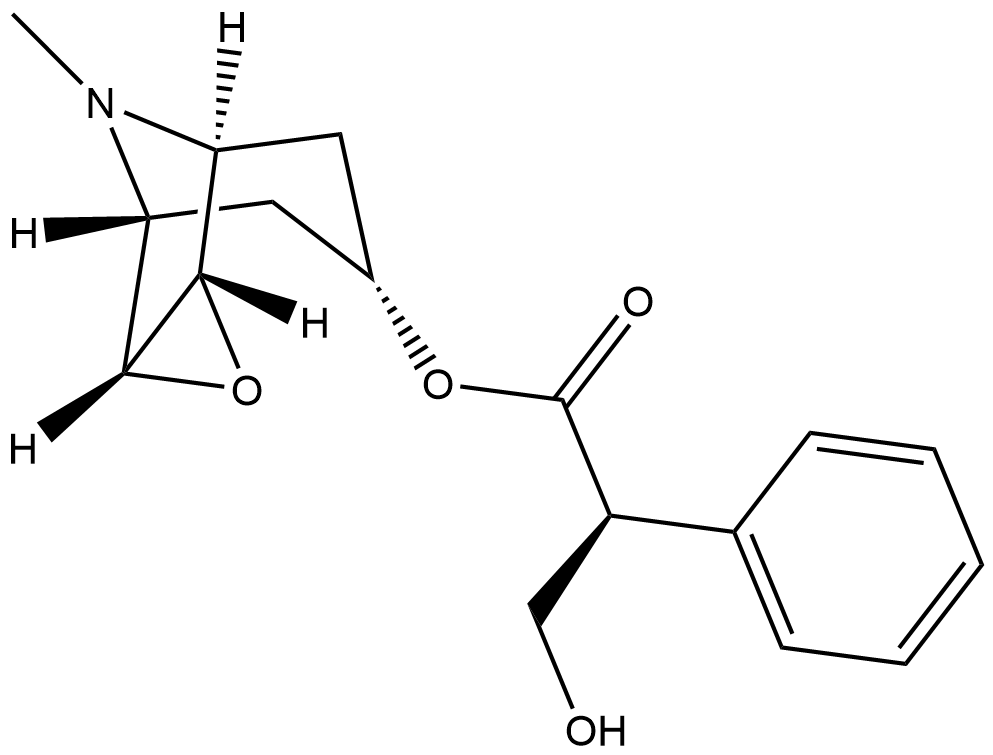
| Chemical Name | (1R,5S)-8-methyl-8-azabicyclo[3.2.1]octan-3-yl 3-hydroxy-2-phenylpropanoate |
| Canonical SMILES | O=C(C(CO)C1=CC=CC=C1)OC2C[C@@]3([H])N(C)[C@](C2)([H])CC3 |
| Shipping Condition | Small Molecules with Blue Ice, Modified Nucleotides with Dry Ice. |
| General tips | We do not recommend long-term storage for the solution, please use it up soon. |