Atrazine
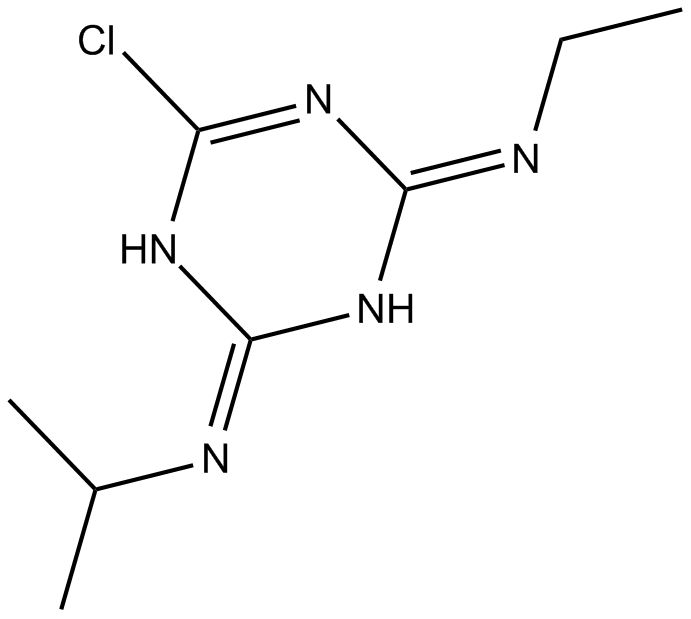





Atrazine (CAS No.: 1912-24-9) is a widely used triazine-class herbicide that serves as a prototypical inhibitor of photosystem II, acting at the QB-binding site within the chloroplast electron transport chain to disrupt photophosphorylation and block electron transfer, thereby reducing ATP and NADPH production and impairing photosynthetic function. Beyond its agricultural role in controlling annual broadleaf and grass weeds, atrazine has become an important tool compound in biomedical and environmental health research due to its capacity to modulate cellular signaling pathways, induce oxidative stress, and interfere with endocrine regulation. Experimental studies have demonstrated that atrazine exposure can alter hormone homeostasis, affecting steroidogenesis and pituitary hormone levels, and can perturb developmental processes in aquatic and mammalian models, supporting its classification as an endocrine-disrupting chemical. In vitro, its biological effects are typically observed across low micromolar to higher concentration ranges depending on cell type and assay conditions, often without immediate cytotoxicity but with measurable impacts on mitochondrial function, redox balance, and gene expression. Consequently, atrazine is frequently employed in studies of toxicological mechanisms, xenobiotic metabolism, and environmental risk assessment, as well as in screening platforms investigating pathways related to oxidative damage, apoptosis, and hormonal signaling, with experimental concentrations or dosing regimens tailored to specific model systems and research objectives.
| Physical Appearance | A solid |
| Storage | -20°C |
| M.Wt | 215.68 |
| Cas No. | 1912-24-9 |
| Formula | C8H14ClN5 |
| Synonyms | ATR |
| Solubility | insoluble in H2O; ≥22.4 mg/mL in EtOH with gentle warming; ≥45.4 mg/mL in DMSO |
| Chemical Name | (Z)-N-((Z)-6-chloro-4-(ethylimino)-3,4-dihydro-1,3,5-triazin-2(1H)-ylidene)propan-2-amine |
| Canonical SMILES | CC/N=C(N/1)\N=C(NC1=N/C(C)C)Cl |
| Shipping Condition | Small Molecules with Blue Ice, Modified Nucleotides with Dry Ice. |
| General tips | We do not recommend long-term storage for the solution, please use it up soon. |