


Anthraquinone
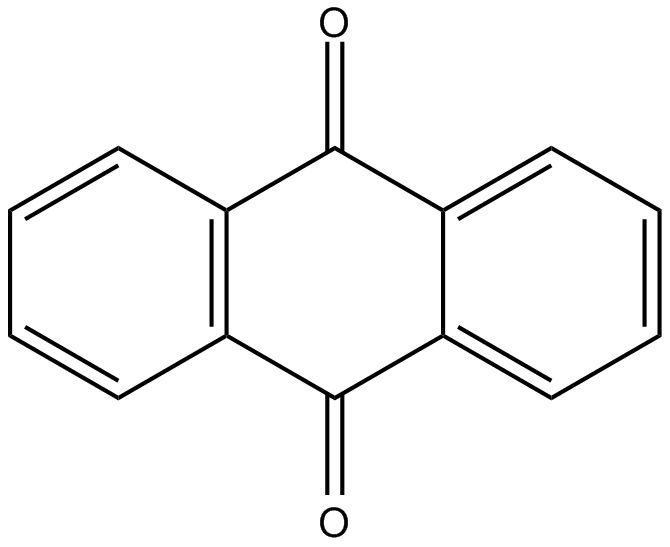
Anthraquinone (CAS No.: 84-65-1) is a naturally occurring anthraquinone derivative widely distributed across bacteria, fungi, plants, and certain animal species, and is commonly classified as a bioactive small molecule used in chemical biology and pharmacological research. It is well characterized for its ability to intercalate into DNA and inhibit topoisomerase II activity, thereby disrupting DNA replication and inducing apoptosis, making it a valuable tool for studying cell cycle regulation and programmed cell death pathways. In plant systems, anthraquinone interferes with the photosynthetic electron transport chain by inhibiting energy transfer processes, highlighting its role in primary metabolic regulation. This compound exhibits a broad spectrum of biological activities, including anti-inflammatory, antimicrobial, antifungal, antimalarial, and antioxidant effects, which have been extensively explored in vitro, typically within nanomolar to micromolar concentration ranges depending on the experimental model. Anthraquinone also serves as a precursor in dye and agrochemical synthesis, further supporting its relevance in applied research contexts. In biomedical research, it is frequently utilized in cellular assays for apoptosis induction, anticancer activity screening, and anti-infective mechanism studies, as well as in plant biology models investigating photosynthetic processes, with experimental concentrations or dosing regimens varying according to specific study designs and objectives.
| Physical Appearance | Solid |
| Storage | -20°C |
| M.Wt | 208.21 |
| Cas No. | 84-65-1 |
| Formula | C14H8O2 |
| Solubility | insoluble in H2O; insoluble in DMSO; insoluble in EtOH |
| Chemical Name | anthracene-9,10-dione |
| Canonical SMILES | O=C(C1=C2C=CC=C1)C3=CC=CC=C3C2=O |
| Shipping Condition | Small Molecules with Blue Ice, Modified Nucleotides with Dry Ice. |
| General tips | We do not recommend long-term storage for the solution, please use it up soon. |