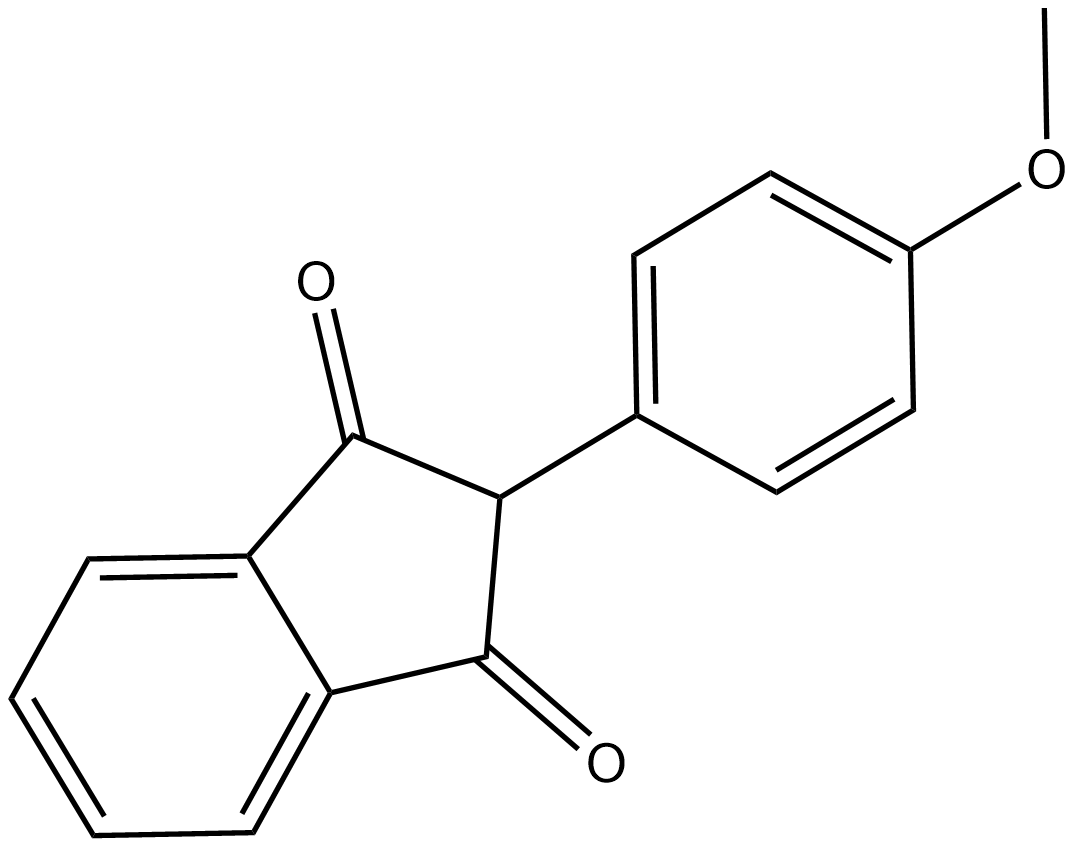
Anisindione
Anisindione (CAS No.: 117-37-3) is a synthetic small molecule of the indanedione class that is widely used as a reference anticoagulation research tool in biochemical, cellular, and preclinical pharmacology settings, where it is classified as a vitamin K cycle modulator and functional inhibitor of hepatic vitamin K dependent protein maturation through suppression of vitamin K mediated gamma carboxylation of precursor proteins, thereby reducing generation of active coagulation factors II, VII, IX, and X and also affecting proteins C and S, with downstream impact on coagulation network dynamics and hemostatic signaling readouts in liver associated systems. In life sciences workflows, this compound is primarily positioned in thrombosis and hemostasis research, mechanism of action studies, pathway interrogation of vitamin K dependent post translational modification processes, and benchmarking of anticoagulation relevant phenotypes in comparison with other coumarin or indanedione type modulators. Reported utility is generally mechanism focused rather than target selective in a single receptor sense, and current public descriptions emphasize pathway level effects in the coagulation cascade and hepatic biosynthetic context rather than robustly standardized potency constants across unified assay formats; accordingly, when quantitative in vitro metrics are not consistently established across sources, activity is typically interpreted in assay dependent concentration windows that are commonly explored from micromolar to higher micromolar ranges for mechanistic probing, with exact exposure conditions determined by matrix composition, metabolic competence, and endpoint selection. Typical research applications include coagulation factor activity studies in plasma based assays, hepatocyte or liver derived model systems for vitamin K dependent protein processing, and animal model investigations of anticoagulation biology, while dosing or concentration schemes are selected according to specific experimental designs and research objectives, with appropriate controls for exposure time, species differences, and analytical method sensitivity.
| Storage | -20°C for 3 years |
| M.Wt | 252.26 |
| Cas No. | 117-37-3 |
| Formula | C16H12O3 |
| Solubility | ≥23.7 mg/mL in DMSO; ≥3.66 mg/mL in EtOH with ultrasonic; insoluble in H2O |
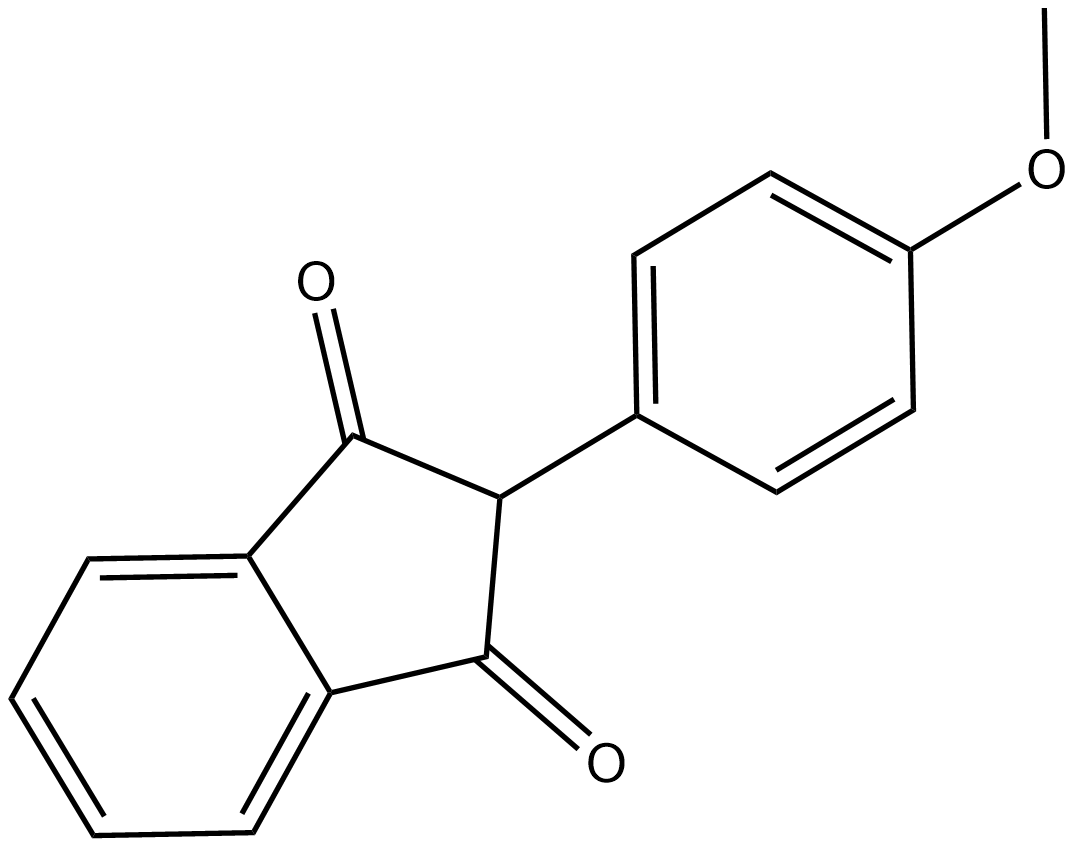
| Chemical Name | 2-(4-methoxyphenyl)-1H-indene-1,3(2H)-dione |
| Canonical SMILES | O=C1C=2C=CC=CC2C(=O)C1C3=CC=C(OC)C=C3 |
| Shipping Condition | Small Molecules with Blue Ice, Modified Nucleotides with Dry Ice. |
| General tips | We do not recommend long-term storage for the solution, please use it up soon. |
Quality Control & MSDS
- View current batch:
Chemical structure