


Anisic acid
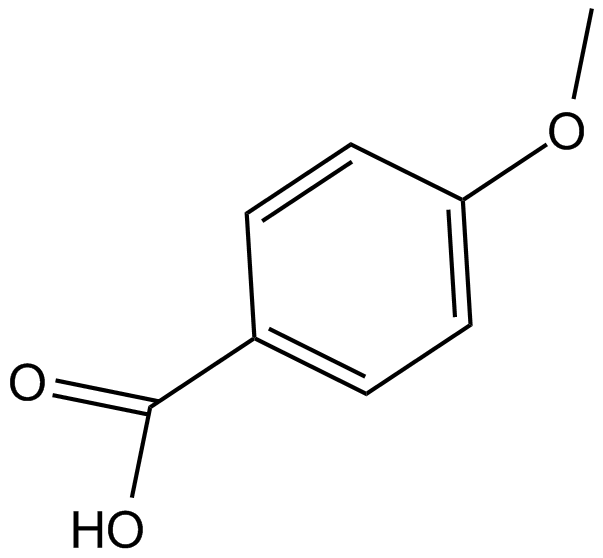
Anisic acid (CAS No.: 100-09-4) is a small aromatic organic compound belonging to the class of p-methoxybenzoic acids, widely utilized as a biochemical tool compound in life sciences research due to its diverse bioactivity profile. It is characterized as a phenolic acid derivative with reported inhibitory activity against tyrosinase, making it relevant for studies investigating melanogenesis, oxidative stress responses, and enzyme regulation. Experimental evidence indicates that anisic acid exhibits antioxidant, anti-inflammatory, and antimicrobial effects, with activity typically observed in the low micromolar to millimolar range depending on the assay system and biological context. Mechanistically, it is associated with modulation of oxidative stress pathways and may influence signaling cascades linked to inflammation and cellular stress responses, although its precise molecular targets remain under active investigation. In vitro and in vivo research applications include its use as a reference compound in screening assays for enzyme inhibition, redox modulation, and antimicrobial activity, as well as in studies exploring structure–activity relationships of benzoic acid derivatives. Additionally, it serves as a precursor or intermediate in the synthesis of more complex bioactive molecules for pharmacological research. The concentrations or doses employed in experimental settings vary according to specific model systems, such as cultured cells or animal models, and are determined by the objectives of the study.
| Physical Appearance | Solid |
| Storage | -20°C |
| M.Wt | 152.15 |
| Cas No. | 100-09-4 |
| Formula | C8H8O3 |
| Solubility | insoluble in H2O; ≥13.57 mg/mL in EtOH; ≥47.4 mg/mL in DMSO |
| Chemical Name | 4-methoxybenzoic acid |
| Canonical SMILES | COC1=CC=C(C(O)=O)C=C1 |
| Shipping Condition | Small Molecules with Blue Ice, Modified Nucleotides with Dry Ice. |
| General tips | We do not recommend long-term storage for the solution, please use it up soon. |