Ampicillin
Ampicillin (CAS No.: 69-53-4) is a semi-synthetic β-lactam antibiotic derived from penicillin, broadly classified within the aminopenicillin subgroup and widely utilized as a research tool in microbiology and biochemical studies. It exerts bactericidal activity by targeting bacterial penicillin-binding proteins, thereby inhibiting the transpeptidation step of peptidoglycan synthesis and disrupting cell wall integrity, which ultimately leads to cell lysis in susceptible Gram-positive and Gram-negative organisms. This mechanism makes ampicillin a valuable agent for investigating bacterial cell wall biosynthesis, resistance mechanisms such as β-lactamase-mediated hydrolysis, and antibiotic susceptibility profiling. In vitro activity is typically observed in the low micromolar to millimolar concentration range depending on the bacterial strain and experimental conditions, reflecting variability in permeability and resistance determinants. Ampicillin is frequently employed in cell-based assays, bacterial culture selection systems, and plasmid maintenance protocols, as well as in animal infection models to study antimicrobial resistance and host–pathogen interactions, with concentrations or dosing regimens adjusted according to specific experimental objectives.
| Physical Appearance | Solid |
| Storage | -20°C |
| M.Wt | 349.4 |
| Cas No. | 69-53-4 |
| Formula | C16H19N3O4S |
| Solubility | insoluble in H2O; insoluble in EtOH; ≥35.7 mg/mL in DMSO |
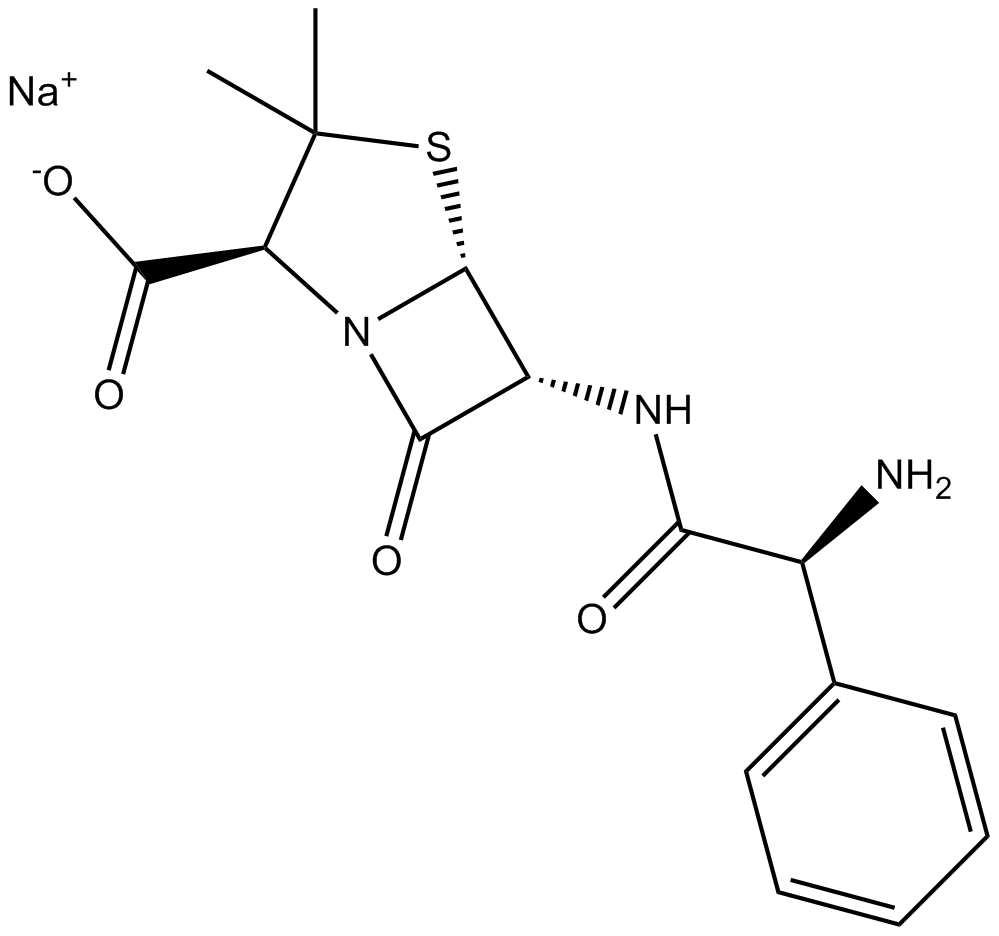
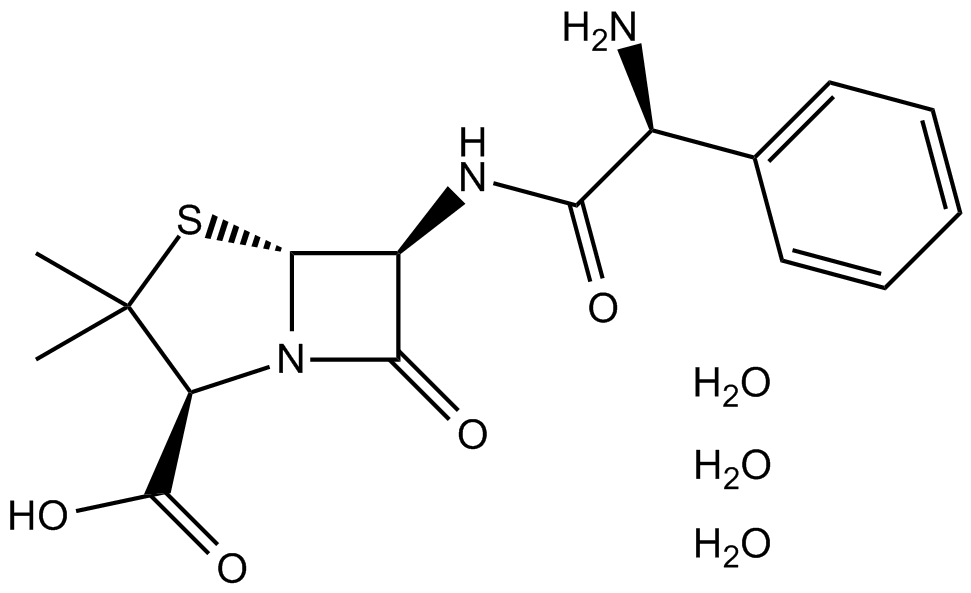
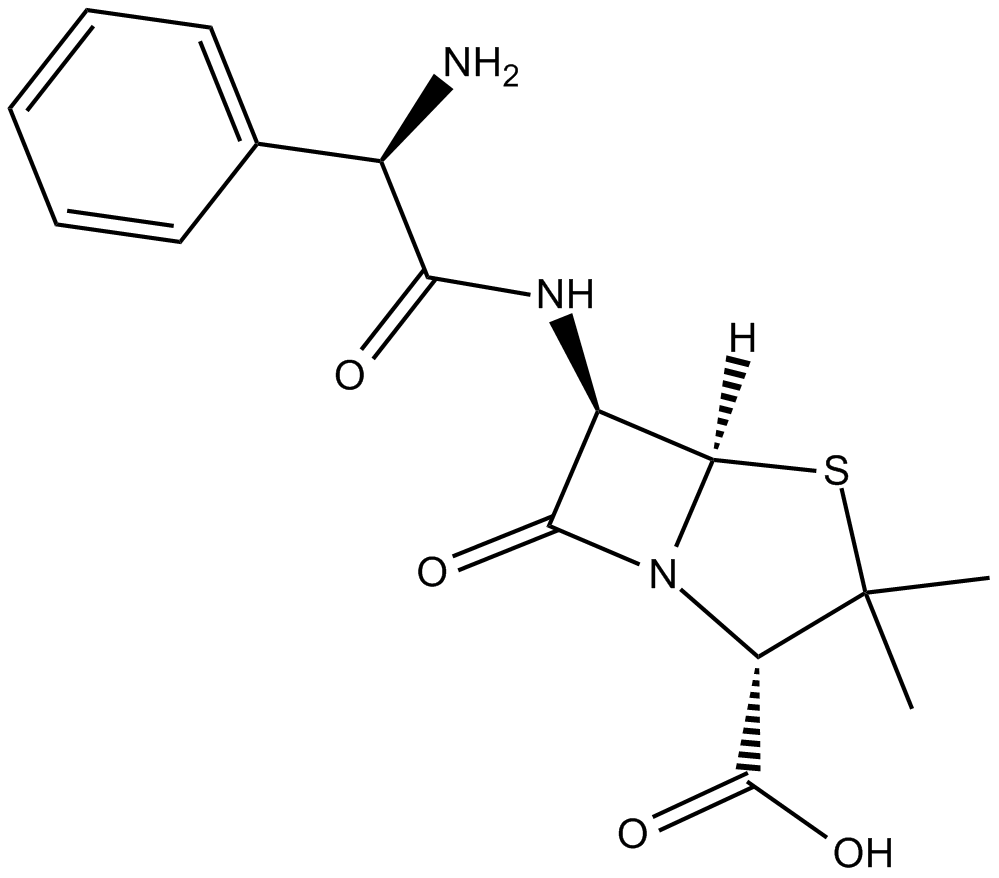
| Chemical Name | (2S,5R,6R)-6-((R)-2-amino-2-phenylacetamido)-3,3-dimethyl-7-oxo-4-thia-1-azabicyclo[3.2.0]heptane-2-carboxylic acid |
| Canonical SMILES | O=C(N[C@@H]1C(N2[C@]1([H])SC(C)(C)[C@@H]2C(O)=O)=O)[C@H](N)C3=CC=CC=C3 |
| Shipping Condition | Small Molecules with Blue Ice, Modified Nucleotides with Dry Ice. |
| General tips | We do not recommend long-term storage for the solution, please use it up soon. |
Quality Control & MSDS
- View current batch:
Chemical structure