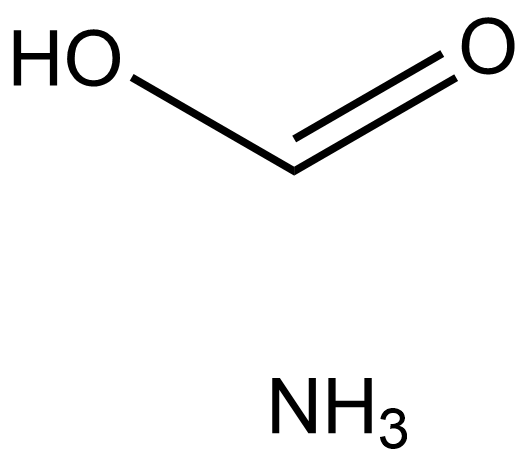
Ammonium formate
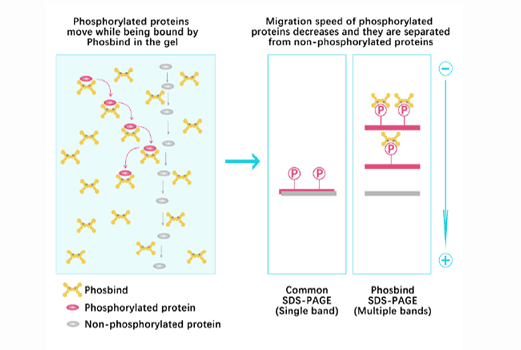
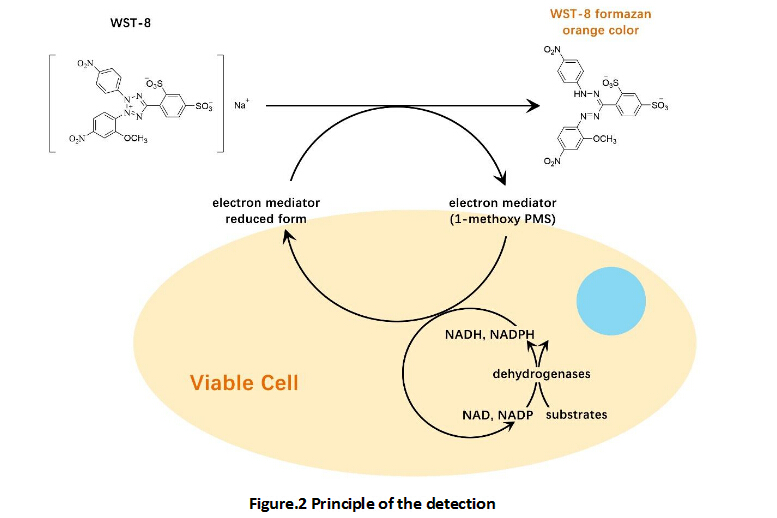
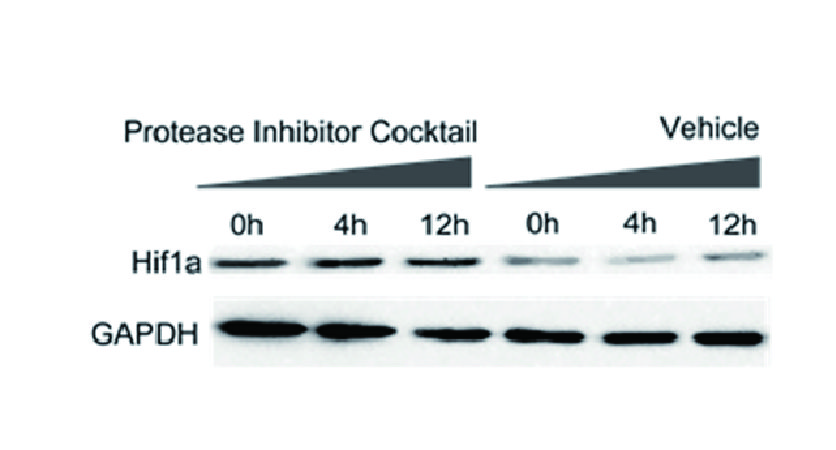
Ammonium formate (CAS No.: 540-69-2) is a small ionic organic salt and formate donor widely classified as a biochemical reagent for metabolism, mitochondrial bioenergetics, redox stress, and vascular signaling research, with biological relevance because formate is an endogenous one carbon intermediate in normal cellular metabolism; in mechanistic studies, ammonium formate related formate exposure has been associated with inhibition of cytochrome c oxidase in the mitochondrial electron transport chain, consequent impairment of oxidative phosphorylation, ATP depletion, and secondary elevation of reactive oxygen species, while additional literature context indicates modulation of nitric oxide and cGMP linked endothelial signaling and reduced calcium influx in vascular smooth muscle models, supporting its use as a tool compound to interrogate energy failure, oxidative injury pathways, and cell viability responses in biomedical research and early stage drug discovery workflows; consistent with this role, reported activity is predominantly described qualitatively rather than with universally standardized potency constants, and where quantified in model specific systems the effective windows are generally discussed in broad concentration bands from micromolar to millimolar ranges rather than a single transferable IC50 or EC50 value, so experimental interpretation should remain context dependent across cell type, exposure duration, and endpoint selection; typical applications include in vitro assays of mitochondrial function, ROS generation, metabolic stress signaling, and cytotoxicity profiling, as well as exploratory in vivo toxicology and pharmacology paradigms designed to map mechanism based liabilities, and the concentrations or doses used in experiments typically depend on specific experimental designs and research objectives.
| Storage | -20°C for 3 years |
| M.Wt | 63.06 |
| Cas No. | 540-69-2 |
| Formula | HCO2NH4 |
| Solubility | ≥5.1 mg/mL in DMSO; ≥5.65 mg/mL in EtOH; ≥10.8 mg/mL in H2O |
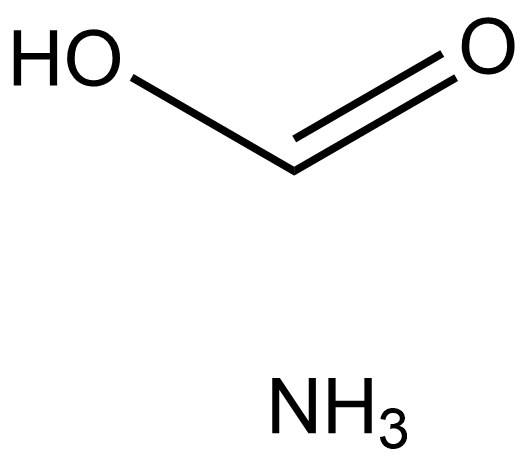
| Canonical SMILES | [H]C(O[NH4])=O |
| Shipping Condition | Small Molecules with Blue Ice, Modified Nucleotides with Dry Ice. |
| General tips | We do not recommend long-term storage for the solution, please use it up soon. |
Quality Control & MSDS
- View current batch:
Chemical structure