


Ambroxol
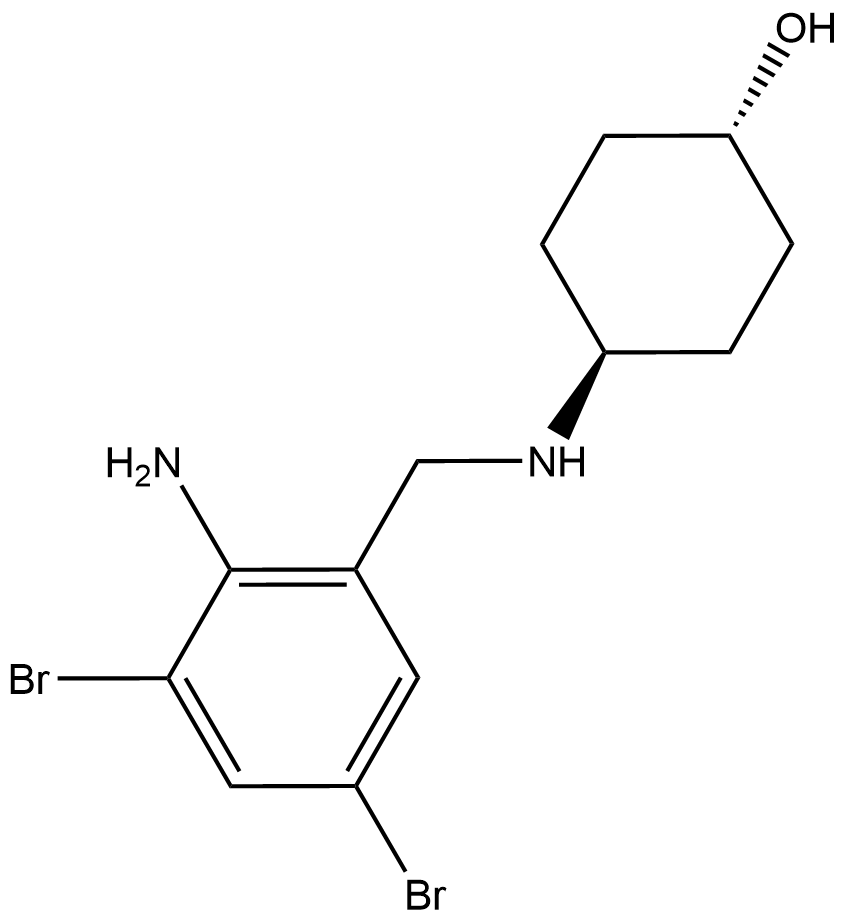
Ambroxol (CAS No.: 18683-91-5) is a mucoactive small molecule and active metabolite of bromhexine widely utilized as a pharmacological tool in respiratory and lysosomal biology research. It exhibits secretolytic and secretomotor properties by stimulating surfactant synthesis and release from type II pneumocytes and enhancing bronchial ciliary activity, thereby improving mucus clearance mechanisms in experimental systems. Mechanistically, Ambroxol has been shown to inhibit neuronal sodium channels at low micromolar concentrations, contributing to modulation of cellular excitability and inflammatory mediator release, and it also functions as a molecular chaperone for glucocerebrosidase (GCase), increasing its enzymatic activity and lysosomal trafficking. In addition, Ambroxol has been reported to induce autophagic processes in pulmonary and neuronal cell models, supporting its use in studies of lysosomal function, proteostasis, and neurodegeneration-related pathways. In vitro activity is typically observed in the low micromolar range for ion channel modulation and enzyme chaperoning effects. This compound is broadly applied in cell-based assays and animal models to investigate mucus secretion dynamics, ciliary motility, inflammatory signaling, lysosomal enzyme regulation, and autophagy, with experimental concentrations or dosing regimens adjusted according to specific study designs and research objectives.
| Physical Appearance | A solid |
| Storage | -20°C |
| M.Wt | 378.10 |
| Cas No. | 18683-91-5 |
| Formula | C13H18Br2N2O |
| Synonyms | NA-872, Ambroxolum |
| Solubility | ≥44.6 mg/mL in DMSO; ≥8.8 mg/mL in EtOH; insoluble in H2O |
| Chemical Name | (1r,4r)-4-((2-amino-3,5-dibromobenzyl)amino)cyclohexan-1-ol |
| Canonical SMILES | C(N[C@H]1CC[C@H](O)CC1)C2=C(N)C(Br)=CC(Br)=C2 |
| Shipping Condition | Small Molecules with Blue Ice, Modified Nucleotides with Dry Ice. |
| General tips | We do not recommend long-term storage for the solution, please use it up soon. |